

The plates that define Toulouse: what they are, where they came from, and where to eat the canonical version.
Signature dishes
-
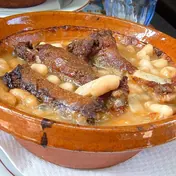
Cassoulet de Toulouse ★ 4.9
Cassoulet de Toulouse is the city's signature slow-cooked bean dish with confit duck, Toulouse sausage and pork belly. Reservations recommended in season.
Where to try it: Restaurant Emile, Le Genty Magre, Le Colombier, Le Bibent
Price: EUR 25-32
The cassoulet's origin legend places it around 1355 during the Hundred Years' War, when Castelnaudary peasants under English siege threw beans, sausage and confit duck into a clay cassole. The Toulouse version, distinct from Castelnaudary and Carcassonne, uses confit duck plus the city's coiled saucisse de Toulouse. The Confrerie du Cassoulet de Toulouse was founded in April 2022 to defend the recipe.
Watch out for: Pork, Duck
-
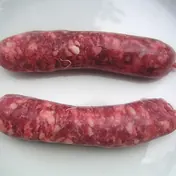
Saucisse de Toulouse ★ 4.9
The saucisse de Toulouse is the city's coiled pork sausage, made from coarsely chopped pork shoulder seasoned with garlic, white wine and black pepper.
Where to try it: Restaurant Emile, Le Genty Magre, Le J'Go Restaurant, Le Bibent
Price: EUR 12-18
The Toulouse sausage has been the city's butcher's signature since at least the 16th century. The recipe traditionally uses pork shoulder, not belly, coarsely chopped (not minced), seasoned only with salt, pepper, garlic and a touch of white wine. The sausage's signature coil shape, unbroken and over a metre long, is what distinguishes it from other regional French sausages.
Watch out for: Pork
-
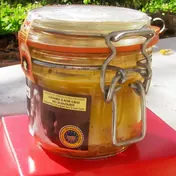
Foie gras du Sud-Ouest ★ 4.9
Foie gras du Sud-Ouest is the canonical southwestern French fattened duck or goose liver, sold raw, mi-cuit or torchon. Reservations recommended in season.
Where to try it: Chez Navarre, Restaurant Emile, Le Genty Magre
Price: EUR 16-32
Foie gras production in the southwest dates to Roman antiquity but expanded commercially in the 19th century, with Strasbourg and Toulouse vying as production capitals. Today southwest France produces 70 percent of European foie gras, the Gers as the third-largest producer (after Landes and Pyrenees-Atlantiques). The Toulouse goose, a regional subvariety, was historically central to the city's industry.
Watch out for: Egg (in pate)
Book food experiences in Toulouse


-
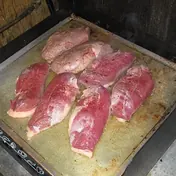
Magret de canard ★ 4.7
Magret de canard is the southwestern French duck breast, traditionally grilled with the skin scored, served pink with potato sarladaise and a red-wine redu.
Where to try it: Chez Navarre, Restaurant Le Magret, Le J'Go Restaurant, L'Oncle Pom
Price: EUR 22-32
The magret was popularised by Andre Daguin in the 1960s at his Hotel de France in Auch, when he started cooking the fattened-duck breast like a steak rather than rendering it into confit. The technique transformed how the southwest cooked duck. Magret du Sud-Ouest received IGP status in 2000 to defend the regional product.
-
Confit de canard ★ 4.7
Confit de canard is the southwestern French duck leg slow-cooked in its own fat, the canonical Lauragais preserve preparation served with potatoes sarladaise.
Where to try it: Chez Navarre, Restaurant Emile, Le Colombier, La Cave au Cassoulet
Price: EUR 16-22
Confit is a preserve technique central to southwestern French gastronomy since pre-refrigeration days, when farmers preserved fattened ducks in their own fat for the winter. The Confrerie du Cassoulet of Toulouse requires confit duck as a defining cassoulet ingredient. Today most southwest restaurants either confit in-house or buy from Gers producers.
-

Violet candy of Toulouse ★ 4.7
The violet candy of Toulouse is a crystallised Parma violet petal, sugar-coated to preserve the flower's perfume and colour. Booking essential at peak times.
Where to try it: Maison Pillon, Violettes et Pastels
Price: EUR 6-12 per box
Violets were first cultivated in Toulouse from 1850 in the Lalande quarter, with 600 families growing 30 tons of cut flowers a year by 1900. A Toulouse druggist first popularised crystallised violet candies in the early 20th century. The candies became permanent fixtures of Toulouse confectionery via Maison Pillon (1894). The recipe sugar-coats fresh violet petals one at a time, then dries them to lock in the perfume.
-
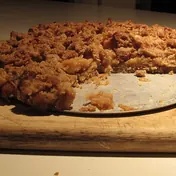
Croustade aux pommes ★ 4.5
Croustade aux pommes is the southwestern French apple pastry made with paper-thin filo-like dough wrapped around spiced apples. Reservations recommended in season.
Where to try it: Maison Pillon, La Boulangerie Saint-Georges, Maison Serres, Au Poussin Bleu
Price: EUR 4-8
The croustade is a Gascon and Lauragais pastry tradition dating to at least the 16th century, with origins in North African pastilla brought across the Pyrenees. The signature is the gossamer-thin pastry, hand-stretched until transparent. The classic filling is apples with Armagnac, though prune versions exist. The dish travelled to Toulouse from the Gers and is sold across the city's bakeries.
Watch out for: Gluten, Egg
-
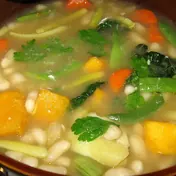
Garbure ★ 4.6
Garbure is the Pyrenean cabbage-and-confit soup of the Bearn and Gers, a thick winter pottage of green cabbage, white beans. Booking essential at peak times.
Where to try it: Chez Navarre, Le Genty Magre, Restaurant Emile
Price: EUR 14-22
Garbure is the canonical Pyrenean mountain soup, served as the working farmer's evening meal across the Bearn, Bigorre and Gers since at least the 18th century. The recipe relies on the trinciat (the cooking liquid), the chabrot (a pour of red wine into the empty bowl) and the confit duck leg sitting on top of the cabbage. The Garbure championship in Oloron-Sainte-Marie has run annually since 1996.
-
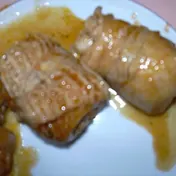
Tripoux ★ 4.4
Tripoux are tripe parcels stuffed with veal sweetbreads, ham and herbs, slow-cooked in white wine, an Aveyronnais tradition served at Toulouse market bistros.
Where to try it: Restaurant Le Magret, L'Imperiale, Le Bistrot du Marche
Price: EUR 12-18
Tripoux originated in the Aveyron and Lozere as a shepherd's breakfast dish, sold at market mornings since at least the 19th century. The tripe parcels are tied with kitchen string and braised in white wine for six hours, served traditionally at 06:00 as a market breakfast. The Marche Victor Hugo's upstairs bistros keep the tradition alive for the market crowd.
-
Fronton wine ★ 4.4
Fronton wine is the canonical Toulouse-region AOC red wine, made with the indigenous Negrette grape blended with Syrah and Cabernet Franc on the Fronton terroir.
Where to try it: N5 Wine Bar, Le Tire-Bouchon
Price: EUR 8-25 per bottle
Fronton wine has been produced in the Tarn-et-Garonne hills 25 km north of Toulouse since Roman times, and the Negrette grape (a Toulouse-specific variety) was popularised in the Middle Ages. The Fronton AOC was awarded in 1975. The wine pairs canonically with cassoulet, magret and the southwest plate. Chateau Boujac, Chateau Bellevue La Foret and Domaine Le Roc are the modern reference producers.
Watch out for: Sulphites
-
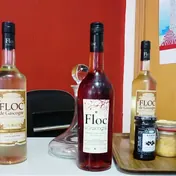
Floc de Gascogne ★ 4.3
Floc de Gascogne is the canonical Gers aperitif, a sweet fortified wine made by blending Armagnac into Gers grape must. Reservations recommended in season.
Where to try it: N5 Wine Bar, Le Bar Basque, Le Tire-Bouchon
Price: EUR 5-9 per glass
Floc de Gascogne dates to at least the 16th century in the Gers, originally as a way to use young Armagnac and surplus grape must on Armagnac-producing farms. The drink received AOC status in 1990 and is now produced in red, white and rose styles. The Floc Confrerie, founded in 1985, defends the traditional recipe of one-third Armagnac to two-thirds grape must.
Watch out for: Sulphites
-
Daube de boeuf gasconne ★ 4.5
Daube de boeuf gasconne is the southwestern French beef stew slow-braised in Madiran red wine with ceps, the canonical Gers Sunday-lunch dish for cold months.
Where to try it: Chez Navarre, Le Genty Magre
Price: EUR 22-32
The daube is a Languedoc and Gascon stew tradition with roots in the Provencal daube avignonnaise. The Gers and Tarn versions use Madiran red wine (the local Tannat-based AOC) and add wild cepes from the Pyrenean foothills. The dish is the canonical Sunday-lunch braise across the southwest, eaten with potato gratin sarladaise or fresh tagliatelle.
-
Cou de canard farci ★ 4.3
Cou de canard farci is the duck neck stuffed with foie gras and pork, simmered then sliced cold or warmed in fat. Reservations recommended in season.
Where to try it: Chez Navarre, Le Genty Magre, Restaurant Emile
Price: EUR 15-22
The cou farci is a peasant charcuterie tradition from the Gers and Landes, using the skin of the duck neck stuffed with the duck's own foie gras, lean pork, lard and seasoning. The dish was a way to use every part of the fattened duck. It is served sliced cold as a starter, or warmed in fat and crisped on a hot pan.
-
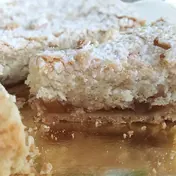
Fenetra de Toulouse ★ 4.4
The fenetra is a Toulouse-only almond and citron pastry of a meringue base topped with apricot jam, candied citron and ground almonds. Reservations recommended in season.
Where to try it: Maison Pillon, La Bonbonniere, La Boulangerie Saint-Georges
Price: EUR 4-7
The fenetra dates to the medieval Toulouse fair of the same name held around Toussaint (All Saints). The pastry combines almonds (a southwestern crop), apricot jam (preserved summer fruit) and candied citron. The recipe nearly disappeared in the 20th century and was revived by Toulouse patisseries in the 1990s. La Bonbonniere and Maison Pillon are the modern reference makers.
Watch out for: Gluten, Egg, Tree nuts
Signature Dishes in Toulouse, FAQ
What food is Toulouse known for?
Toulouse's signature dishes include Cassoulet de Toulouse, Saucisse de Toulouse, Foie gras du Sud-Ouest, Magret de canard, Confit de canard. See our signature dishes chapter for where to eat each.