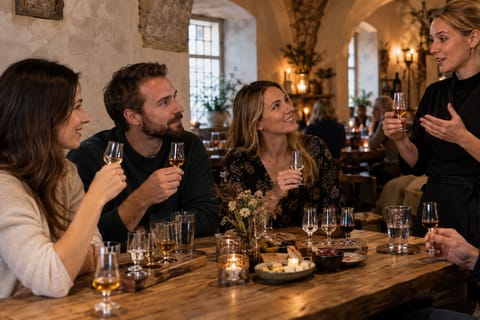

The plates that define Tallinn: what they are, where they came from, and where to eat the canonical version.
Signature dishes
-
Verivorst ★ 4.8
Estonian blood sausage made from pig's blood, pearl barley, onion and marjoram in an intestine casing. Traditionally eaten at Christmas with lingonberry jam, sour cream and hapukapsas sauerkraut.
Where to try it: Olde Hansa, Rataskaevu 16, III Draakon
Price: €4-8
Verivorst grew from peasant winter cookery in the Estonian countryside, where families slaughtered a pig before the Christmas darkness. The pig's blood was mixed with pearl barley, onion, marjoram and stuffed into the intestine casing. The Christmas market on Tallinn's Town Hall Square (Raekoja plats) sells it through December, paired with lingonberry jam and gluhwine. Many Old Town restaurants like Olde Hansa and Rataskaevu 16 also serve it as a year-round homage to the season.
Watch out for: Gluten
-
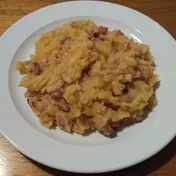
Mulgi Puder ★ 4.5
Estonia's national peasant dish: a creamy porridge of mashed potato and pearl barley, finished with butter, bacon and onion. Mulgimaa-region origin.
Where to try it: Rataskaevu 16, Olde Hansa, III Draakon
Price: €10-16
Mulgi puder takes its name from the Mulgimaa region in southern Estonia, where pearl barley grew well on the heavy soils. Peasant farmers cooked the barley into a porridge then mashed it with potato to stretch the dish through winter. The barley was usually pearled and slow-cooked, then loosened with cream or milk and topped with bacon and onion. Tallinn's Old Town traditional rooms like Rataskaevu 16 still keep it on the menu year-round, alongside lingonberry jam.
Watch out for: Gluten, Milk
-
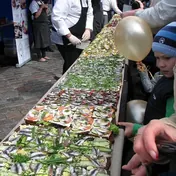
Kiluvõileib ★ 4.4
Baltic sprat open sandwich on Estonian black rye bread, with butter, hard-boiled egg and dill. The classic afternoon snack and tavern bar bite served across Estonia year-round.
Where to try it: Olde Hansa, III Draakon, Rataskaevu 16
Price: €3-6
Kiluvõileib pairs Estonia's two cornerstone ingredients: smoked Baltic sprat (kilu) and dense rye bread (leib). The sprat fishery has run on the Estonian Baltic since the medieval Hanseatic period, with sprat preserved in salt and oil for the winter months. The open sandwich became the everyday small plate of the early Soviet era, when meat was scarce and the canned sprat was always available. It remains the bar snack at most Estonian taverns and a staple at home for afternoon tea.
Watch out for: Fish, Gluten, Egg
Book food experiences in Tallinn

-
Rosolje ★ 4.3
Estonian beetroot, herring and potato salad bound in sour cream and finely chopped to a uniform dice, eaten at Christmas, Easter and most every Estonian Sunday dinner table.
Where to try it: Rataskaevu 16, Olde Hansa, Pegasus
Price: €6-10
Rosolje is the Estonian version of the Russian and Polish 'beetroot salad with herring' (vinegret), absorbed during the Russian Empire centuries of rule and re-locked into Estonian culture during the 19th century. It uses cooked beetroot, potato, gherkin, hard-boiled egg and a pickled herring fillet, all chopped to a similar small dice and bound in sour cream. Many Old Town traditional rooms still serve it year-round; at home it appears at every major holiday.
Watch out for: Fish, Egg, Milk
-
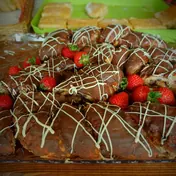
Kringel ★ 4.5
Estonian sweet braided bread scented with cardamom, raisins and citrus zest, baked golden and brushed with butter. The everyday coffee bread, sold at Maiasmokk on Pikk since 1864.
Where to try it: Maiasmokk, Karjase Sai, RØST Bakery
Price: €2-4
The kringel arrived in Estonia from Northern Germany through the Hanseatic League merchants of the 13th and 14th centuries, who controlled the Baltic bread trade. Estonian bakers adapted it with cardamom and raisins to fit local pantries. By 1864 Maiasmokk on Pikk had standardised the Tallinn version: long braided ropes scented with citrus zest, baked golden and brushed with butter. It remains the standard sweet bread of Estonian breakfast and afternoon coffee.
Watch out for: Gluten, Egg, Milk
-

Kohuke ★ 4.2
Estonian curd snack: a fresh-cheese bar dipped in dark chocolate, sometimes with vanilla, jam or coconut in the curd. Found in every Estonian fridge and corner shop, eaten daily year-round.
Where to try it: Maiasmokk, Kalev Confectionery Shop, Balti Jaama Turg
Price: €0.80-1.50 each
Kohuke evolved from the Estonian tradition of fresh curd cheese (kohupiim), which farmers made from soured milk and salt for centuries. In the 1950s, Estonian dairy factories began shaping the curd into bars and dipping them in dark chocolate, sometimes adding vanilla, jam or coconut to the curd. The kohuke became Estonia's universal snack: roughly a hundred kohuke per Estonian per year by current dairy industry estimates. Every Tallinn supermarket counter carries five or six varieties at the cash register.
Watch out for: Milk
-
Leib ★ 4.5
Estonian dense fermented rye bread, the daily staple across the country. Eaten at every meal with butter, herring or as a base for kiluvõileib.
Where to try it: Karjase Sai, RØST Bakery, Maiasmokk
Price: €4-8 per loaf
Estonian black rye bread (leib) traces back to medieval Estonian peasant cookery and the dense rye-baking tradition shared across the Baltic and Nordic regions. Rye grew well on Estonian soils where wheat struggled, and the long sourdough fermentation made the loaf last weeks. The phrase 'igapäevane leib' (daily bread) carries the same weight in Estonian as it does in any agricultural culture. Modern bakers like Karjase Sai in Kopli keep the traditional long-fermented version going.
Watch out for: Gluten
-
Sült ★ 4.1
Estonian head cheese: meat from pork hocks slow-boiled with bay, allspice and pepper, then set into a clear aspic. Sliced cold and served with mustard and rye bread at Christmas smorgasbords.
Where to try it: Rataskaevu 16, Olde Hansa, Pegasus
Price: €8-14
Sült belongs to the broader European tradition of head cheese (German Sülze, Polish galareta), absorbed into Estonian cooking through Baltic German aristocracy and Hanseatic trade in the 13th to 19th centuries. Estonian farmers boiled pork hocks for hours with bay, allspice and pepper, then set the gelatinous broth into a mould. The slices became a winter staple at every Estonian smorgasbord and remain a Christmas-table standard alongside verivorst.
-
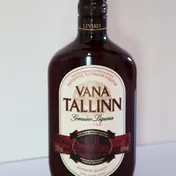
Vana Tallinn ★ 4.3
Estonian rum-vanilla-citrus liqueur, served neat as a dessert pour or stirred into coffee at the end of dinner. Recipe from 1960, drunk year-round.
Where to try it: Maiasmokk, Olde Hansa, Tchaikovsky
Price: €6-10 per pour
Vana Tallinn (Old Tallinn) was created in 1960 by Estonian distiller Liviko in central Tallinn, with industrial production from 1962, combining Jamaican rum with Estonian vanilla, citrus oils and warm spices. The dark amber liqueur quickly became the country's signature dessert pour and a Soviet-era export across the Eastern Bloc. Today it remains the standard end-of-dinner spirit in Tallinn restaurants and the Christmas Market on Town Hall Square sells gluhwine versions through December.
-
Hapukapsas ★ 4.2
Estonian sauerkraut: fermented white cabbage, eaten with verivorst at Christmas, alongside roast pork year-round, and as the everyday vegetable.
Where to try it: Olde Hansa, Rataskaevu 16, III Draakon
Price: €4-7 as side
Hapukapsas grew from Northern European fermentation traditions absorbed during the Hanseatic and Russian Empire periods, when winter vegetable storage was a survival skill. Estonian farmers fermented entire cabbages in wooden barrels with salt, caraway and juniper, then ladled the cured slaw onto every winter plate. The Estonian Christmas Eve dinner is built around hapukapsas piled next to verivorst, with stewed pork and lingonberry jam.
Signature Dishes in Tallinn, FAQ
What food is Tallinn known for?
Tallinn's signature dishes include Verivorst, Mulgi Puder, Kiluvõileib, Rosolje, Kringel. See our signature dishes chapter for where to eat each.