

History
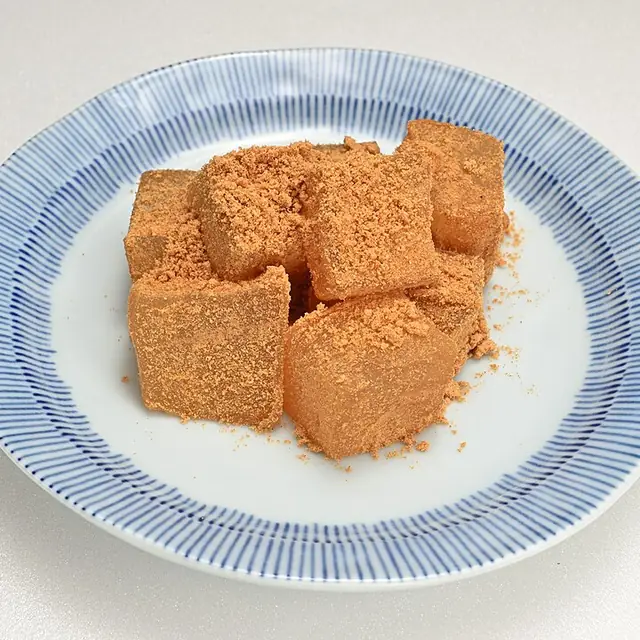
Warabi-mochi has roots in Heian-era Kyoto, originally made from wild-foraged warabi (bracken fern) starch, expensive enough that Emperor Daigo (897-930) was said to favour it. The modern Nishiki Market form, sold cup-by-cup dusted in kinako roasted soybean and drizzled with kuromitsu syrup, codified in the Showa era. Counter stands at Nishiki Market still press fresh warabi-mochi by the cup; the form is now Kyoto's most-photographed summer snack.
Book a food experience
Tours, tastings and classes that match this page, bookable on GetYourGuide.

Make it at home
Ingredients
- 50g warabi starch (or substitute with potato or tapioca starch)
- 50g sugar
- 300ml water
- 60g kinako (roasted soybean flour) for dusting
- 60ml kuromitsu (Okinawan black sugar syrup) for serving
- Ice water for cooling
Method
- Whisk starch, sugar and water in a heavy saucepan until completely smooth.
- Heat over medium-low, stirring constantly with a wooden spoon, until the mixture thickens and turns translucent (about 5-7 minutes).
- Continue stirring for another 2 minutes once translucent to fully cook the starch.
- Drop spoonfuls into a bowl of ice water; the mochi will firm up into soft jellies in 1-2 minutes.
- Lift the pieces with a slotted spoon, pat dry on a cloth, and toss in kinako powder.
- Serve cold in small cups, drizzled with kuromitsu syrup.
Tip from the editors. Real warabi starch from Kyoto wagashi suppliers is grey-tinted and gives the most chew; potato starch works fine but is whiter and less elastic.
Where to eat warabi-mochi
Warabi-mochi in Kyoto
Kagizen Yoshifusa ★ 4.6
An 18th-century wagashi maker on Shijo-dori with a tatami tea room behind the storefront. Tsukimi rabbit jellies and the most quoted kuzukiri in Kyoto.
DrinkKuzukiri with kuromitsu
Demachi Futaba ★ 4.7
A wagashi shinise on Kawaramachi north of Imadegawa in Kyoto, famed for its mame-mochi: salted black soybeans pressed into sweet azuki paste-filled mochi.
TryMame mochi
More cities are in research. Want warabi-mochi covered somewhere specific? Tell us where you want to eat.