
History
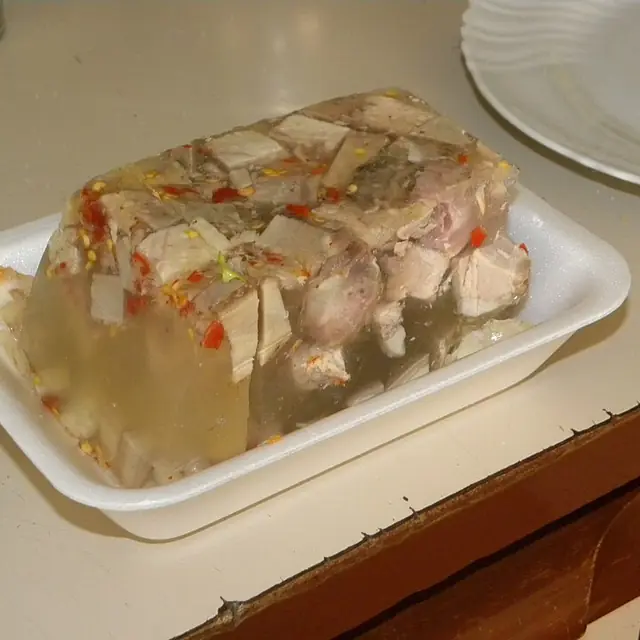
Until the 20th century Estonian farmers slaughtered animals in the autumn and cooked the pig's head and legs into sült. The name is a loan from German, but Estonian sült is usually less seasoned and made from higher quality meat, with a loose aspic soft enough to start melting at room temperature, sometimes with carrots or greens. It is traditionally made from the gelatinous parts of pork, served with diluted vinegar, horseradish or strong mustard, and belongs to the Christmas menu with blood sausage and sauerkraut.
Book a food experience
Tours, tastings and classes that match this page, bookable on GetYourGuide.


Make it at home
Ingredients
- 2 pork hocks (about 1.5kg total)
- 1 onion, halved
- 2 carrots, halved
- 3 bay leaves
- 10 allspice berries
- 10 black peppercorns
- 3 teaspoons salt
- 2 garlic cloves, crushed
- Mustard and rye bread to serve
Method
- Place the pork hocks, onion, carrots and spices in a large pot, cover with 3 litres cold water.
- Bring to a simmer and skim the foam, then cook gently for 4 hours until meat falls off the bone.
- Lift the meat out, discard skin and bones, shred the meat coarsely with two forks.
- Strain the broth, season generously with salt and garlic, then pour over the shredded meat in a terrine mould.
- Chill overnight until set. Slice and serve cold with strong mustard and rye bread.
Tip from the editors. The natural gelatin in pork hocks sets the aspic; no extra gelatine is needed.
Where to eat sült
Sült in Tallinn
Featured by TableJourney as a signature dish of Tallinn. See where to eat Sült in Tallinn or the Tallinn signature dishes guide.
More cities are in research. Want sült covered somewhere specific? Tell us where you want to eat.