History

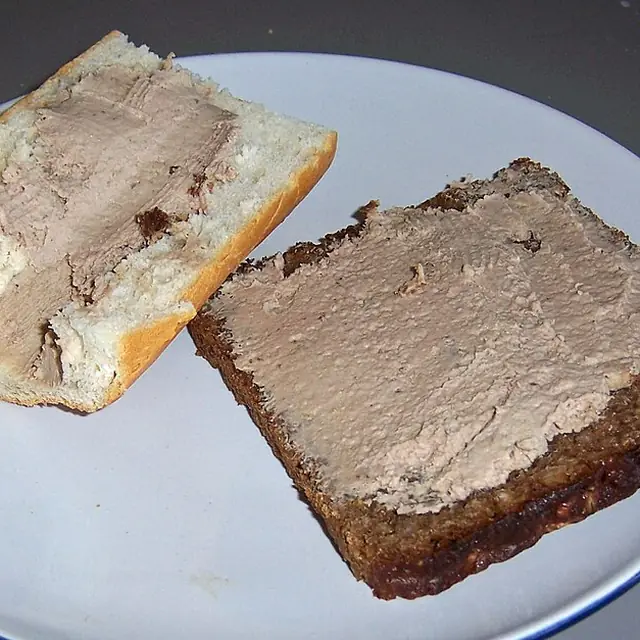
Rugbrød is the Danish national bread, distinguished from other northern European rye loaves by its dense, almost cake-like texture and its long sourdough fermentation. The bread has been on Danish tables since the medieval period when rye replaced wheat as the affordable grain. Hart Bageri, Andersen Bakery and Juno the Bakery all produce the canonical Copenhagen sourdough rugbrød daily; supermarkets carry industrial versions but the bakery sourdough is the proper article.

Common allergens: Gluten

Make it at home

Yield 1Hands-on 45 minTotal 48 hrDifficulty Intermediate

Ingredients

  • 200g active rye sourdough starter (100% hydration)
  • 500g coarse stone-ground rye flour
  • 200g cracked rye kernels (rugkerner), soaked overnight in 400ml water
  • 150g sunflower seeds
  • 100g flax seeds
  • 100g pumpkin seeds
  • 20g fine sea salt
  • 1 tablespoon malt syrup or dark molasses
  • 500ml warm water plus the soaking water from the rye kernels

Method

  1. The night before: soak the cracked rye kernels in 400ml cold water at room temperature. They will absorb the water and soften.
  2. In a large bowl combine the active starter, rye flour, soaked rye kernels with their water, sunflower seeds, flax seeds, pumpkin seeds, salt, malt syrup and 500ml warm water.
  3. Stir vigorously with a strong spoon for 5 minutes; the mixture is too wet to knead.
  4. Tip into a heavily greased 1.5kg loaf tin. Smooth the top with a wet spatula.
  5. Cover loosely and bulk-ferment at room temperature for 12 to 16 hours, until the surface shows bubbles and the dough has risen by about a third.
  6. Bake at 200C for 60 minutes, then reduce to 180C and bake 60 minutes more. The internal temperature should reach 97C.
  7. Turn out onto a rack and cool completely; do not cut for at least 24 hours.
  8. Slice paper-thin with a serrated knife. The loaf keeps a week in a sealed bag and is the canonical base for smørrebrød.

Tip from the editors. The 24-hour rest after baking is non-negotiable; cutting hot makes the crumb gummy.

Where to eat rugbrød

Rugbrød in Copenhagen

Hart Bageri ★ 4.8

Bakery$Daily 07:30-18:00Walk-in onlySourdough loaves and laminated Danish pastries

Hart Bageri on Gammel Kongevej in Frederiksberg was opened by former Tartine head baker Richard Hart and now runs ten locations across greater Copenhagen.

Tip: Arrive by 09:00 weekends for the cardamom buns and tebirkes; sourdough loaves restock through the morning.

Worth the queue: Tebirkes (poppyseed danish)

Juno the Bakery ★ 4.9

Bakery$Wed-Sat 07:30-18:00, Sun 09:00-15:00, closed Mon-TueWalk-in onlySourdough, Scandinavian pastry, cardamom buns

Juno the Bakery on Århusgade in Østerbro from former noma cook Emil Glaser bakes the cardamom bun that anchors the modern Copenhagen pastry conversation.

Tip: Open Wednesday to Sunday only. Arrive by 09:30 for the cardamom bun or expect the 60-deep weekend queue.

Worth the queue: Cardamom bun

Andersen Bakery ★ 4.2

Bakery$Mon-Sun 07:00-19:00Walk-in onlyDanish pastry and sourdough bread

Andersen Bakery on Thorshavnsgade in Islands Brygge is the Copenhagen outpost of the Japanese-owned Andersen chain, which the Takaki family founded.

Tip: Harbour-side counter in Islands Brygge with both takeaway and cafe seating. The Hiroshima mothership has been baking Danish-style since the 1960s.

Worth the queue: Spandauer with crème pâtissière

Schønnemann ★ 4.8

Smørrebrød$$$indre-byDaily 11:30-17:00

Schønnemann on Hauser Plads in Copenhagen has served smørrebrød since 1877, with house-baked rye, a 140-bottle snaps cabinet and lunch-only service.

Signature: Marinated herring, Stegt flæsk smørrebrød, Karrysild

Order: Marinated herring with raw onion, capers and rye, plus a glass of cold akvavit.

Tip: Lunch only, closed Sunday and books a week ahead. Walk in at 14:30 for the best chance of a counter seat.

More cities are in research. Want rugbrød covered somewhere specific? Tell us where you want to eat.

Browse all dishes →