

History
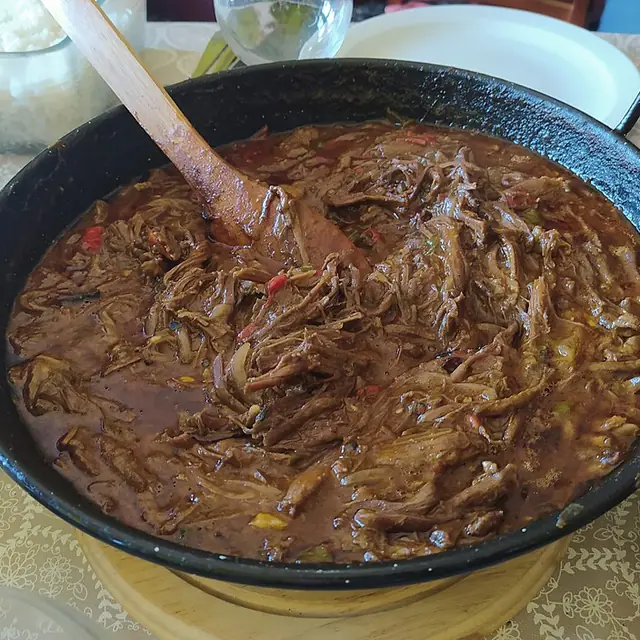
Ropa vieja arrived in Cuba from Spain's Canary Islands and Castilla-La Mancha in the 17th century, where peasant cooks shredded leftover boiled meat into a stew rather than waste it. The Cuban version codified through the 19th century and became the national dish, particularly identified with Havana. Miami's exile generation brought the recipe wholesale in the 1960s; Versailles in Little Havana, opened 1971, made it the canonical Miami address for ropa vieja. The textural distinction is essential; the meat must shred to long fibres, never chunks.
Book a food experience
Tours, tastings and classes that match this page, bookable on GetYourGuide.


Common allergens: Sulphites
Make it at home
Ingredients
- 1.5kg beef flank steak or skirt steak (these cuts shred into the canonical long fibres; brisket also works but gives a different texture)
- 2L cold water
- 2 carrots, roughly chopped
- 2 celery stalks, roughly chopped
- 1 large onion, halved (skin on)
- 2 bay leaves
- 10 black peppercorns
- 2 tsp sea salt
- For the sofrito and braise: 4 tbsp olive oil, 2 large yellow onions (sliced thin into half-moons), 2 red bell peppers (sliced thin), 1 green bell pepper (sliced thin), 6 garlic cloves (minced), 2 tbsp tomato paste, 1 can (400g) good Italian whole peeled tomatoes (crushed by hand), 250ml dry white wine or dry sherry, 2 tsp ground cumin, 2 tsp dried oregano, 1 tsp smoked paprika (the secret Miami touch), 1/2 tsp cayenne, 100g pimiento-stuffed green olives (sliced; the canonical Cuban garnish), 50g drained capers, sea salt and freshly ground black pepper
- Garnish: 2 tbsp chopped flat-leaf parsley, 2 tbsp chopped fresh oregano
- To serve: 600g cooked long-grain white rice
- 400g Cuban black beans (canned drained or home-cooked)
- 4 ripe yellow plantains (sliced 2cm thick, fried in oil until caramelised gold)
Method
- Place the flank in a large stockpot with the cold water, carrots, celery, halved onion, bay leaves, peppercorns and 2 tsp sea salt.
- Bring to a low boil, skim the foam carefully, then reduce to a bare simmer. Cover loosely and cook 2 hours until the meat is fork-tender and pulls easily into shreds.
- Lift the beef out into a bowl; cool slightly. Strain and reserve 500ml of the cooking liquid.
- Using two forks (or your fingers when cool enough), shred the meat into long fibrous strands; this is the structural step. The shreds should be 5 to 8cm long, not chunks.
- Heat the olive oil in a wide heavy pan over medium heat. Add the sliced onions and bell peppers; cook 15 minutes until very soft and starting to caramelise.
- Add the garlic, cumin, oregano, smoked paprika and cayenne; cook 90 seconds.
- Stir in the tomato paste and crushed tomatoes; cook 4 minutes.
- Pour in the wine or sherry, reduce 3 minutes.
- Add the shredded beef back to the pan with 400ml of the reserved cooking liquid. Simmer uncovered 30 to 40 minutes, stirring occasionally, until the sauce thickens and clings to the meat.
- Stir in the sliced olives and drained capers in the last 5 minutes; check seasoning, add salt and pepper to taste.
- Plate a generous mound of white rice on each plate, lay a heap of ropa vieja across the top, garnish with parsley and fresh oregano. Serve with black beans on one side and fried sweet plantains on the other (the Cuban trio of moros y cristianos plus maduros).
Tip from the editors. The cut of beef matters enormously; flank or skirt steak gives the canonical fibrous shred. The 2-hour low simmer is non-negotiable; rushing gives chewy chunks instead of strands. Smoked paprika is the Miami signature; without it the dish reads as generic stew.
Where to eat ropa vieja (cuban braised beef)
Ropa Vieja (Cuban braised beef) in Miami
Versailles ★ 4.5
Versailles in Miami is the 1971 Cuban institution at 3555 SW 8th Street, open until midnight every night and 1am on weekends with the ventanita pouring.
TryCuban full plates and ventanita cafecito
TipWeekend 1am closing on the dining room; the ventanita stays open later. Order vaca frita and a cortadito.
La Carreta ★ 4.1
La Carreta in Miami is the Calle Ocho Cuban diner at 3632 SW 8th Street, a sister room to Versailles serving abuela-style plates and cafe con leche from 8am.
OrderLechon asado with moros y cristianos and a side of tostones.
TipThe ventanita pours strong cafecito at any hour; the dining room is quieter than Versailles next door.
Sergio's ★ 4.0
Sergio's in Coral Gables is the original family Cuban diner at 3252 SW 22nd Street, serving abuela-style Miami plates across South Florida since 1975.
OrderPan con bistec with crispy potato sticks and a cafe con leche.
TipOpen early for breakfast, late for after-show plates. The Coral Way location is the founding room.
Ropa Vieja (Cuban braised beef) in Tampa
Columbia Restaurant ★ 4.5
Columbia in Ybor City has plated 1905 Salad, paella and Spanish-Cuban classics since 1905, Florida's oldest restaurant under five Gonzmart family generations.
Book1 week ahead
La Teresita ★ 4.5
La Teresita on Columbus Drive has run a Cuban counter and dining room in West Tampa since 1972, owned by the Capdevila family across two generations.
OrderPalomilla steak with yellow rice and black beans.
TipThe counter side runs 6am to midnight Friday and Saturday; the dining room takes reservations next door.
More cities are in research. Want ropa vieja (cuban braised beef) covered somewhere specific? Tell us where you want to eat.