History

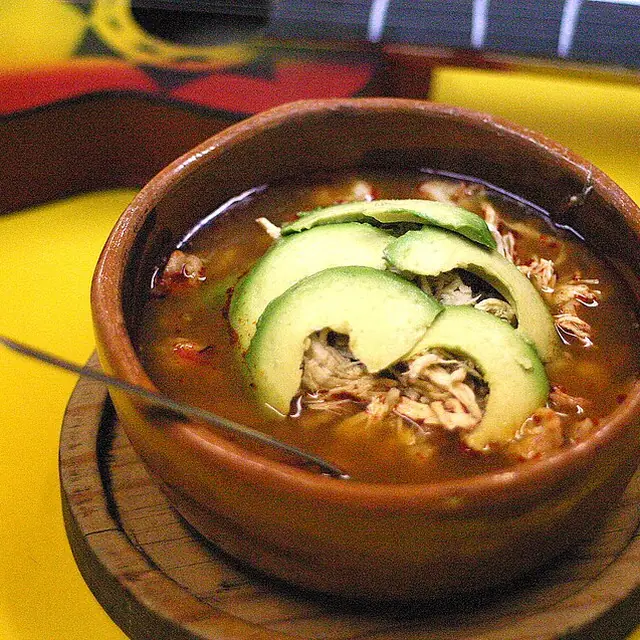
Pozole is a Pre-Hispanic ceremonial soup dating to the Aztec era; the word comes from the Nahuatl pozolli (foamy). Originally made with the meat of sacrificed prisoners, the dish became pork after the Spanish arrival. Three regional styles dominate: blanco (Mexico City and the central highlands), rojo (Jalisco and Sinaloa) and verde (Guerrero, with pumpkin seeds). Today pozole is the Thursday lunch ritual across Mexico City, served from late afternoon at fondas and pozolerias citywide.

Make it at home

Yield Serves 6Hands-on 45 minTotal 3 hrDifficulty Intermediate

Ingredients

  • 1 kg pork shoulder, cut into 5cm cubes
  • 500g pork ribs
  • 1 large white onion, halved
  • 8 garlic cloves
  • 2 bay leaves
  • 1 tablespoon salt
  • 2 cans (800g) white hominy, drained
  • For garnish: 1 small green cabbage, finely shredded
  • 1 bunch radishes, sliced
  • Limes, dried oregano, ground chile piquin
  • Tostadas, sour cream, queso fresco

Method

  1. Put the pork shoulder and ribs in a large pot with onion, garlic, bay and salt. Cover with water by 5cm and bring to a boil.
  2. Reduce to a simmer; skim foam for the first 30 minutes. Cook 2 hours until the meat is fork-tender.
  3. Remove the meat. Shred the shoulder and chop the rib meat off the bone. Strain the broth and return to the pot.
  4. Add the hominy to the broth. Simmer 30 minutes. Return the meat to the pot and warm through. Adjust seasoning.
  5. Ladle into wide bowls. Serve all the garnishes at the table for each diner to dress their own bowl: cabbage on top, then radishes, lime juice, a pinch of oregano and chile, with tostadas on the side.

Tip from the editors. The broth gets richer overnight; make it a day ahead. The cabbage and radishes go in cold, on top of the hot soup, just before eating.

This is the TableJourney editorial recipe, modelled on the canonical bistro / counter version. The first place to try the dish in its city of origin is below.

Where to eat pozole

Pozole in Mexico City

Cafe de Tacuba ★ 4.3

Traditional Mexican$$centro-historico

Cafe de Tacuba in Mexico City is the Mollinedo family's 1912 Centro Historico room on Tacuba, the 17th-century palace dining hall that runs every traditional Mexican breakfast format the capital invented.

Signature: Enchiladas de mole, Tamales, Chocolate caliente

Order: Enchiladas de mole verde; tamales served with frothy chocolate caliente.

Tip: Daily 08:00 to 23:00; the strolling student trio on Sunday afternoons is the move for the room's full character.

El Cardenal ★ 4.6

Traditional Mexican$$centro-historico

El Cardenal in Mexico City is the Briz family's 1969 Centro Historico room on Palma, the traditional Mexican breakfast institution where hot chocolate is frothed tableside with raw-milk nata.

Signature: Hot chocolate, Pan de nata, Chiles en nogada

Order: The hot chocolate with pan de nata; chiles en nogada when in season July to September.

Tip: Open 08:00 to 18:00; the Centro location seats four floors and still queues by 09:30 on Sunday morning.

El Bajio Polanco ★ 4.3

Regional Mexican$$polanco

El Bajio in Mexico City is chef Carmen Titita Ramirez's Veracruz-rooted regional Mexican kitchen with the Polanco branch on Alejandro Dumas, the dependable daytime stop for tamales and mole.

Signature: Carnitas, Empanadas de platano, Mole de Xico

Order: Carnitas; empanadas de platano relleno de frijol; tamal de mole.

Tip: Open daily 09:00 to 22:00. The Azcapotzalco original is the deeper room for Veracruz regional depth.

More cities are in research. Want pozole covered somewhere specific? Tell us where you want to eat.

Browse all dishes →