History

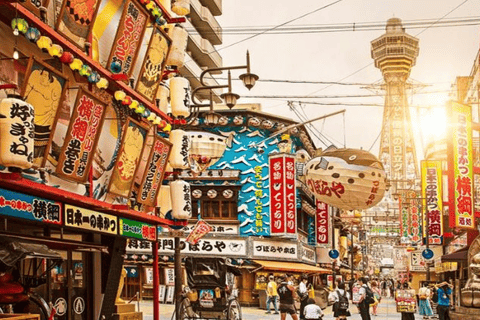
Oden arrived in Osaka from Tokyo in the Edo era; Osakans renamed it kanto-daki (cooked-in-the-Kanto-style) and over a century thinned the broth to the lighter dashi-soy base canonical to Kansai. Takoume Honten in Dotonbori, founded 1844, is Japan's oldest oden restaurant and is widely cited as the city's defining shop.

Common allergens: Soy, Fish, Egg

Make it at home

Yield 4Hands-on 35 minTotal 3 hrDifficulty Intermediate

Ingredients

  • 2 litres dashi stock
  • 100ml light soy sauce (usukuchi)
  • 3 tablespoons mirin
  • 1 tablespoon sake
  • 1 teaspoon salt
  • 1 large daikon, peeled and cut into 3cm rounds
  • 6 eggs, hard-boiled and peeled
  • 300g konnyaku, scored and cut into triangles
  • 8 assorted oden fishcakes (chikuwa, hanpen, satsuma-age)
  • 300g beef tendon (gyusuji), pre-boiled 60 minutes and skewered
  • 4 small new potatoes, peeled
  • Karashi (Japanese mustard), to serve

Method

  1. Score a cross on one face of each daikon round. Parboil the rounds 12 minutes in lightly salted water until starting to turn translucent at the edges; drain.
  2. Blanch the konnyaku 2 minutes in boiling water; drain.
  3. Combine the dashi, soy sauce, mirin, sake and salt in a wide shallow pot and bring to a low simmer.
  4. Add the daikon, eggs, konnyaku and beef tendon. Simmer covered 60 minutes at a tremble.
  5. Add the potatoes; simmer 30 minutes more.
  6. Add the fishcakes 15 minutes before serving; they only need to warm through and absorb a little broth.
  7. Rest off the heat 30 minutes (ideally overnight in the fridge, reheated the next day; oden is better on the second day).
  8. Serve in shallow bowls with a ladle of broth, plus a dab of karashi mustard on the side of each plate.

Tip from the editors. Use light usukuchi soy sauce, never the dark Tokyo variant; the broth should look almost the colour of tea, not coffee, or it stops being Osaka oden and becomes Tokyo oden.

Where to eat osaka oden (kanto-daki)

Osaka oden (Kanto-daki) in Osaka

More cities are in research. Want osaka oden (kanto-daki) covered somewhere specific? Tell us where you want to eat.

Browse all dishes →