
_-_Flickr_-_Fishyone1.jpg)
History
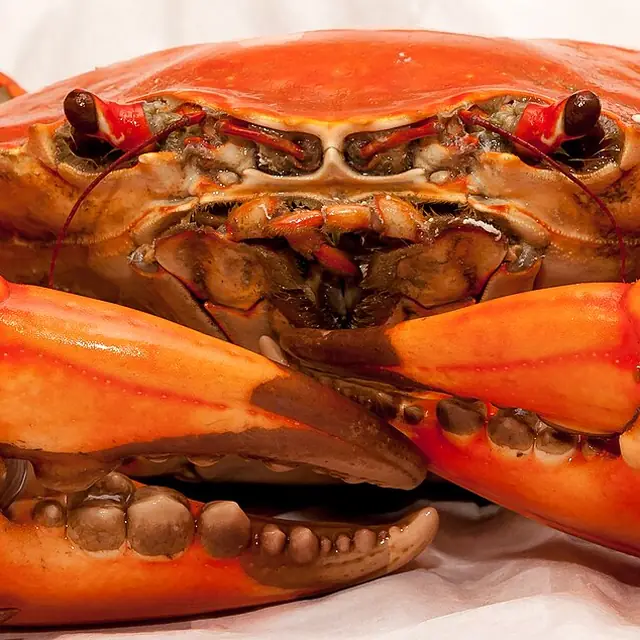
Scylla serrata, called the mud crab or mangrove crab, lives in the estuaries and mangroves of Africa, Australia and Asia, from South Africa to south-eastern Australia. In Australia it is caught in pots, drop nets and dillies from New South Wales north around to Shark Bay, and most of the commercial catch comes from Queensland and the Northern Territory, with a peak from January to April in Queensland. A study on the tidal flats of Deception Bay in Queensland found young crabs living in the mangrove zone.
Book a food experience
Tours, tastings and classes from the cities on this page, bookable on GetYourGuide.

Common allergens: Crustacean
Make it at home
Ingredients
- 1 live mud crab, around 1.5kg
- 4 long red chillies, deseeded and finely chopped
- 5cm ginger, finely chopped
- 5 garlic cloves, finely chopped
- 4 spring onions, sliced
- 100ml tomato ketchup
- 60ml shaoxing wine
- 2 tbsp light soy sauce
- 2 tsp brown sugar
- Steamed jasmine rice, to serve
Method
- Humanely dispatch the crab by chilling in the freezer for 30 minutes; remove top shell, gills and clean cavity.
- Quarter the crab body and crack the claws with the back of a heavy knife.
- Heat 3 tbsp peanut oil in a wok until smoking. Add crab pieces and stir-fry 3 minutes until shells turn red.
- Add ginger, garlic and chilli; stir-fry 1 minute. Add shaoxing, soy, ketchup, sugar and 200ml water; bring to a simmer.
- Cover and steam-cook 8 minutes, tossing occasionally, until flesh is cooked through.
- Scatter spring onions, toss once more, and serve with jasmine rice and finger bowls.
Tip from the editors. Cook mud crab live or freshly dispatched on the day you buy it; 30 minutes in the freezer first makes it sluggish and easier to handle.
Where to eat queensland mud crab
Queensland Mud Crab in Brisbane
Stanley Restaurant ★ 4.6
Stanley is on the river at Howard Smith Wharves, where Head Chef Louis Tikaram's menu brings seafood, meat, vegetables and fruit to Cantonese flavours.
More places near Stanley Restaurant
Not on this list, but close by, nearest first. Every one is in our guide with its address, hours and what to order.
- Ciao Papi Italian, under 100 m away
- Felons Brewing Co. Brewery, under 100 m away
- Greca Greek, about 300 m away
- Bisou Bisou Brasserie, about 400 m away
- Continental Cafe Casual dining, about 400 m away
- Rosmarino Italian, about 600 m away
More cities are in research. Want queensland mud crab covered somewhere specific? Tell us where you want to eat.