


History
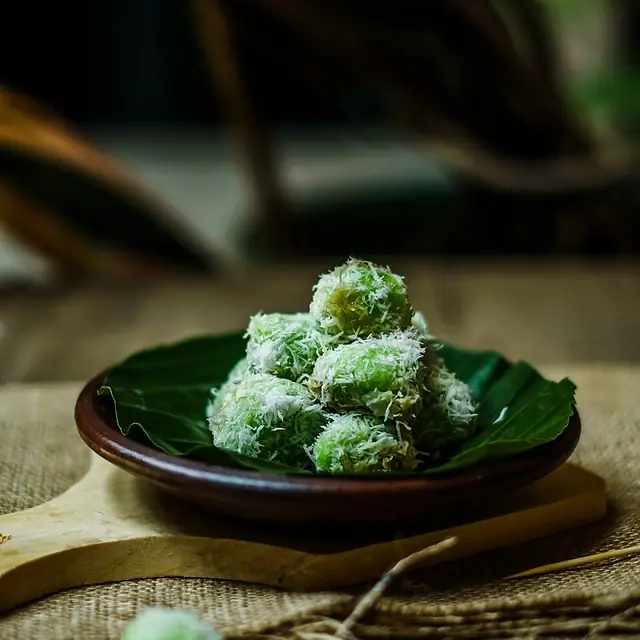
Klepon is spread across maritime Southeast Asia: it appears in the Javanese Serat Centhini of 1814, and Balinese and Bugis-Makassar communities use it in ritual offerings. Klepon Gianyar has been made in Gianyar town since 1980; it won the Bali Arts Festival cooking contest for Gianyar regency and was later served at a coffee morning hosted by Ibu Tien Soeharto.
Book a food experience
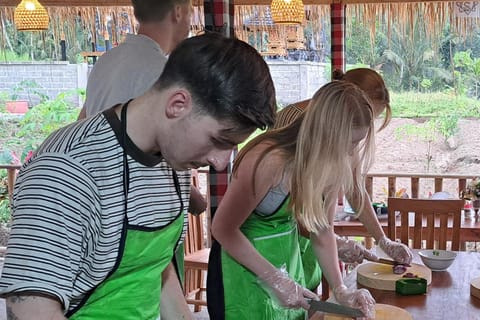
Tours, tastings and classes from the cities on this page, bookable on GetYourGuide.

Make it at home
Ingredients
- 200g glutinous rice flour
- 3 tbsp tapioca flour
- 1/2 tsp salt
- 210ml coconut milk, blended with 3 pandan leaves and strained
- For the filling: 150g palm sugar boiled with 150ml water
- For the coating: 1/2 fresh coconut, grated, with 1/2 tsp salt and 1 knotted pandan leaf
Method
- Mix the grated coconut, salt and pandan leaf, steam for 15 minutes and set aside.
- Boil the palm sugar with the water until dissolved and slightly thick, then cool completely.
- Mix the glutinous rice flour, tapioca flour and salt. Bring the pandan coconut milk to the boil, pour it in and knead to a smooth dough.
- Flatten a walnut-sized piece of dough, spoon in about 1 tsp of the cool liquid sugar, pinch it shut and roll into an oval.
- Boil the klepon in plenty of water until they float, then lift out and drain.
- Roll in the steamed coconut and serve at once.
Tip from the editors. Seal each ball completely, as a weak seam leaks the sugar into the water, and eat them within a few hours.
Where to eat klepon gianyar
More cities are in research. Want klepon gianyar covered somewhere specific? Tell us where you want to eat.