How Hangzhou came to eat the way it does: the people, migrations and accidents that shaped the plate.
Key eras
-
Wuyue and the Southern Song capital, 10th to 13th centuries
Hangzhou was the capital of the Wuyue Kingdom and then, from 1132 until the Mongol invasion of 1276, of the Southern Song, when it was known as Lin'an and was a centre of trade and entertainment. Song Wusao came south from the old capital Bianjing and sold fish soup by West Lake outside Qiantang Gate; in 1179 the retired emperor Zhao Gou tasted it from his boat.
-
Su Dongpo and the West Lake dredging
Su Dongpo, the Song poet and gastronome, served as an official in Hangzhou and organised labourers to build embankments and dredge waterways after heavy rains. Legend says the grateful city gave him a large amount of pork, which he had cut into cubes, braised in brown sauce and shared with the labourers: the origin of Dongpo pork.
-
Qing dynasty, imperial tea and lakeside restaurants
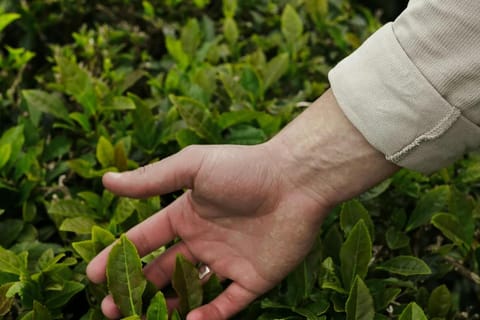
Longjing tea was granted the status of imperial tea in the Qing dynasty. Louwailou on Gushan was, by tradition, founded in 1848 by Hong Ruitang, a scholar from Shaoxing who cooked river fish and shrimp, and Kuiyuanguan opened in 1867. The late Qing scholar Yu Yue adapted the vinegar fish recipe and wrote of buying Louwailou's vinegar fish to go with wine.
-
1913 to 1959, time-honoured brands
In 1913 Sun Yizhai of Shaoxing set up a wonton stall near Hubin Park that grew into Zhiweiguan. In 1956 Zhejiang province named 36 famous Hangzhou dishes, among them Longjing shrimp, Dongpo pork, West Lake fish in vinegar and beggar's chicken, and in 1959 Kuiyuanguan moved into a new three-storey building on Jiefang Road.
-
Hangzhou cuisine today
Hangzhou cuisine took shape as a cuisine of its own from the late 1980s. The China Hangzhou Cuisine Museum opened on 20 March 2012, and in December 2024 the city introduced local standards for traditional dishes, with detailed rules for West Lake vinegar fish. Michelin's first Hangzhou selection came in 2023, and in 2026 Ru Yuan ranked 36th on the World's 50 Best Restaurants list.
Immigrant influences
- Northern refugees in the Song capital
- When the Song court moved south, Song Wusao came from the old capital Bianjing and opened a fish soup shop by West Lake, famous in the Southern Song city.Taste it todaySong
- Shaoxing natives
- Shaoxing men founded two of Hangzhou's best-known restaurants: Hong Ruitang, who opened Louwailou, and Sun Yizhai, whose 1913 wonton stall became Zhiweiguan.
- Anhui and Ningbo noodle makers
- Kuiyuanguan was founded in 1867 by people from Anhui; in the early Republic Li Shanlin of Ningbo took it over and turned it to Ningbo-style noodles.
Signature innovations
- West Lake fish in vinegar gravy, adapted by the late Qing scholar Yu Yue and made famous by LouwailouTaste it todayWest Lake Fish in Vinegar Gravy (西湖醋鱼)
- Longjing shrimp, river shrimp cooked with Longjing tea leaves, a speciality of LouwailouTaste it todayLongjing Shrimp (龙井虾仁)
- Pian'erchuan and shrimp and eel noodles, both first made at the noodle house KuiyuanguanTaste it todayShrimp and Eel Noodles (虾爆鳝面)
- Sister Song's fish soup in its modern form, refined at Louwailou by chef Tao Haiming, who joined in 1959
- Cong bao hui, a spring pancake rolled round a fried dough stick with scallion and pressed on a griddleTaste it todayCong Bao Hui (葱包桧)
Book food experiences in Hangzhou
Check dates and prices
Powered by GetYourGuide