

The plates that define Vancouver: what they are, where they came from, and where to eat the canonical version.
Signature dishes
-
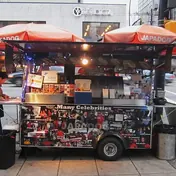
Japadog ★ 4.7
Japadog is a Vancouver hot dog stand with Japanese toppings. Its Terimayo puts teriyaki sauce, Japanese mayo, fried onions and seaweed on a beef sausage.
Where to try it: Japadog, Japadog Burrard cart
Noriki Tamura started Japadog in January 2005, and its first location, still a trailer at 899 Burrard Street, stands in downtown Vancouver. A second stand opened in 2009, and in 2010 a sit-in restaurant joined the three stands; it is now the shop at 530 Robson Street. Japadog opened its first US location in 2011, and its media page lists Anthony Bourdain among the celebrities who have eaten there. The menu offers the Terimayo on all-beef, wagyu and spicy cheese smokie sausages.
Watch out for: Gluten, Egg
-
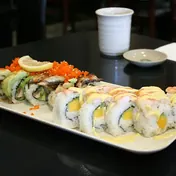
BC roll ★ 4.7
The BC roll is an inside-out sushi roll of barbecued salmon and cucumber, often with salmon skin in a sweet sauce. Tojo's on West Broadway lists a Great BC Roll on its menu.
Where to try it: Tojo's
Price: $26
Chef Hidekazu Tojo, born in Kagoshima and a Vancouver resident since 1971, is credited with creating the BC roll in 1974, when he used salmon skin in place of anago, which was hard to find on the West Coast. He opened Tojo's in October 1988. He is also often credited with the California roll, a claim Wikipedia notes is disputed. Tojo's own site calls him the creator of the California roll, and its menu lists the Great BC Roll of barbecued salmon skin, cucumber, sesame and scallion.
Watch out for: Gluten, Fish
-
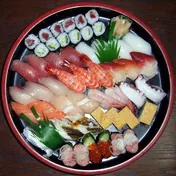
Aburi salmon oshi sushi ★ 4.6
Aburi oshi is pressed sushi with a flame-seared top. Miku's Salmon Oshi Sushi uses BC wild sockeye with jalapeno and Miku sauce, and costs $23.
Where to try it: Miku
Price: $23
Seigo Nakamura took his family's restaurant business from Miyazaki, Japan, to Vancouver in 2008, when Miku opened downtown, specializing in aburi (flame-seared) sushi. After three years he opened a second restaurant, Minami, in Yaletown. Miku's menu lists Aburi Oshi sushi as salmon, ebi and saba, and the Michelin Guide's entry for Miku singles out the aburi salmon oshi sushi with wild sockeye salmon, jalapeno and the house sauce.
Watch out for: Fish, Gluten, Soy
Book food experiences in Vancouver


-
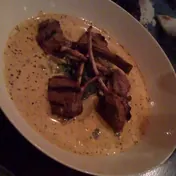
Vij's lamb popsicles ★ 4.8
Vij's wine marinated lamb popsicles come with spinach potatoes and a garlic fenugreek curry. The Michelin Guide calls them a signature dish of the restaurant.
Where to try it: Vij's
Price: $39
Vikram Vij opened Vij's in Vancouver in 1994, and Mark Bittman of the New York Times later called it one of the finest Indian restaurants in the world. Wikipedia describes the lamb popsicles as famous, and Vij made them for Giada De Laurentiis when she visited his restaurant for her Food Network series. Vij's holds a Michelin Bib Gourmand, and its menu lists the dish at $39 with spinach potatoes and garlic fenugreek curry. The restaurant is at 3106 Cambie Street.
Watch out for: Dairy, Soy
-
Pacific oysters on the half shell ★ 4.8
Oysters on the half shell are on the menu at Joe Fortes, with its horseshoe oyster bar, at Boulevard's raw bar, at Blue Water Cafe and at Miku, six for $27.
Where to try it: Joe Fortes Seafood & Chop House, Boulevard Kitchen & Oyster Bar, Blue Water Cafe, Miku
Price: $27 for six at Miku
The Pacific oyster is native to the Pacific coast of Asia, and Fisheries and Oceans Canada says it was first brought into British Columbia in 1912 or 1913 for aquaculture, with large-scale importation of seed oysters beginning in 1925. Fanny Bay, on Baynes Sound on the east coast of Vancouver Island, is best known for its oysters. In Vancouver, Joe Fortes serves oysters at a horseshoe oyster bar, and Boulevard and Blue Water Cafe both list oysters on their raw bar and seafood menus.
Watch out for: Shellfish
-
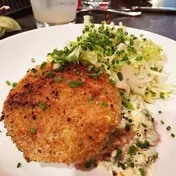
Dungeness crab ★ 4.7
Dungeness crab is part of the cooking of British Columbia and the Pacific Northwest. Boulevard lists a Dungeness crab louie, Blue Water Cafe a crab salad.
Where to try it: Boulevard Kitchen & Oyster Bar, Blue Water Cafe, Granville Island Public Market
Wikipedia says Dungeness crab is an integral part of the cuisines of California, British Columbia and the Pacific Northwest, traditionally featured in dishes such as crab Louie. Boulevard's seafood tower lists a Dungeness crab louie, and Blue Water Cafe lists a Dungeness Crab and Matane Shrimp Salad and a Dungeness Crab Roll at its raw bar. At Granville Island Public Market, Longliner Seafoods, one of the market's original tenants, is known for its fresh Dungeness crab.
Watch out for: Shellfish
-
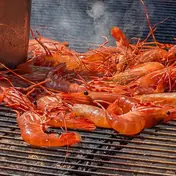
BC spot prawns ★ 4.7
BC spot prawns have a short season of six to eight weeks from May. Miku lists spot prawn sashimi and nigiri, and Granville Island Public Market sells them.
Where to try it: Miku, Granville Island Public Market
Spot prawn harvests last six to eight weeks from May, and the largest harvests are in British Columbia, with about 65 percent coming from waters between Vancouver Island and the mainland. Granville Island says local prawns were an unknown commodity in Vancouver as its Public Market got going in the 1980s and that they are now a seasonal favourite, on sale there by about 4pm each day of the season. The Spot Prawn Festival, founded by the Chefs' Table Society of BC, held its 20th annual event at False Creek Fishermen's Wharf on 31 May 2026.
Watch out for: Shellfish
-
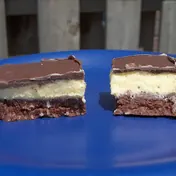
Nanaimo bar ★ 4.6
The Nanaimo bar is a no-bake bar of three layers: a wafer, nut and coconut crumb base, custard icing in the middle and chocolate ganache on top.
The earliest confirmed printed recipe under the name Nanaimo bars is in the 14th edition of the Edith Adams prize cookbook, from 1953, and the Vancouver Sun printed the same recipe earlier that year as London Fog Bar. Vancouver caterer Susan Mendleson helped keep it popular by selling it at her Lazy Gourmet Cafe in the 1970s and printing three recipes in the Expo 86 cookbook. In 1985 Nanaimo's mayor held a contest for the best recipe, won by Joyce Hardcastle.
Watch out for: Gluten, Dairy, Egg, Nuts
-
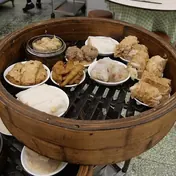
Cantonese dim sum ★ 4.6
Dim sum is a range of small Chinese dishes, mostly Cantonese, eaten for brunch with tea. Vancouver's Chinatown, centred on Pender Street, is Canada's largest.
Wikipedia says Cantonese dim sum culture developed rapidly in the latter half of the 19th century in Guangzhou, and that dim sum restaurants traditionally serve from steam-heated carts. Vancouver's Chinatown, centred on Pender Street, is Canada's largest, with Main, Pender and Keefer streets its busiest. Richmond, where about half of residents identify as having Chinese ancestry, has a Golden Village of Chinese malls along No. 3 Road that includes Aberdeen Centre.
Watch out for: Gluten, Shellfish, Soy
-
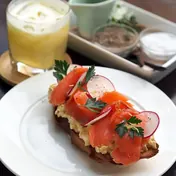
Salmon candy (BC smoked salmon) ★ 4.5
Salmon candy is smoked salmon glazed with honey or sugar. Salmon n' Bannock serves candied, smoked chum salmon, peppered, with a maple drizzle, for $14.
Where to try it: Granville Island Public Market, Salmon n' Bannock Bistro
Price: $14
Wikipedia says that in Pacific Northwest cuisine smoked salmon may be fillets or nuggets, including candied salmon, smoked and glazed with honey or sugar, also known as Indian candy. In the Pacific Northwest, Indigenous peoples have used a cold-smoked, jerky-style salmon for centuries. At Granville Island Public Market, Longliner Seafoods, one of the original tenants, is known for its maple candied salmon nuggets. Salmon n' Bannock lists candied salmon, peppered and finished with a maple drizzle.
Watch out for: Fish
-
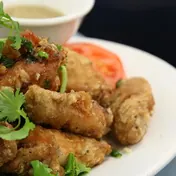
Phnom Penh chicken wings ★ 4.8
Phnom Penh's chicken wings are golden-fried and coated in salt, pepper and sugar, a classic order at the family-run Chinatown restaurant open since 1985.
Where to try it: Phnom Penh
Phnom Penh, on East Georgia Street, has been a family-run institution since 1985, serving both Vietnamese and Cambodian dishes from a menu of nearly 100 rice, noodle and soup preparations. The Michelin Guide says everyone knows to lean on the classics, including a mound of golden-fried chicken wings coated in salt, pepper and sugar, and warns that lines form almost as soon as the doors open. The restaurant was among the Bib Gourmand restaurants in the first Michelin Guide Vancouver selection, announced in October 2022.
Watch out for: Soy, Gluten
Signature Dishes in Vancouver, FAQ
What food is Vancouver known for?
Vancouver's signature dishes include Japadog, BC roll, Aburi salmon oshi sushi, Vij's lamb popsicles, Pacific oysters on the half shell. See our signature dishes chapter for where to eat each.