
The plates that define Antwerp: what they are, where they came from, and where to eat the canonical version.
Signature dishes
-
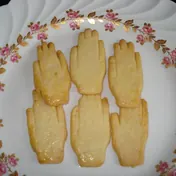
Antwerpse Handjes ★ 4.7
Hand-shaped Antwerp biscuits of butter, sugar, eggs, flour and flaked almonds, with chocolate versions too. The shape recalls the legend of Brabo and the giant's hand.
Where to try it: Philip's Biscuits, DelRey
The handje came from a competition run by the Royal Association of Master Pastry Chefs of Antwerp. In 1934 Jos Hakker, a pastry chef from Amsterdam, won with the hand-shaped almond biscuit. The shape nods to the legend of Silvius Brabo, who cut off the giant Druon Antigoon's hand and threw it into the Scheldt.
Watch out for: Gluten, Dairy, Tree nuts (almonds)
-
Stoofvlees met frieten ★ 4.6
Flemish beef stew made with beer and mustard, the sauce sometimes thickened with bread. It is often eaten with French fries, and is widely available in Belgian restaurants and friteries.
Where to try it: Elfde Gebod, Den Engel, Fritkot Max
Known in Dutch as stoofvlees or stoverij and in French as carbonade flamande, the stew is a staple of Belgian cuisine and recipes vary by region and household. Common beers for it include Oud Bruin, abbey brune and Flanders Red.
Watch out for: Gluten
-
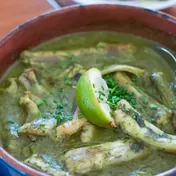
Paling in 't groen ★ 4.4
Freshwater eel simmered in a green herb sauce, a Belgian dish from the Flemish Region along the Scheldt between Dendermonde and Antwerp. It is normally served hot with chips or bread.
Where to try it: RAS
The eel is cut into pieces and simmered with finely chopped fresh herbs, such as sorrel, chervil, parsley and tarragon. The local river eel has become rare, so wild eel is usually imported, and eel is now a threatened and very expensive species.
Watch out for: Fish, Dairy
Book food experiences in Antwerp
-
Garnaalkroketten ★ 4.5
Croquettes made with grey North Sea shrimp (Crangon crangon), eaten in Belgium mostly as a starter or snack. In 2015 about 90 percent of the world's shrimp croquettes were eaten in Belgium.
The shrimp croquette evolved from the meat croquette. A 1750 manuscript by Petronella Calkoen describes an early version, and Madame Barella published probably the first true recipe, with bechamel mixed with shrimp, in 1914.
Watch out for: Crustaceans, Gluten, Dairy, Egg
-
Witloof gegratineerd ★ 4.2
Belgian endive wrapped in ham and baked in a cheese sauce, a well-known cooked dish known as endive au jambon. In Europe endive is an important winter vegetable.
Where to try it: Elfde Gebod, Marolus, Mampoko
Belgian endive, or witloof, was developed in Belgium in the 1850s and is nicknamed white gold there. In Europe it is sometimes served as a roasted or baked whole vegetable in a sauce, such as a gratin.
Watch out for: Gluten, Dairy
-
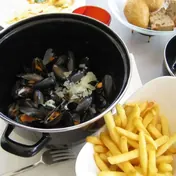
Mosselen-friet ★ 4.5
Mussels served with French fries, called the national dish of Belgium. Common variants steam the mussels with white wine, shallots and parsley, or with celery, leeks and butter.
Moules-frites is thought to have originated in Belgium, combining mussels, a cheap food around the Flemish coast, with fried potatoes eaten in winter. Much of the mussels eaten in Belgium come from farms in Zeeland in the Netherlands.
Watch out for: Molluscs, Gluten, Egg
-
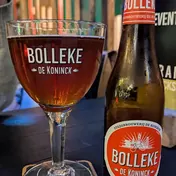
Antwerps Bolleke ★ 4.4
De Koninck's flagship pale ale, brewed in Antwerp. The glass it is served in is called a bolleke, and ordering a bolleke is the way the beer is asked for in bars.
Where to try it: De Koninck Antwerp City Brewery
De Koninck Brewery was founded in 1833 and is based in Antwerp. Its flagship beer is a pale ale, and the word bolleke is used both for the glass and for the beer itself. The brewery offers tours and tastings of its beers.
Watch out for: Gluten
-
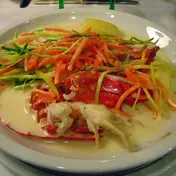
Waterzooi ★ 4.3
Creamy Flemish soup-stew of fish or chicken with vegetables in a broth thickened with egg yolk and cream. It originated in Ghent, and the chicken version is more common today.
Where to try it: Elfde Gebod, Marolus
Waterzooi comes from Flanders and is sometimes called Gentse waterzooi after Ghent, where it originated. All versions use a base of egg yolk, cream and thickened vegetable broth with carrots, onions, celery, leeks, potatoes and herbs.
Watch out for: Dairy, Egg, Celery
-
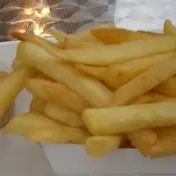
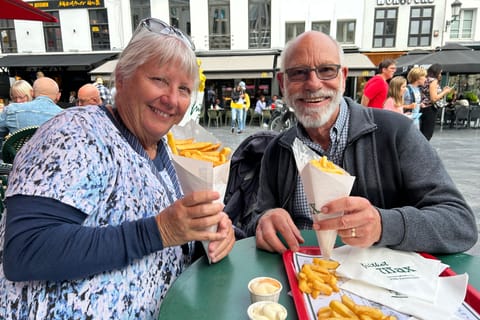
Belgian frites ★ 4.6
Belgian frites from a friterie, traditionally served in a paper cone with a choice of sauces such as mayonnaise, curry ketchup or samurai. The oldest known friterie stood in Antwerp in 1842.
Where to try it: Fritkot Max, Frites Atelier, Frituur 't Stad
A friterie, frituur or frietkot is a traditional restaurant or kiosk serving fries. The frites were originally served in rolled paper cones, and traditional companions were cold mussels in vinegar and carbonade flamande.
-
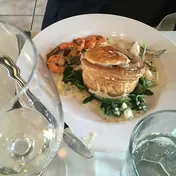
Vol-au-vent ★ 4.2
Puff-pastry case, French for fly to the wind. In Belgium it is a common main dish on most restaurant menus, filled with chicken, mushrooms and small meatballs and served with fries or mashed potatoes.
Where to try it: Bistrot Benoit, Mampoko, Den Engel
A vol-au-vent is a small hollow case of puff pastry with a filling. It is sometimes credited to Marie-Antoine Carême, though a 1739 cookbook mentions it years before his birth. The Belgian version is also eaten in the Netherlands, where it is called pasteitje.
Watch out for: Gluten, Dairy, Egg
-
Tomaat-Garnaal (Tomate aux Crevettes Grises) ★ 4.5
A hollowed-out tomato filled with grey shrimp and mayonnaise, a Belgian specialty usually served as a starter and popular on special occasions such as holidays.
Where to try it: Bistrot Benoit, Patine Wijnbistro
Shrimp eating in Belgium rose from the later 19th century as distribution and cooling improved, and tomaat-garnaal grew into a brasserie classic. In March 1919 the magazine De Boerin recommended filling tomatoes with shrimp.
Watch out for: Shellfish, Egg
-
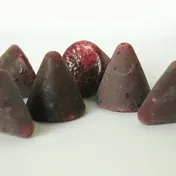
Cuberdons (Neuzekes) ★ 4.3
Cone-shaped Belgian candy with a hard gum arabic crust and a soft raspberry-flavoured gel filling. It is a popular local delicacy in Ghent, also called neuzeke.
Where to try it: Bakkerij Goossens, Kleinblatt, Bakker Aldo
One origin story says pharmacist De Vynck of Ghent found the recipe by chance in 1873, while trying to make drug syrups last longer. Cuberdons are traditionally purple and about 2.5 cm wide, and keep for only about three weeks.

Signature Dishes in Antwerp, FAQ
What food is Antwerp known for?
Antwerp's signature dishes include Antwerpse Handjes, Stoofvlees met frieten, Paling in 't groen, Garnaalkroketten, Witloof gegratineerd. See our signature dishes chapter for where to eat each.