

The plates that define San Antonio: what they are, where they came from, and where to eat the canonical version.
Signature dishes
-
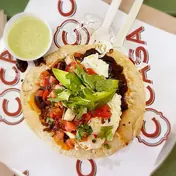
Breakfast taco ★ 4.9
The breakfast taco is San Antonio's daily ritual, a warm flour or corn tortilla folded around eggs and a filling: bean and cheese, bacon, potato, chorizo, or carne guisada.
Where to try it: Garcia's Mexican Food, Eddie's Taco House, Lucy's Cafe, Mendez Cafe, The Original Donut Shop
Price: $2-4 per taco
Breakfast tacos grew out of the Mexican-American kitchens of San Antonio's West and South Sides in the 20th century, and the city claims to be their birthplace. By the 1970s and 1980s family taquerias had made the taco a daily habit across the city. San Antonio's identity around the breakfast taco is fierce enough to fuel a long-running rivalry with Austin over who does it best, a debate that runs to flour versus corn tortillas and which fillings count as canon.
Watch out for: Gluten, Egg, Dairy
-
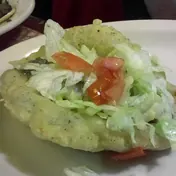
Puffy taco ★ 4.9
The puffy taco is a San Antonio invention: fresh masa pressed thin and dropped into hot oil so the shell puffs and crisps into a light, blistered pocket.
Where to try it: Ray's Drive Inn, Henry's Puffy Tacos, Nicha's Comida Mexicana
Price: $3-5 each
The puffy taco emerged on San Antonio's West Side in the mid-20th century. Ray Lopez opened Ray's Drive Inn in 1956 and trademarked the Original Puffy Taco, while his brother Henry opened Henry's Puffy Tacos on West Woodlawn, and the two family operations have traded claims to the dish ever since. The puffy taco is now so identified with the city that the local minor-league baseball team's mascot is a running puffy taco.
Watch out for: Gluten, Dairy
-
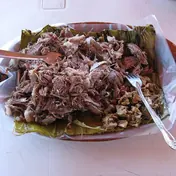
Barbacoa and Big Red ★ 4.9
Barbacoa is slow-cooked beef cheek, traditionally pit-steamed until it falls apart, served by the pound on weekend mornings with warm tortillas, chopped onion, cilantro, and salsa.
Where to try it: Tellez Tamales & Barbacoa, Tommy's Restaurant, Mi Tierra Cafe y Panaderia
Price: $12-18 per pound
Barbacoa de cabeza came north with Mexican ranching traditions, where the whole cow's head was wrapped and cooked in an underground pit. On San Antonio's West and South Sides it became a Sunday-morning ritual, sold by the pound at meat markets and taquerias. The pairing with Big Red, a Waco-born soda popular across south Texas, turned barbacoa and Big Red into a regional shorthand for a San Antonio weekend.
Watch out for: Gluten
Book food experiences in San Antonio


-
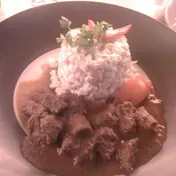
Carne guisada ★ 4.6
Carne guisada is a Tex-Mex beef stew: chunks of chuck braised in a peppery, lightly thickened gravy with tomato, onion, garlic, and cumin until the meat is tender.
Where to try it: Blanco Cafe, Mendez Cafe, Garcia's Mexican Food, Lucy's Cafe
Price: $3-5 per taco, $10-14 a plate
Carne guisada is a south-Texas home-cooking staple that moved onto taqueria menus across San Antonio, where it became one of the defining fillings for both breakfast and lunch tacos. Family cafes on the West and South Sides built reputations on their version of the gravy, and it remains a daily-eaten benchmark of a good neighbourhood Tex-Mex kitchen.
Watch out for: Gluten
-
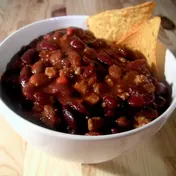
Chili con carne ★ 4.7
Chili con carne is a bowl of beef simmered in a deep, dried-chile gravy seasoned with cumin and garlic, traditionally without beans in the Texas style.
Where to try it: Mi Tierra Cafe y Panaderia, La Fonda on Main, Rosario's ComidaMex & Bar
Price: $8-14 a bowl
San Antonio's Chili Queens sold bowls of chili con carne from open-air stands in the downtown plazas from the 1880s, feeding workers and visitors by lamplight for decades. Their stands effectively introduced chili to the wider United States before the city closed them over sanitation rules in the 1930s and 1940s. The chili-gravy enchilada plate that defines San Antonio Tex-Mex descends directly from that tradition.
-
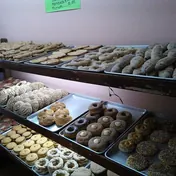
Pan dulce ★ 4.7
Pan dulce is Mexican sweet bread, a panaderia case of conchas with their crackled shell-shaped topping, marranitos shaped like little pigs, empanadas, and bigote.
Where to try it: Mi Tierra Panaderia, Panifico Bake Shop, Bedoy's Bakery, La Panaderia
Price: $1-3 per piece
Pan dulce arrived with Mexican baking traditions and became a fixture of San Antonio's West Side panaderias and Market Square. Mi Tierra has baked it around the clock since 1941, and family bakeries across the city keep the conchas, marranitos, and seasonal pan de muerto coming. The self-serve tray-and-tongs ritual is a daily part of Mexican-American life in the city.
Watch out for: Gluten, Dairy, Egg
-
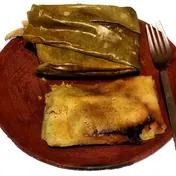
Tamales ★ 4.6
Tamales are masa spread on a corn husk, filled with pork in red chile, chicken or beans, folded and steamed until tender. In San Antonio they are a Christmas tradition, made by the dozen across the West Side.
Where to try it: Tellez Tamales & Barbacoa, Mi Tierra Cafe y Panaderia
Price: $10-15 a dozen
The tamal is one of the oldest dishes in Mesoamerican cooking, and in San Antonio the holiday tamalada, the family gathering to make tamales by the hundred, is a deep-rooted December ritual. Mexican-American families and West Side spots like Tellez produce them by the dozen through the holidays, and the city holds an annual tamales festival celebrating the masa-and-pork tradition.
-
Cheese enchiladas with chili gravy ★ 4.6
The San Antonio cheese enchilada is corn tortillas rolled around shredded cheese and onion, blanketed in a brick-red chili con carne gravy and more melted cheese, then baked.
Where to try it: Mi Tierra Cafe y Panaderia, La Fonda on Main, El Mirasol, Rosario's ComidaMex & Bar
Price: $10-16 a plate
The chili-gravy enchilada descends directly from the Chili Queens' chili con carne and the combination-plate tradition that San Antonio's Mexican restaurants codified through the 20th century. Where interior Mexican enchiladas use a salsa or mole, the San Antonio version leans on a flour-thickened, cumin-scented chili gravy, a distinctly Tex-Mex creation that long-running rooms like La Fonda on Main and Mi Tierra still serve daily.
Watch out for: Gluten, Dairy
-
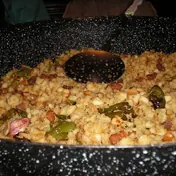
Migas ★ 4.4
Migas are eggs scrambled with crisp tortilla strips, onion, tomato and chile, often finished with cheese. In San Antonio they are a breakfast-and-brunch staple, served with beans and tortillas or folded into a taco.
Where to try it: Tlahco Mexican Kitchen, Rosario's ComidaMex & Bar, Con Huevos Tacos
Price: $9-14 a plate
Migas, meaning crumbs, has roots in using up day-old tortillas, and the Tex-Mex version became a breakfast fixture across San Antonio's cafes and taquerias. The dish bridges home cooking and restaurant menus, a thrifty, satisfying egg plate that anchors weekend brunch and weekday breakfast alike across the city.
Watch out for: Gluten, Egg, Dairy
-
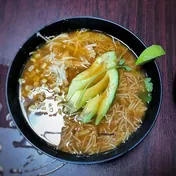
Fideo ★ 4.2
Fideo is a Tex-Mex comfort dish of thin vermicelli noodles toasted golden, then simmered in a tomato-and-chile broth with onion and garlic until soft.
Where to try it: Blanco Cafe, El Mirasol, La Fonda on Main
Price: $4-8 a side
Fideo came to Mexico via Spanish and earlier Arab noodle traditions and settled into Mexican-American home cooking across south Texas. In San Antonio it is the kind of everyday dish more often eaten at home than ordered out, though family-run Tex-Mex rooms keep it on the menu as a side or a light soup, a quiet emblem of the city's home-kitchen heritage.
Watch out for: Gluten
-
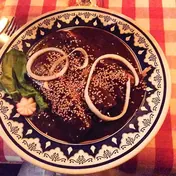
Mole poblano ★ 4.4
Mole poblano is a deep, complex Pueblan sauce of dried chiles, spices, nuts, seeds, and a little chocolate, simmered for hours and ladled over chicken or turkey.
Where to try it: La Fonda on Main, El Mirasol, Mixtli
Price: $14-22 a plate
Mole poblano comes from Puebla in central Mexico, and its arrival on San Antonio menus reflects the city's interior-Mexican thread, distinct from the Tex-Mex mainstream. Long-running rooms that lean toward interior cooking, like La Fonda on Main, keep mole on the menu as a marker of the broader Mexican kitchen that sits alongside the city's Tex-Mex identity.
Watch out for: Nuts
-
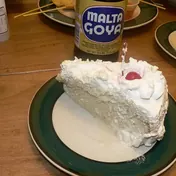
Tres leches cake ★ 4.3
Tres leches is a sponge cake soaked in three milks, evaporated, condensed, and whole or cream, until it is dense and wet, then topped with whipped cream.
Where to try it: Aldaco's Mexican Cuisine, Mi Tierra Cafe y Panaderia, Rosario's ComidaMex & Bar
Price: $7-10 a slice
Tres leches spread through Mexico and Latin America in the 20th century, often credited to dairy-brand recipes, and became a fixture of San Antonio's Mexican and Tex-Mex dessert menus. Rooms like Aldaco's built a following on their version, and it remains the default celebration cake at quinceaneras and family dinners throughout the city.
Watch out for: Gluten, Dairy, Egg
Signature Dishes in San Antonio, FAQ
What food is San Antonio known for?
San Antonio's signature dishes include Breakfast taco, Puffy taco, Barbacoa and Big Red, Carne guisada, Chili con carne. See our signature dishes chapter for where to eat each.