

The plates that define Pittsburgh: what they are, where they came from, and where to eat the canonical version.
Signature dishes
-
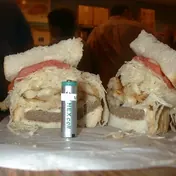
The Primanti sandwich ★ 4.8
Pittsburgh's defining sandwich stacks grilled meat, melted provolone, an oil-and-vinegar coleslaw and a handful of fries inside two thick slices of Italian bread.
Where to try it: Primanti Bros (Strip District original)
Price: $8-12
Around 1933, Joe Primanti set up a cart and then a counter at 46 18th Street in the Strip District to feed produce truckers and overnight workers. Putting the fries and slaw inside the bread let drivers eat one-handed without sitting down at a deli. The Almost Famous sandwich became the city's signature street food, and the original counter still stands. Versions now run from capicola and cheese to pastrami and the classic Pitts-burger.
Watch out for: Gluten, Dairy
-
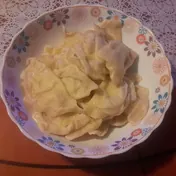
Pierogi ★ 4.7
Pittsburgh's established Eastern European dumpling, filled with potato and cheese or sauerkraut, boiled then fried in butter and onions. The city is pierogi-obsessed, from church basements to the Pirates' Pierogi Race.
Where to try it: Pierogies Plus, S&D Polish Deli, Apteka, Gooski's
Price: $8-14 a dozen
Polish, Slovak and Ukrainian immigrants brought pierogi to Pittsburgh's mill neighbourhoods from the late 1800s. The dumpling became a regional staple, sold by the dozen from Catholic and Orthodox church basements, heaviest during Lent. Pierogies Plus opened in a former McKees Rocks gas station in 1991; S&D Polish Deli runs the Strip District counter; Apteka reinvented the dumpling as vegan to national acclaim. The Pittsburgh Pirates run a costumed Pierogi Race every home game.
Watch out for: Gluten, Dairy
-
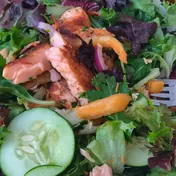
The Pittsburgh salad ★ 4.0
A regional habit more than a recipe: a salad topped with a pile of French fries, plus grilled meat and cheese. The city's love of fries on everything, plated as a main-course salad.
Where to try it: Tessaro's, Butterjoint, The Original Oyster House
Price: $12-18
The Pittsburgh salad grew out of the same fries-on-everything instinct that produced the Primanti sandwich. Diners and bars across the city pile hot French fries on a chef-style salad of lettuce, tomato, cheese and grilled chicken or steak. There is no single inventor; it is a regional convention that visitors notice immediately and locals take for granted. It appears on menus from neighbourhood diners to bar kitchens citywide.
Watch out for: Dairy
Book food experiences in Pittsburgh


-
Pittsburgh-style square pizza ★ 4.1
A square-cut pizza with a tangy, slightly sweet sauce and a crisp, medium-thick crust, sold whole or by the cut. Distinct from the Detroit and New York styles, it is the city's neighbourhood-pizzeria standard.
Where to try it: Mineo's Pizza House, Aiello's Pizza, Slice on Broadway
Price: $3-6 a cut
Pittsburgh's neighbourhood pizzerias developed their own square-cut style in the post-war decades, defined by a tangy tomato sauce and a crust crisp on the bottom. Mineo's opened on Murray Avenue in Squirrel Hill in 1958 and Aiello's set up a few doors away, fuelling a rivalry locals still argue. The pies are cut in squares and sold whole or by the cut at counters across the city, separate from the Detroit-pan style that newer shops like Iron Born bake.
Watch out for: Gluten, Dairy
-
The Pittsburgh fish sandwich ★ 4.2
A large piece of battered, fried fish that hangs well over the bun, a Catholic Lenten staple that runs year-round. Church fish fries and old market counters both serve their own versions.
Where to try it: Wholey's Fish Market, The Original Oyster House, The Pub Chip Shop
Price: $8-14
Pittsburgh's heavily Catholic, Eastern-European population made the Friday fish fry a fixture, especially during Lent, when parishes and fire halls battered and fried cod by the hundreds. The habit spread to year-round counters: Wholey's in the Strip District has fried its famous oversized fish sandwich for decades, and The Original Oyster House on Market Square has served fried fish since 1870. The sandwich is judged by how far the fish overhangs the bun.
Watch out for: Gluten, Fish
-
City chicken ★ 3.9
Breaded and fried cubes of pork and veal on a wooden skewer, despite the name containing no chicken. A Depression-era dish from Pittsburgh's Eastern European and mill communities.
Where to try it: Max's Allegheny Tavern, S&D Polish Deli
Price: $12-18
City chicken was born in Pittsburgh and the wider Rust Belt during the Great Depression, when pork and veal were cheaper than chicken. Cooks cubed the meat, skewered it to mimic a drumstick, then breaded and fried it. The dish persisted in Eastern European and Polish households and on diner menus; it still turns up at old-school restaurants and family Sunday tables across the region as a nostalgic comfort dish.
Watch out for: Gluten, Egg
-
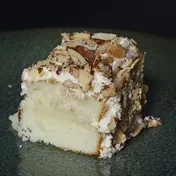
Burnt Almond Torte ★ 4.5
A light yellow sponge cake layered with custard buttercream and coated in toasted, candied almond crunch. Prantl's Bakery's signature, widely called one of America's best cakes.
Where to try it: Prantl's Bakery
Price: $40-50 a cake
Prantl's Bakery, a long-running Pittsburgh bakery, debuted its Burnt Almond Torte around 1970, when Henry Prantl reworked a candied-almond cake at the Walnut Street shop in Shadyside. The cake layers a light sponge with a custard buttercream and a coating of caramelised, toasted almonds. It became the city's default birthday and celebration cake, sold from the Shadyside and downtown shops, and was named one of America's best cakes by national outlets. Locals ship it across the country.
Watch out for: Gluten, Dairy, Egg, Nuts
-
Chipped ham barbecue ★ 3.8
Wafer-thin chipped chopped ham simmered in a sweet tomato barbecue sauce and piled on a soft bun. A Pittsburgh deli-meat tradition rooted in Isaly's chipped ham.
Where to try it: S&D Polish Deli, Jimmy & Nino Sunseri Co.
Price: $6-10
Isaly's, the western Pennsylvania dairy and deli chain, gave Pittsburgh chipped chopped ham, a pressed ham shaved into wafer-thin ribbons. Home cooks and church kitchens simmered the chipped ham in a sweet ketchup-and-brown-sugar barbecue sauce and served it on soft buns, a cheap crowd-feeder known as a ham barbecue or a 'gob' sandwich. It remains a nostalgic Pittsburgh staple at home gatherings, picnics and old-school counters.
Watch out for: Gluten
-
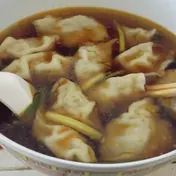
Taiwanese soup dumplings ★ 4.2
Pleated xiao long bao filled with seasoned pork and a hot broth that bursts when you bite in. A signature of Squirrel Hill's Taiwanese kitchens, made fresh to order behind glass.
Where to try it: Everyday Noodles, The Parlor Dim Sum
Price: $10-15
Squirrel Hill's growing Taiwanese and Chinese community brought soup dumplings to Pittsburgh in force in the 2010s. Everyday Noodles on Forbes Avenue put a glass-walled dumpling team out front, pleating xiao long bao to order, and the dish became a Squirrel Hill draw. It sits alongside hand-pulled noodles and beef rolls as part of the neighbourhood's East Asian food identity.
Watch out for: Gluten
-
The Pittsburgh ice ball ★ 4.0
A mound of finely shaved ice doused in fruit syrup, served in a paper cup. A summer-only North Side tradition from a single cart that has run since 1934.
Where to try it: Gus and Yiayia's Ice Balls
Price: $2-5
Gus Kalaris's family has scraped and sold ice balls from a cart at Allegheny Commons on the North Side since 1934, making it one of Pittsburgh's oldest continuously-run food stands. The ice is shaved fine and soaked in homemade fruit syrups, served cheap from a window. The cart is summer-only and cash-only; in 2025 the city gave it a ceremonial street sign honouring the tradition.
-
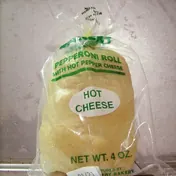
The pepperoni roll ★ 4.1
Soft Italian bread baked around whole-stick or sliced pepperoni and provolone, eaten warm from the bakery counter. A Strip District grab-and-go staple of Appalachian-Italian origin.
Where to try it: Jimmy & Nino Sunseri Co., Mancini's Bread Company
Price: $4-12
The pepperoni roll spread from the West Virginia coalfields into western Pennsylvania's Italian bakeries, where pepperoni and cheese are baked inside a soft bread roll. In Pittsburgh's Strip District, Jimmy & Nino Sunseri became famous for an oversized two-pound version stuffed with house pepperoni, mozzarella and provolone. The rolls are sold warm from bakery counters as a portable lunch with deep Appalachian-Italian roots.
Watch out for: Gluten, Dairy
-
The Pittsburgh cookie table ★ 4.0
A wedding tradition where families bake hundreds of dozens of cookies for a vast communal dessert spread. Less a single dish than a Pittsburgh ritual rooted in Italian and Eastern European baking.
Where to try it: Prantl's Bakery, Gaby et Jules, Enrico Biscotti Company
Price: Varies by event
The cookie table is a uniquely Pittsburgh wedding custom with Italian and Eastern European roots, in which extended families bake dozens upon dozens of cookies (pizzelle, lady locks, thumbprints, kolache) for a sprawling reception spread that often rivals the cake. The tradition is strongest in the Mon Valley mill towns and is documented as a regional signature; bakeries like Prantl's and Gaby et Jules supply cookies when families want backup.
Watch out for: Gluten, Dairy, Egg, Nuts
Signature Dishes in Pittsburgh, FAQ
What food is Pittsburgh known for?
Pittsburgh's signature dishes include The Primanti sandwich, Pierogi, The Pittsburgh salad, Pittsburgh-style square pizza, The Pittsburgh fish sandwich. See our signature dishes chapter for where to eat each.