How Memphis came to eat the way it does: the people, migrations and accidents that shaped the plate.
Key eras
1819 to 1900, the river city's first dining
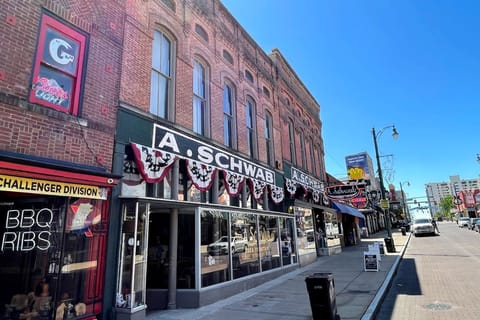
Memphis emerged as a Mississippi River cotton port in 1819. Steamboats brought oysters, French cooks and saloon trade to Front Street. By the 1880s, the city had Greek immigrant cafes, German butchers and the first concentration of Black-owned restaurants along Beale Street, the rise of the city's restaurant culture.
1900 to 1950, Beale Street and the rise of BBQ
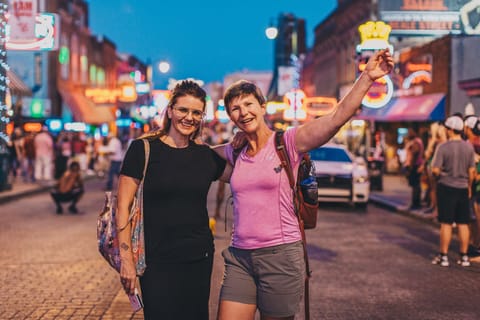
Beale Street became the centre of Black entertainment and dining in the South in the early 1900s. The first commercial BBQ pits opened in alleys near Beale around 1922. Charlie Vergos opened the Rendezvous in a basement off Second Street in 1948, codifying the dry-rub Memphis-style rib that would define the city.
1946 to 1980, soul food, the civil rights table
The Four Way Restaurant opened on Mississippi Boulevard in 1946 and fed Martin Luther King Jr. during the civil rights movement. Memphis soul food, the meat-and-three lunch counter, hot tamales sold from carts and the BBQ shacks on Lamar (Payne's opened 1972) all grew through the same decades.
1980 to present, modern Memphis and the new wave
The Bar-B-Q Shop opened in 1987 and invented BBQ spaghetti. Andy Ticer and Michael Hudman opened Andrew Michael Italian Kitchen in 2008, then Hog and Hominy and Catherine and Mary's, raising the city's restaurant ambition. New rooms in Cooper-Young, Crosstown and South Main mark the modern Memphis era.
Immigrant influences
- African-American: Black cooks codified Memphis BBQ, soul food and hot tamales. The Black-owned BBQ shacks of Lamar Avenue and South Memphis still set the city's standard.
- Greek: Greek immigrants opened cafes downtown in the early 20th century, including the Arcade in 1919 by Speros Zepatos. Annual Greek Festival since 1958.
- Italian: Italian Americans brought red-sauce trattorias like Coletta's (1923) and Pete and Sam's (1948), and a tradition that runs through Hog and Hominy today.
- Mexican: Memphis's Mexican community has grown since the 1990s. Las Tortugas in Germantown and Maciel's downtown on South Main anchor a serious taqueria scene across the city.
- Vietnamese: Vietnamese refugees arrived in Memphis in the 1970s and 1980s, opening pho shops and Asian-fusion rooms like Mosa Asian Bistro in East Memphis.
- Lebanese and Syrian: Middle Eastern grocers and bakeries opened on Cooper and Madison from the 1970s, supplying halal meat, pita and the city's first kebab counters.
Signature innovations
- Memphis-style dry-rub ribs, codified at Rendezvous in 1948.
- BBQ spaghetti, invented at the Bar-B-Q Shop in 1987.
- BBQ pizza, attributed to Coletta's around 1954 and popularised by Elvis.
- BBQ nachos, a city-wide stadium snack that put Central BBQ on the map.
- Delta hot tamales, the corn-husk-tied beef tradition crossing from Mississippi.
- Smoked Cornish hen, Raymond Robinson's signature plate at Cozy Corner since 1977.
- Memphis dry-rub bologna sandwich, smoked thick and sliced thick.
- The World Championship Barbecue Cooking Contest, founded 1978, the largest BBQ contest globally.
- Soul food at the Four Way as a civil-rights-era gathering point in Memphis.
- The fried peanut butter and banana sandwich, Elvis's order at the Arcade.
- Memphis Greek Festival, the South's longest-running Greek food festival since 1958.
- Hattie B's Hot Chicken Cooper-Young outpost in Memphis, bringing Nashville hot chicken to the city.
- Cxffeeblack, a Memphis-based Black-led specialty coffee company sourcing direct from Ethiopian producers.
- Slim and Husky's Black-owned vegan-friendly pizza concept that travelled from Nashville.
- Pyro's Fire Fresh Pizza, Memphis's wood-fired fast-casual concept that grew nationally.
- Belltower Coffee's Highland flagship roastery and cafe, anchoring Memphis's modern specialty coffee scene.
Book food experiences in Memphis
Guided tour · 3.5 hours
VIP behind the scenes access to local craft breweries, up to 12 beer samples, a fresh baked snack, and round trip transportation. Led by a Beer Guide who will educate ...
Guided tour · 1 hour
Explore "America's Most Iconic Street" on a one-hour guided walking tour. Learn about the colorful characters and stories that have made Beale Street the "Home of the Blues."
Multi-day trip · 6 days
Picture it, a journey from Nashville to Memphis to New Orleans, recording tracks in iconic studios, walking in Elvis’ footsteps and diving into the food, music and cul...
See all 30 bookable experiences in Memphis