

The plates that define Honolulu: what they are, where they came from, and where to eat the canonical version.
Signature dishes
-
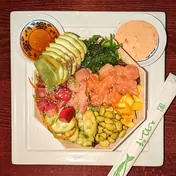
Poke ★ 4.9
The Hawaiian cubed-fish dish: sashimi-grade ahi tossed with shoyu, sweet onion, sesame oil, limu seaweed and inamona kukui-nut salt. Eaten by the pound at counters and over two scoops of rice as a bowl.
Where to try it: Ono Seafood, Maguro Brothers Hawaii Chinatown, Off the Hook Poke Market, Foodland Farms Ala Moana
Price: $10 to $18
Poke (Hawaiian for 'to cut crosswise') was pre-contact reef-fish scraps tossed with limu salt at the shoreline. The dish came onto the modern Hawaiian table when Foodland and Tamashiro Market in Kalihi began selling prepared shoyu-ahi poke from the 1970s. Maguro Brothers Hawaii in Chinatown's Kekaulike Market formalized the sashimi-grade fresh-from-the-Honolulu-Fish-Auction version in 2014. Foodland Farms Ala Moana now runs a 20-variation poke bar; Ono Seafood in Kapahulu sells the most-affordable two-scoop bowl in the city.
Watch out for: Fish, Soy
-
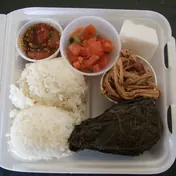
Plate lunch ★ 4.9
Two scoops of rice, one scoop of macaroni salad and a protein (kalbi, chicken katsu, kalua pig, mahi mahi). The canonical Hawaiian lunch born in the plantation cane fields and now sold from every drive-in window.
Where to try it: Rainbow Drive-In, Zippy's Kapahulu, Helena's Hawaiian Food, Highway Inn Kakaako
Price: $10 to $15
The plate lunch came out of the 1880s sugar plantation lunch bento; workers shared rice and protein at the field-edge break. The post-war 1950s and 1960s saw stationary drive-ins formalize it: Rainbow Drive-In in Kapahulu opened 1961 with the still-canonical mix plate. The Higa brothers built Zippy's as a 24-hour version starting 1966. L&L Hawaiian Barbecue exported the format to the mainland from 1976. The basic grammar (two scoops rice, mac salad, protein) hasn't changed in 80 years.
Watch out for: Gluten, Soy, Egg
-
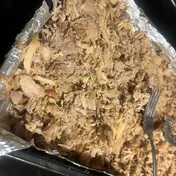
Kalua pig ★ 4.9
Pork shoulder smoke-roasted underground in a stone-lined imu, wrapped in ti and banana leaves. Pulled apart in long sweet strands; smoky, salty, the canonical Hawaiian luau centerpiece.
Where to try it: Helena's Hawaiian Food, Highway Inn Kakaako
Price: $13 to $22
Kalua means 'to bake in an underground oven' in Hawaiian. The traditional imu method dates to pre-contact Polynesia: dig a pit, line with kiawe wood embers and lava stones, wrap a whole hog in ti and banana leaves, cover with damp burlap and earth, leave 8 to 12 hours. The dish was the centerpiece of luaus before and after Western contact. The Toguchi family's Highway Inn has served kalua pork plates since the 1947 Waipahu opening, now with a 2013 Kakaako outpost; Helena's Hawaiian Food on North School Street has cooked the imu since 1946.
Book food experiences in Honolulu


-
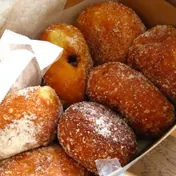
Malasada ★ 4.9
Portuguese-style yeasted dough fried golden and rolled in sugar. Dense, eggy, slightly crisped at the edges. Hawaii's canonical doughnut, eaten warm from the fryer at counters that have lined up since 1952.
Where to try it: Leonard's Bakery, Leonard's Malasadamobile
Price: $2 to $3 each
Madeiran Portuguese plantation workers brought the malasada to Hawaii in the 1880s. They were originally a Shrove Tuesday tradition to use up sugar and lard before Lent. Leonard's Bakery in Kapahulu, opened 1952 by Frank Leonard Rego Sr., made them year-round and is now the canonical Hawaii malasada. The Leonard's Malasadamobile lunch trucks now park across Hawaii Kai and the East Side. Modern fillings include haupia coconut cream, lilikoi passionfruit, dobash chocolate and macadamia custard.
Watch out for: Wheat, Egg, Dairy
-
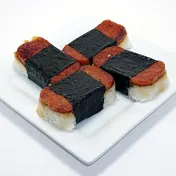
Spam musubi ★ 4.7
A slice of pan-fried Spam glazed in shoyu and sugar, layered onto a brick of Koshihikari rice, wrapped in nori. The canonical Hawaiian handheld breakfast, born of WWII rations and never left.
Where to try it: Musubi Cafe Iyasume
Price: $3 to $5
Spam came to Hawaii during World War II when fresh meat shipments stopped; the canned protein was rationed across the islands. Japanese-Hawaiian cooks layered a slice of pan-fried Spam onto rice, wrapped it in nori, and a portable snack was born. Musubi Cafe Iyasume in Waikiki opened in 2000 to formalize the artisanal version with handmade Koshihikari rice and a dozen creative combinations. Every 7-Eleven Hawaii now stocks Spam musubi at the register; locals eat them for breakfast, the beach, and after the bars close.
Watch out for: Soy, Wheat, Pork
-
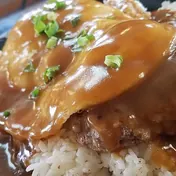
Loco moco ★ 4.8
Two scoops of rice topped with a hamburger patty, a sunny-side egg and brown gravy. Hilo invented it in 1949 at Lincoln Grill but Honolulu eats it everywhere now from Rainbow Drive-In to Zippy's at 03:00.
Where to try it: Rainbow Drive-In, Zippy's Kapahulu
Price: $9 to $14
The loco moco came out of Hilo's Lincoln Grill in 1949 when a gang of teenagers called the Lincoln Wreckers asked owner Nancy Inouye for a cheap, fast lunch. She dropped rice in a saimin bowl, topped with a hamburger patty, a fried egg and brown gravy. The first boy nicknamed Loco gave the dish its name. Cafe 100 in Hilo, opened in 1946 by 442nd Infantry veteran Richard Miyashiro, now sells 29 variations. Rainbow Drive-In in Kapahulu Honolulu has slung the canonical version since 1961.
Watch out for: Gluten, Egg, Dairy
-
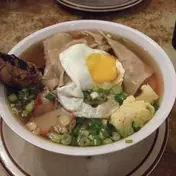
Saimin ★ 4.7
A Hawaii-specific noodle soup in a clear shrimp-and-pork dashi, topped with char siu, fish cake, scrambled egg and green onion. Lighter than ramen, sweeter than udon, deeply local.
Where to try it: Palace Saimin, Zippy's Kapahulu
Price: $6 to $11
Saimin emerged in the plantation camps in the early 1900s as a fusion of Japanese udon, Chinese mein and Filipino pancit. The broth was historically clear and built from dried shrimp, konbu and a touch of ginger. Palace Saimin in Kalihi opened 1946 with thicker custom Sun Noodle and the dashi recipe unchanged today. Zippy's Kapahulu carries the most popular chain version; saimin is sold at Hawaiian McDonald's, the only US state where you can buy it as a fast-food side.
Watch out for: Gluten, Shellfish, Egg, Soy
-
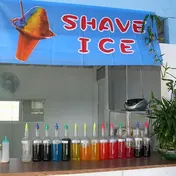
Shave ice ★ 4.7
Fine-grain ice scraped from a block, drowned in housemade syrups and served over a scoop of vanilla ice cream with sweet azuki beans. Hawaii's canonical hot-day dessert, perfected on the North Shore.
Where to try it: Matsumoto Shave Ice, Waiola Shave Ice
Price: $5 to $9
Shave ice (kakigori in Japanese) came to Hawaii with Japanese plantation workers in the 1880s. Matsumoto Shave Ice in Haleiwa opened 1951 and became the canonical North Shore version with custom-cut ice and house fruit syrups; the family still runs it 75 years later. Waiola Shave Ice in Kapahulu Honolulu opened in 1940 with even finer ice grain and a deeper roster of syrups. The signature local order: rainbow shave ice over vanilla ice cream with azuki beans and condensed-milk drizzle.
Watch out for: Dairy
-
Kalbi short ribs ★ 4.6
Korean-style flanken-cut beef short ribs marinated in a sweet shoyu glaze with sesame and garlic, char-grilled. Standard plate-lunch entree at every Hawaiian drive-in since the 1960s.
Where to try it: Rainbow Drive-In, Side Street Inn Ala Moana
Price: $14 to $20
Korean immigrants arrived in Hawaii from 1903 to work the cane fields. They brought kalbi (galbi in Korean Romanization), the cross-cut beef short ribs marinated in soy, sugar and sesame and grilled over open coals. By the 1960s the dish was a standard plate-lunch entree at Honolulu and Pearl City drive-ins. Side Street Inn and Rainbow Drive-In both cook canonical versions; the Hawaii style is sweeter than the South Korean original, reflecting Hawaiian palate preferences.
Watch out for: Soy, Wheat, Sesame
-
North Shore garlic shrimp ★ 4.7
Twelve plump shrimp sauteed in garlic butter with chunks of caramelized garlic, served over two scoops of rice. The canonical North Shore lunch wagon plate.
Where to try it: Giovanni's Shrimp Truck, Romy's Kahuku Prawns, Jenny's Shrimp
Price: $14 to $20
Garlic shrimp came out of the North Shore aquaculture boom in the 1990s. Kahuku's shrimp ponds (still operating today) gave nearby trucks the ingredient. Giovanni's Shrimp Truck started selling shrimp scampi from a mobile truck in 1993 and parked a permanent location in Kahuku in 1995. Romy's Kahuku Prawns runs its own pond next door to the lunch wagon. Jenny's Shrimp took over the Macky's spot in 2018 with the same butter-garlic recipe. The format: 12 shrimp, garlic butter, two scoops rice.
Watch out for: Shellfish, Dairy, Wheat
-
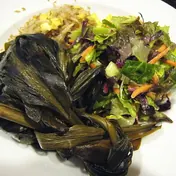
Laulau ★ 4.6
Pork (sometimes butterfish or chicken) wrapped in taro leaves and ti leaves, steamed for hours until the leaves are tender and the meat falls apart. Earthy, salty, the canonical luau small plate.
Where to try it: Helena's Hawaiian Food, Highway Inn Kakaako
Price: $10 to $16
Laulau is pre-contact Hawaiian. The traditional dish wrapped pork, salt, and sometimes butterfish in luau (kalo) leaves, then in ti leaves, and steamed it in the imu underground oven alongside the kalua pig. The luau leaves cook into a spinach-like wrap and the wrap absorbs the smoke. Highway Inn Kakaako and Helena's Hawaiian Food both run canonical laulau plates with butterfish and pork. Modern home cooks steam them in a stove-top pot rather than the imu; the result is similar though missing the smoke notes.
Watch out for: Fish
-
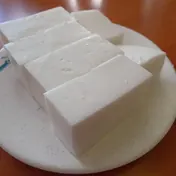
Haupia ★ 4.6
Coconut milk thickened with starch to a firm pudding that cuts into squares. White, glossy, lightly sweet. The canonical Hawaiian dessert and the haupia in Ted's Bakery chocolate haupia cream pie.
Where to try it: Ted's Bakery North Shore Plate Counter, Liliha Bakery
Price: $3 to $8
Haupia is pre-contact Hawaiian. Original versions used arrowroot (pia) as the starch; modern recipes use cornstarch. The dish was historically a luau closer, served in 5cm squares cut from a pan and chilled. Ted's Bakery on Oahu's North Shore turned haupia into a national breakthrough with the chocolate haupia cream pie, sold by the slice or whole since the early 1990s. Lonohana Estate Chocolate now layers Honolulu-grown dark chocolate over haupia in tasting flights.
Signature Dishes in Honolulu, FAQ
What food is Honolulu known for?
Honolulu's signature dishes include Poke, Plate lunch, Kalua pig, Malasada, Spam musubi. See our signature dishes chapter for where to eat each.