
The plates that define Jeju: what they are, where they came from, and where to eat the canonical version.
Signature dishes
-
Jeju black pork (heukdwaeji) ★ 4.8
Thick cuts of Jeju black pork, sold by the geun of 600 grams, grilled over charcoal or briquettes and dipped in meljeot, the island's salted anchovy sauce.
Where to try it: Donsadon Main Store, Dombedon, Heukdonga Jeju, Heukdonhyang, Heukdwaejiguijip Hayeong, Nandreubadang, Yeolliji Garden, Haeoreum Sikdang, Noknamu
Pork is Jeju's signature meat and was long served at weddings and funerals, the Korea Times notes. The Jeju Black is a small native breed with black skin, erect ears and a narrow snout; until the late twentieth century the pigs lived in pig toilets under outhouses, a practice that gave way to conventional feeding from the 1960s. Chilseong Road in old Jeju City, Black Pork Street, is lined with restaurants grilling it, and the Jeju Tourism Organization recommends meljeot to cut the oiliness.
Watch out for: Fish (meljeot anchovy sauce)
-
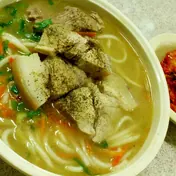
Gogi-guksu (pork noodle soup) ★ 4.7
Wheat noodles in a clean pork-bone broth topped with sliced pork, often eaten with dombe-gogi, boiled pork served on a wooden cutting board.
Where to try it: Ollae Guksu, Samdae Guksuhoegwan, Eondeokjip Guksu, Jangsumul Sikdang
Wheat noodles were barely eaten on Jeju before the Japanese colonial period, while pork broths were older; US wheat aid in the occupation and war years may have spread the noodles, and the dish grew in the decades after. In 1995 only one restaurant served it; demand in the 1997 Asian financial crisis brought other noodle shops to the same street, now the Noodle Culture Street near Shinsan Park, where Guksu Madang, open since 2000, was the first designated restaurant.
Watch out for: Wheat (gluten)
-
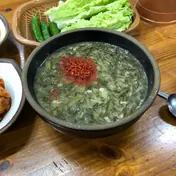
Momguk (gulfweed and pork soup) ★ 4.3
Pork broth simmered with mom, the Jeju word for gulfweed, a brown seaweed, sometimes with hand-torn dough; a traditional soup of the island's local restaurants.
Where to try it: Ujin Haejangguk
Momguk joins two staples of the island. Pork is central to Jeju's food culture and was long served at family occasions such as weddings and funerals, and sargassum is among the seaweeds the haenyeo divers harvest. Visit Jeju calls momguk a traditional Jeju soup of gulfweed simmered in pork broth. In Jeju City, Guksu Madang lists it beside dombe-gogi on the Noodle Culture Street, and in Pyoseon, Myeongmun Gasiri Restaurant serves it with sundae and boiled pork to a mostly local crowd.
Watch out for: Wheat (gluten, if dough is added)
Book food experiences in Jeju
-
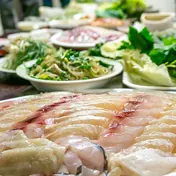
Jari mulhoe (cold damselfish soup) ★ 4.6
Sliced raw jaridom, a small damselfish, with vegetables and chilli in iced water, seasoned in Jeju with doenjang and vinegar; the island's summer bowl.
Price: 10,000 won a bowl at the 2026 Bomok Jaridom Festival
The Jeju Tourism Organization names mulhoe the island's favourite summer delicacy, made by pouring water and spices over fresh raw fish, with jari mulhoe among its kinds; rice goes into the leftover soup. Jeju seasons it with doenjang rather than gochujang. Jaridom is in season from April until Chuseok, and Bomok in Seogwipo holds a Jaridom Festival each spring; at Bomok Haenyeo's House, Visit Jeju says, jari mulhoe makes up 99% of orders.
Watch out for: Fish, Soy (doenjang)
-
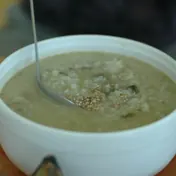
Jeonbokjuk (abalone porridge) ★ 4.6
Rice porridge cooked with abalone, a Jeju specialty from the waters the haenyeo dive; the porridge at haenyeo houses comes from the divers' own catch.
Where to try it: Myeongjin Jeonbok, Samdajeong, Eouneul, Jeju Ttukbaegi
Jeonbokjuk is made with abalone and white rice and is a local specialty of Jeju, where abalone are commonly harvested; porridges of fish, seafood and seaweed are the representative main dishes of the island's cuisine. Abalone was often presented as a gift to the king, and an 18th-century record shows taxes of dried abalone that forced women to dive in cold water. The Jeju Tourism Organization calls abalone the wild ginseng of the sea.
Watch out for: Shellfish (abalone)
-
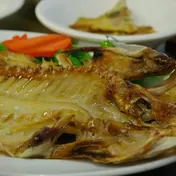
Okdom-gui (grilled red tilefish) ★ 4.4
Grilled okdom, the pinkish-red tilefish Jeju is known for, served whole with rice at local restaurants; the same fish also goes into okdomjuk, a Jeju porridge.
Where to try it: Negeori Sikdang, Jangsuaeseom Restaurant, Okdom Village
Okdom, Branchiostegus japonicus, is a pinkish-red tilefish that lives by burrows in sand and mud on the sea floor. Wikipedia counts the island's special tile fish among the local products tourists seek, and okdomjuk, porridge of red tilefish, among Jeju's porridges. Grilled okdom was one of the three Jeju treasures at Sambo Sikdang, beside jari mulhoe and seafood ttukbaegi, and Visit Jeju lists okdom among the specialties of Seogwipo's Maeil Olle Market.
Watch out for: Fish
-
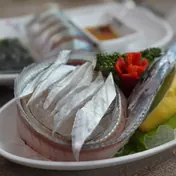
Galchi (silver hairtail) ★ 4.5
Jeju's silver hairtail, eaten raw as galchi-hoe, braised in soy or chilli as galchi-jorim, grilled whole, or in galchiguk, a clear soup with cabbage and pumpkin.
Where to try it: Negeori Sikdang, Seongsan Haeoreum Sikdang, Haechon, Jangsuaeseom Restaurant, Cheongun Sikdang, Jejumihyang, Hwanggeum Eojang, Jeju Ttukbaegi
The Jeju Tourism Organization says the first choice for Jeju's galchi is to eat it fresh as hoe, and that boiled galchi in soy sauce is another delight. In Seogwipo, galchiguk is a clear salty soup with cabbage and pumpkin, and the 1.2 km Chilsimni Food Specialty Street is lined with sashimi and silver hairtail restaurants. Visit Jeju lists galchi among the specialties of the Maeil Olle Market, and in Moseulpo's market Hanggu Sikdang cooks galchi-jorim, braised hairtail.
Watch out for: Fish, Soy
-
Haemul ttukbaegi (seafood hotpot) ★ 4.5
A doenjang stew of obunjagi, abalone, shrimp and other seafood boiled in an earthenware pot; the Jeju Tourism Organization calls the obunjagi version the island's best.
Where to try it: Jeju Ttukbaegi, Cheongun Sikdang, Sun Okine Myungga, Seongsan Haeoreum Sikdang
Obunjagi, a small mollusc related to abalone, clings to rocks about 20 metres down, and around 70 percent of Korea's obunjagi comes from Jeju. The Jeju Tourism Organization names obunjagi seafood soup the best seafood delight on the island and says it doubles the taste of a doenjang soup. Seafood ttukbaegi was one of Sambo Sikdang's three Jeju dishes, and locals rated its version with abalone and shrimp the best of the three; in Hallim, Visit Jeju recommends ttukbaegi with hand-picked blue abalone.
Watch out for: Shellfish (molluscs, shrimp), Soy (doenjang)
-
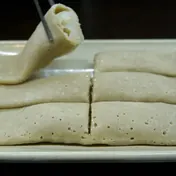
Bingtteok (buckwheat radish roll) ★ 4.3
A thin buckwheat crepe fried flat and rolled around seasoned radish, carrot and green onion; a dish of the island's dry-field grains, sold in Jeju City's markets.
Paddy farming was only ever small on Jeju, and buckwheat was one of the cereals the island grew instead of rice. The Jeju Tourism Organization says bingtteok is named for its rolled shape: fine buckwheat flour is made into a dough, fried thin and round, then filled with radish, carrots, green onions, salt, sesame and sesame oil and rolled. In Boseong Market, Visit Jeju says, Jeju Tosok makes it with Jeju-grown buckwheat.
Watch out for: Buckwheat, Sesame
-

Omegi-tteok (millet rice cake) ★ 4.2
Ring-shaped millet cakes rolled in red bean; modern ones blend glutinous rice and mugwort and are coated in red bean, peanuts or nuts, a favourite take-home.
The traditional cake was a by-product of brewing omegi sul from chajo millet, a grain Jeju used in place of rice: some of the boiled dough was rolled in red bean for children before the rest was fermented. Since the early 2010s its tourist popularity has changed it; most shop cakes now use glutinous rice with mugwort and sugar instead of chajo. Individually wrapped and shipped frozen, it is one of the most popular souvenirs of Jeju.
Watch out for: Peanuts or tree nuts (some coatings)
Signature Dishes in Jeju, FAQ
What food is Jeju known for?
Jeju's signature dishes include Jeju black pork (heukdwaeji), Gogi-guksu (pork noodle soup), Momguk (gulfweed and pork soup), Jari mulhoe (cold damselfish soup), Jeonbokjuk (abalone porridge). See our signature dishes chapter for where to eat each.