
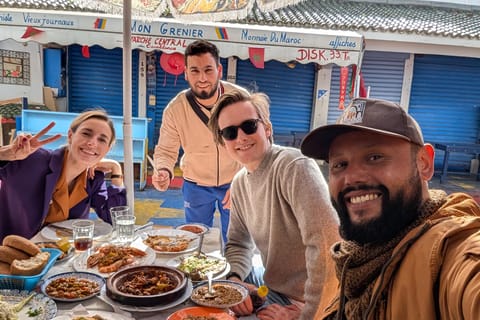
The plates that define Casablanca: what they are, where they came from, and where to eat the canonical version.
Signature dishes
-
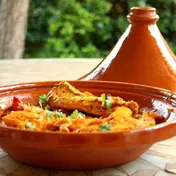
Tajine
A tajine is a stew cooked in a conical earthenware pot, typically combining spiced meat, poultry or fish with vegetables or fruit.
Where to try it: Dar Dada, La Grande Table Marocaine
The cone-shaped lid of the pot traps steam and returns the condensed liquid to the stew, so very little water is needed to cook the meat and vegetables.
-
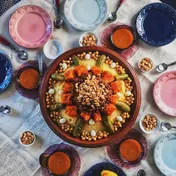
Couscous
Couscous is a staple of Morocco, traditionally served on Fridays after midday prayers, and is made from wheat semolina.
Where to try it: Dar Dada
Couscous originated among the Berbers of Algeria and Morocco between the end of the 11th century Zirid dynasty and the rise of the 13th century Almohad Caliphate, according to food writer Charles Perry.
Watch out for: Gluten (wheat semolina)
-
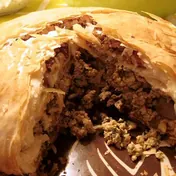
Pastilla
Pastilla, also spelled bastilla, is a pie of warqa dough, similar to filo, filled with chicken, pigeon or seafood. La Grande Table Marocaine lists a royal pastilla with pigeon and almonds on its menu.
Where to try it: La Grande Table Marocaine
Recipes with a strong resemblance to the stuffing appear in 13th century Andalusi cookbooks. Some historians say the dish reached northern Morocco through Ottoman Algeria after 1830.
Watch out for: Gluten (warqa), Egg, Tree nuts (almonds)
Book food experiences in Casablanca


-
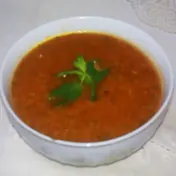
Harira
Harira is a heavy Moroccan soup of tomatoes, lentils, chickpeas, fava beans and onions, thickened with flour and water, often served with hard-boiled eggs and dates.
Where to try it: La Grande Table Marocaine
Its origin is disputed. It is mostly served during Ramadan, though it can be made throughout the year, and in Morocco it is eaten in winter to warm up.
Watch out for: Gluten (thickener), Egg (as served)
-
Cornes de gazelle (gazelle horns)
Cornes de gazelle, or gazelle horns, are a Moroccan pastry, and Pâtisserie Bennis Habous in Casablanca is famed for its pastries and its gazelle horns.
Wikivoyage's Casablanca guide points to the famous gazelle horns at Pâtisserie Bennis Habous, at 2 Rue Fkih El Gabbas.
Watch out for: Tree nuts (almonds), Gluten
-
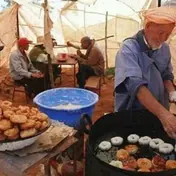
Sfenj
Sfenj is a Maghrebi doughnut, a light spongy ring of dough fried in oil, eaten plain, sprinkled with sugar or soaked in honey, usually for breakfast or with tea in the late afternoon.
Sfenj originated in Al-Andalus. It was well known to the Marinid dynasty, which ruled Morocco from 1270 to 1465, and was only sweetened with sugar from the 18th century.
Watch out for: Gluten
-

Msemen
Msemen, also called rghaif, is a folded square flatbread cooked on a griddle and served with honey or mint tea. It can be stuffed with meat or with onions and tomatoes.
Msemen is a traditional flatbread originally from the Maghreb, and the small msemmen pancakes are of Berber origin.
Watch out for: Gluten
-
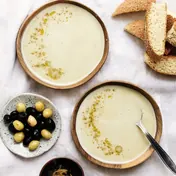
Bissara
Bissara is a thick soup of split fava beans, onions and garlic, drizzled with olive oil and sprinkled with cumin, eaten with bread, especially at breakfast.
Bissara is eaten in the colder months of the year.
-

Moroccan mint tea
Mint tea is gunpowder green tea with spearmint leaves and sugar. Typically at least three glasses are served, and the tea is drunk throughout the day as a social activity.
Gunpowder tea was brought into North Africa by the British in the 18th and 19th centuries. In Casablanca the British began importing it in the 19th century in return for wool.
-
Fresh seafood at the Central Market
Under the octagonal cupola of the Marché Central the daily catch is displayed around a circular walkway, with Atlantic fish, shark meat and oysters from Dakhla shucked on the spot.
Where to try it: Grillade Poissons Chez Redouane
The Central Market was designed by Pierre Bousquet and completed in 1917 for the new European city.
Watch out for: Fish, Shellfish
Signature Dishes in Casablanca, FAQ
What food is Casablanca known for?
Casablanca's signature dishes include Tajine, Couscous, Pastilla, Harira, Cornes de gazelle (gazelle horns). See our signature dishes chapter for where to eat each.