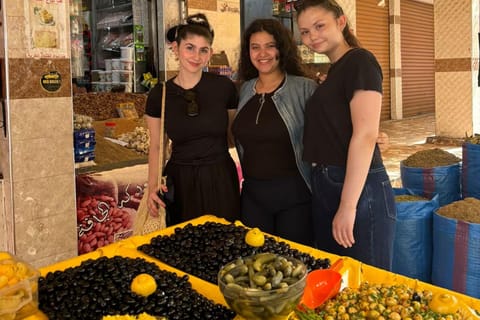
How Casablanca came to eat the way it does: the people, migrations and accidents that shaped the plate.
Key eras
-
Anfa and the Atlantic port (to the 18th century)
The area that is today Casablanca was founded and settled by Berbers by the seventh century BC and used as a port by the Phoenicians, then the Romans. Before the 15th century the settlement was called Anfa, and Portuguese mariners later named it Casa Branca, White House.
-
Wool, shipping and tea (19th century)
In the 19th century the area became a major supplier of wool to Britain and shipping traffic grew. In return the British began importing gunpowder tea, used in Morocco's national drink, mint tea. The population grew from around 5,000 in the 1860s to around 10,000 by the late 1880s.
-
French Protectorate and the new city (1912 to 1956)
French control was formalized in March 1912, and Henri Prost designed a European ville nouvelle outside the walls of the medina. The Central Market was completed in 1917 as the most important marketplace of that new city, and the Habous quarter was planned from 1916 as a new development for Muslims.
-
Largest city of Morocco (today)
Casablanca is the largest city in Morocco and the country's economic and business centre, with about 3.22 million people in the urban area. Its port is one of the largest artificial ports in Africa.
Immigrant influences
- Andalusi and Ottoman Algerian
- Pastilla is a specialty of Morocco whose stuffing resembles recipes in 13th century Andalusi cookbooks. Some historians hold that the dish entered northern Morocco through Ottoman Algeria in the 18th and 19th centuries.
- British traders
- The British began importing gunpowder tea into Morocco in the 19th century, which became the base of mint tea, the national drink.
- French
- Moroccan cuisine is a mix of Arab, Berber, Andalusi, Mediterranean and African cuisines, with minimal European influences, French and Spanish. Casablanca grew as a French colonial port city after 1912.
- Moroccan Jewish community
- Haïm Bendahan, a Moroccan Jewish cereal trader and financier, owned the land of the Habous quarter and gifted it to the sultan, and it is now administered by the Ministry of Hubous and Islamic Affairs.
Signature innovations
- Seksu bedawi, a Casablanca couscous with cabbage, carrots, courgettes, onions, potatoes, pumpkin and squashTaste it todayCouscous
- Mqila, an omelette with fresh shrimp and Laughing Cow cheese, served at hole-in-the-wall eateries near Casa Port train station
Book food experiences in Casablanca