

History
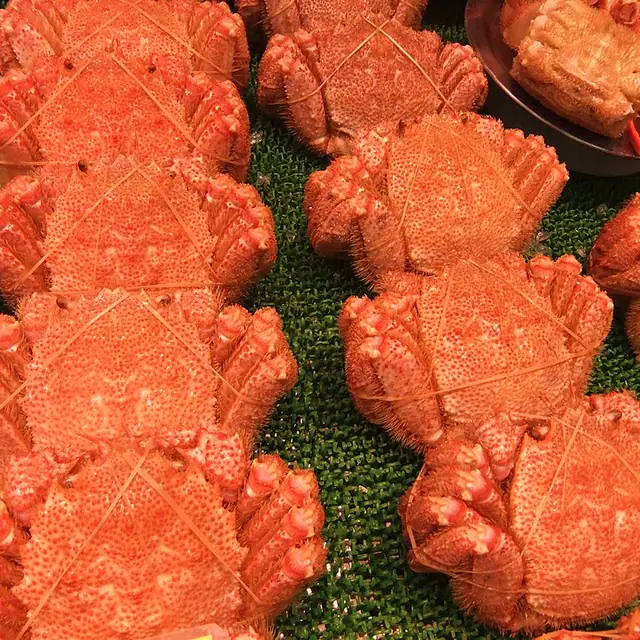
Hokkaido hairy crab fisheries date to the late nineteenth century, but the dish entered Sapporo restaurants seriously in the 1960s as the city's crab houses grew around the Susukino entertainment district. Kani Honke opened its Honten in 1964; the seven-storey building became a tourist landmark in the 1970s. Today, kegani peaks September through November, with the densest tomalley in the autumn months; Kani Honke and Kani Shogun lead the Susukino crab kaiseki rooms.
Book a food experience
Tours, tastings and classes that match this page, bookable on GetYourGuide.
Common allergens: Shellfish
Make it at home
Ingredients
- 1 whole live hairy crab (kegani), 500-700g
- Sea salt (3 percent by water weight)
- 1 small lemon, halved
- Hokkaido sake to pour over (optional)
Method
- Bring a large pot of water to a rolling boil. Add salt at 3 percent by weight.
- Plunge the crab head-first into the boiling water; cook 15 minutes for a 500-600g crab, 18 minutes for 700g.
- Remove crab with tongs and rest belly-up for 5 minutes to redistribute juices.
- Flip the crab on its back; pry off the apron (the triangular flap on the belly).
- Lift the top shell off carefully; the orange tomalley (kani-miso) is inside.
- Use a small knife to break the body into halves and crack each leg with a crab cracker.
- Serve the crab on a plate alongside the tomalley in the shell, with lemon and a small drizzle of Hokkaido sake.
Tip from the editors. Don't overcook; hairy crab flesh dries out fast. The tomalley is the prize; spoon it onto small rice scoops.
Where to eat kegani (hokkaido hairy crab)
Kegani (Hokkaido Hairy Crab) in Sapporo
Sapporo Kani Honke Honten ★ 4.1
The city's reference crab restaurant since 1964, seven floors south of Sapporo Station. Course menus across king, snow and hairy crab, tax-free service.
OrderKegani course: hairy crab steamed whole, plus crab sashimi and a chawanmushi.
Book1 week ahead
TipSusukino branch closed 2022; Honten is the principal Sapporo address now.
Hokkaido Kani Shogun ★ 4.1
Susukino's other heavyweight crab house. Six floors, course menus across all three Hokkaido crabs plus a third-floor sushi counter and private tatami rooms.
OrderSankan three-crab course: one whole king-crab leg, hairy-crab sashimi and snow-crab nabe.
Book1 week ahead
TipTax-free service for international visitors; window tables on the fifth floor face Susukino.
Nijo Ichiba Ohiso ★ 4.6
A Nijo Market sushi-and-donburi counter. The cheapest kaisendon (mixed seafood-over-rice) bowls land 1,800 yen; uni-ikura-crab triple bowls 2,800.
TryKaisendon
TipWalk in early; the queue stretches by 09:00 in summer Cash is faster than card.
More cities are in research. Want kegani (hokkaido hairy crab) covered somewhere specific? Tell us where you want to eat.