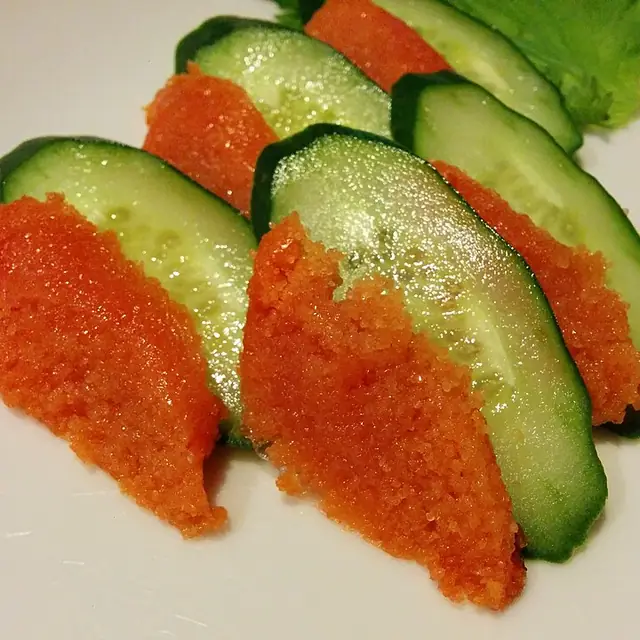
Mentaiko is spicy Alaskan pollock roe, cured with chilli, soy and dashi. Fukuya's 1949 Hakata recipe adapted Korean salted cod roe technique; eaten on rice or stuffed into bread rolls.

Toshio Kawahara opened Fukuya in Hakata in 1949 and adapted the Korean salted cod roe technique (myeongnan-jeot) into the Japanese form: pollock roe cured in chilli, dashi, soy and sake. The product spread through Kyushu in the 1950s and exported across Japan in the 1980s and 1990s. Today Fukuya in Higashi-ku and Yamaya (founded 1974) are the two big factory shops. Mentaiko is eaten on white rice as mentaiko gohan, stuffed into French rolls at Full Full Bakery, or tossed through pasta and Hakata udon. The shape and seasoning carries Korean DNA but the dashi-cure is Japanese.

Where to eat Mentaiko in Fukuoka

3 editor picks for Mentaiko in Fukuoka, ranked by editorial score. All Fukuoka signature dishes · Mentaiko across every city.

Book food experiences in Fukuoka

See all 592 food experiences in Fukuoka

Make it at home

Serves 848 hrIntermediate

Ingredients

  • 400g fresh pollock roe sacs (sometimes labelled tarako)
  • 30g sea salt
  • 30ml mirin
  • 30ml sake
  • 30ml shoyu
  • 5g bonito dashi powder
  • 10g Korean chilli flakes (gochugaru)
  • 5g sugar

Method

  1. Rinse the roe sacs gently in cold water; pat dry without breaking the membranes.
  2. Lay the sacs in a non-reactive tray, sprinkle with the sea salt evenly. Refrigerate 12 hours.
  3. Drain the brine off. Combine mirin, sake, shoyu, dashi, chilli flakes and sugar in a bowl.
  4. Lay the sacs in a clean tray, pour the marinade over so they are half-submerged. Refrigerate 36 hours, turning the sacs once.
  5. Drain, pat dry. Serve sliced and laid on rice, or tossed through pasta, or stuffed into a baguette.

Editor tip. Korean gochugaru is the right chilli. Japanese togarashi will burn the cure instead of seasoning it.

Common allergens: Fish, Soy, Wheat.