What is in season in Budapest. and what to order when the market changes.
Spring
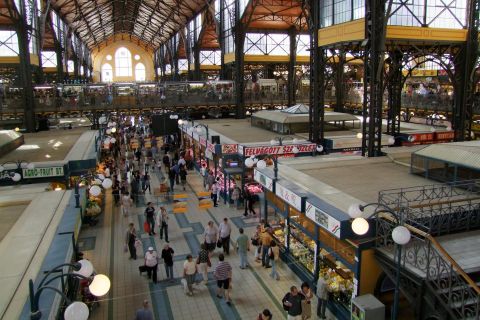
- Spárga (asparagus): Hungarian green and white asparagus arrives at the Central Market on Vámház from late April through May, dressed simply with butter and bread on bistro menus.
- Cseresznye (cherries): Hungarian sour cherries (meggy) start in late May and run through June, going straight into cseresznyés rétes and the chilled hideg meggyleves cherry soup.
- Medvehagyma (wild garlic): Wild garlic blankets the Buda hills in April and May; markets sell it by the bunch and bistros use it in soups, pestos and roast potato dishes.
Summer
- Lecsó: The Hungarian pepper-and-tomato stew comes into its own from July when tomatoes and yellow paprikas hit the markets, eaten on its own or with sausage and rice.
- Görögdinnye (watermelon): Hungarian watermelon shows up at every market in July and August, often by the half from a roadside stall outside the Lehel market hall.
- Sárgabarack (apricot): Hungarian apricots run mid-June through July and go into pálinka, jam, dumplings (barackos gombóc) and the apricot rétes counter.
Autumn
- Szilva (plum): Plum season runs September into October, producing plum dumplings (szilvás gombóc), plum jam (lekvár) for cake fillings and the season's pálinka.
- Sült gesztenye (roasted chestnut): Street vendors start firing chestnut braziers in October and run them through Advent; the warm cone goes for 1,500 to 2,000 Ft.
- Gomba (forest mushrooms): Hungarian forest mushrooms (vargánya, rókagomba) hit the Central Market in late September and run through November, into pörkölt and creamy paprikash sauces.
Winter
- Disznótor (pig slaughter feast): Hungarian villages still mark the winter pig slaughter with sausage-making and pörkölt; the Mangalica Festival in February brings the tradition to Szabadság tér in Budapest.
- Forralt bor (mulled wine): From late November through New Year, the Vorosmarty ter Christmas market and Buda Castle pour mulled wine, often Egri Bikavér with cinnamon, cloves and orange.
- Töltött káposzta (stuffed cabbage): Cabbage stuffed with pork and rice in a paprika sauce is the Christmas Eve dish in most Hungarian households, eaten through January with sour cream and rye.
Seasonal: tours, tastings and classes in Budapest
Day trip · 6 hours
Join This Brand-New 2026 Premium Countryside Experience: Black Truffle Hunt With Dogs, Foie Gras & Black Truffle Tasting, 8 to 10 Etyek Wines Incl. Sparkling-Wine, Lun...
Guided tour · 4 hours
Our signature tour introduces local culinary and wine culture through classic flavors, unique wines, history, and stunning architecture. Includes two food markets and ...
3 hours
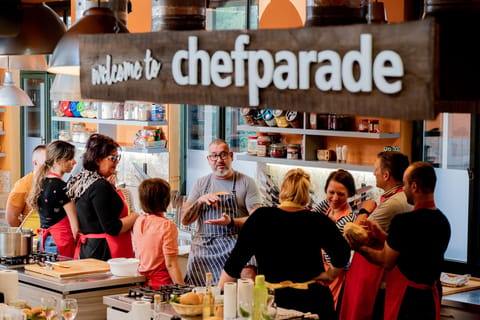
Learn to cook authentic Hungarian dishes during a hands-on 3-hour class in Budapest, guided by a local chef.
See all 802 bookable experiences in Budapest