

History
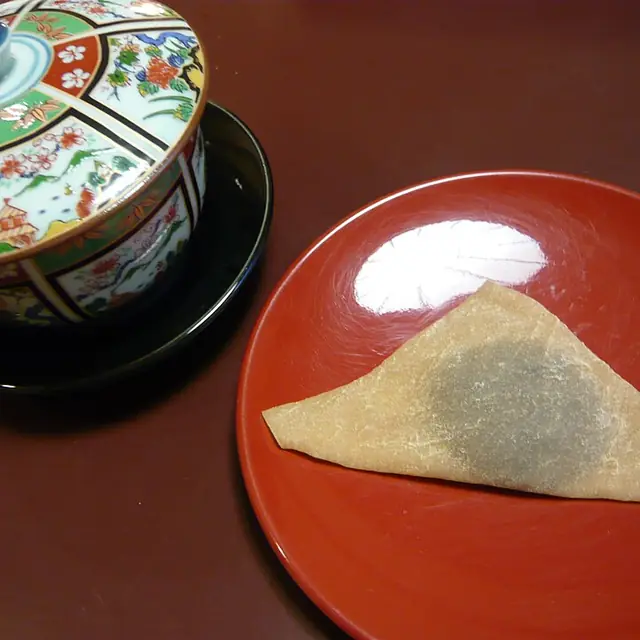
Yatsuhashi takes its name from a 17th-century Kyoto composer of the koto, Yatsuhashi Kengyo. The original baked-crisp form dates to the 1680s in Higashiyama. The soft, cinnamon-dusted nama-yatsuhashi filled with sweet azuki paste is the 20th-century evolution, codified by Honke Nishio and Otabe in the 1960s. Today every souvenir tier of Kyoto Station Porta basement is stacked with yatsuhashi boxes in cinnamon, matcha, sakura and yuzu variants.
Book a food experience
Tours, tastings and classes from the cities on this page, bookable on GetYourGuide.

Common allergens: Wheat
Make it at home
Ingredients
- 150g shiratamako (glutinous rice flour)
- 150ml water
- 100g sugar
- 1 teaspoon ground cinnamon (Shichimi or Vietnamese)
- 200g tsubuan (sweet red-bean paste), divided into 16 small balls
- Extra cinnamon and kinako (roasted soybean flour) for dusting
Method
- Mix shiratamako, water and sugar in a heat-safe bowl until smooth.
- Microwave on full power for 2 minutes, stir, then another 2 minutes; the dough should be translucent and elastic.
- Stir in the ground cinnamon while still warm; let the dough rest 5 minutes covered.
- Dust a board with kinako and roll the dough out to 2-3mm thick.
- Cut into 8cm squares; place a ball of red-bean paste in the centre of each, fold corner-to-corner into a triangle and pinch the edges.
- Dust each finished triangle with extra cinnamon and kinako; eat at room temperature.
Tip from the editors. Roll the dough as thin as you can without tearing; commercial Kyoto yatsuhashi has paper-thin walls so the bean paste leads the bite.
Where to eat yatsuhashi
Yatsuhashi in Kyoto
JR Kyoto Isetan Depachika ★ 4.4
The depachika basement of JR Kyoto Isetan, two underground floors of bento, wagashi, sashimi and sweets at Kyoto Station; the city's pre-shinkansen pantry.
Daimaru Kyoto Depachika ★ 4.3
Daimaru Kyoto's depachika basement on Shijo-dori, 70-plus counters of wagashi, bento, sashimi and sake. The downtown alternative to JR Kyoto Isetan.
Porta Underground Shopping ★ 4.0
The underground passage below Kyoto Station, 120 food and shop counters running from JR to Karasuma Subway. Ramen counters, ekibens and the chain quick lunch.
More cities are in research. Want yatsuhashi covered somewhere specific? Tell us where you want to eat.