History

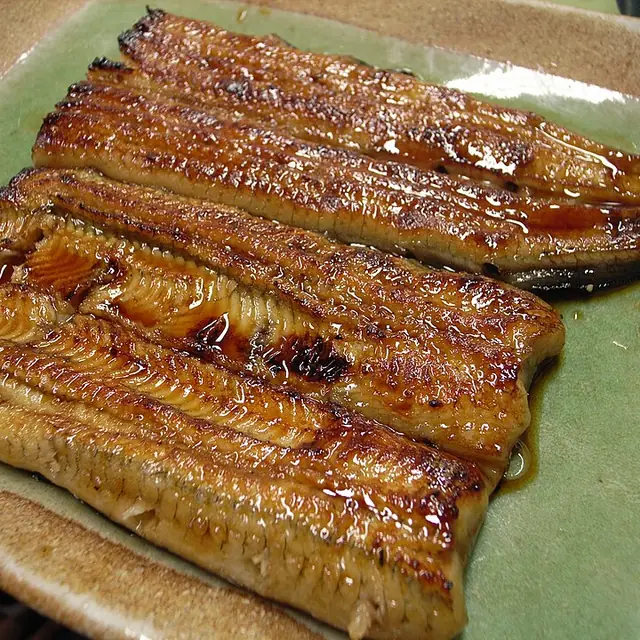
Unagi has been a Tokyo staple since the Edo period, when 17th-century cookbooks first record kabayaki (split, skewered, grilled and lacquered). The Tokyo Edomae method (kanto-style) is to butterfly the eel from the back, par-cook by steaming, then grill, which gives a softer texture than the Osaka belly-cut version. By 1700 the dish was associated with Doyo no Ushi no Hi (the Day of the Ox in late July) thanks to scholar Hiraga Gennai's marketing campaign for eel shops. Long-running Tokyo specialists serve unagi over rice in graduated portions: ichinin-mae, ninin-mae, and the elaborate hitsumabushi where the diner eats first plain, then with garnishes, then as ochazuke.
Common allergens: Fish, Soy, Gluten

Make it at home

Yield 2Hands-on 45 minTotal 1 hrDifficulty Advanced

Ingredients

  • 2 large fresh freshwater eel fillets (about 200g each), butterflied along the spine (sold pre-prepared frozen at Japanese fish markets and online; pre-grilled vacuum-packed unagi kabayaki, sold at Japanese supermarkets, is the realistic substitute and skips steps 2 to 6)
  • 10cm bamboo skewers, soaked in water 30 minutes
  • For the tare sauce: 200ml shoyu
  • 200ml mirin
  • 100ml sake
  • 80g caster sugar
  • 1 piece kombu (10cm square)
  • 300g cooked Japanese short-grain rice (Koshihikari), hot
  • 1 tbsp sansho pepper, freshly ground
  • Pickled ginger and pickled cucumber (kyuri zuke), to serve
  • Roasted nori, julienned, optional garnish

Method

  1. Make the tare: combine shoyu, mirin, sake, sugar and kombu in a small saucepan, bring to a gentle simmer and reduce by a third (about 15 minutes) until syrupy. Discard the kombu. Reserve 4 tablespoons for finishing.
  2. If working with raw eel: skewer each fillet with 3 bamboo skewers running through the flesh in parallel, holding it flat.
  3. Steam the eel skewers over a rack in a covered pan or bamboo steamer for 10 to 12 minutes (the Edomae steaming step is what gives Tokyo unagi its delicate texture).
  4. Light a charcoal grill or heat a heavy cast-iron grill pan very hot.
  5. Grill the steamed eel skin-side down for 90 seconds, then flesh-side for 60 seconds, charring lightly.
  6. Dip each fillet in the tare sauce, then return to the grill for 60 seconds per side; repeat the dip-and-grill twice more for three layers of glaze.
  7. Remove the skewers. Cut each fillet into 2 or 3 pieces.
  8. Serve unaju style: pile hot rice in a black lacquer box (or deep bowl), drizzle 1 tbsp reserved tare over the rice, lay the eel fillets flesh-side up.
  9. Drizzle a final teaspoon of tare over the eel, dust generously with sansho pepper.
  10. Set the pickles and pickled ginger alongside; eat with chopsticks, alternating bites of eel-with-rice and palate-cleansing pickle.

Tip from the editors. Sansho pepper is non-negotiable; black pepper does not give the same lift. Vacuum-packed pre-grilled Japanese unagi is sold frozen in many Asian supermarkets and is much easier than handling raw eel; warm gently in foil with 2 tbsp tare for 8 minutes at 180 degrees Celsius.

Where to eat unagi no kabayaki

Unagi no Kabayaki in Tokyo

Tsukiji Outer Market ★ 4.8

Market¥Tue-Sun 05:00-14:00, closed Wednesdays

Tsukiji Outer Market in Tokyo's Chuo ward is the food-stall labyrinth that survived after the wholesale auctions moved to Toyosu in 2018. Peak 07:00-11:00.

Tip: Arrive by 07:30 for stalls before the tour groups; the tamagoyaki sticks at Yamacho are the canonical first bite.

More cities are in research. Want unagi no kabayaki covered somewhere specific? Tell us where you want to eat.

Browse all dishes →