History

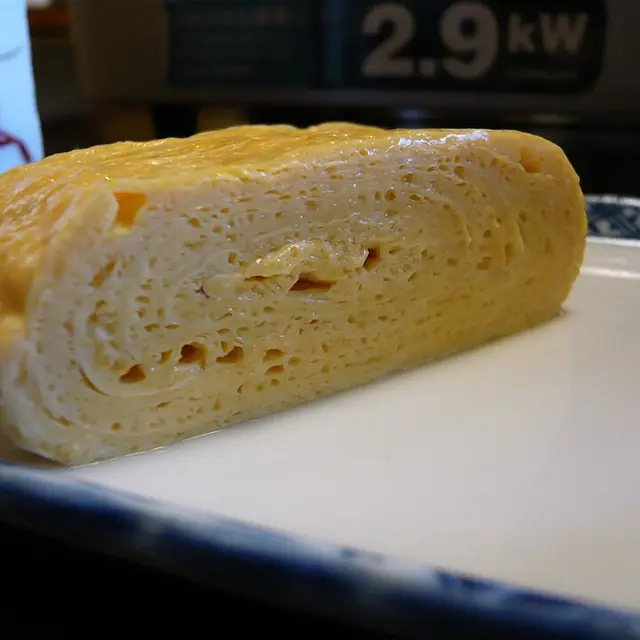
Tamagoyaki has been part of Edo cuisine since the 17th century, with the rectangular copper makiyakinabe pan becoming standard by the late Edo period. The Tokyo style is distinct from the Osaka version (dashimaki tamago): noticeably sweeter, with sugar and mirin balancing the dashi. The Tsukiji Outer Market has eight century-old tamago specialists, the most famous being Marutake, where the sushi chefs of Tokyo's high-end counters source the final-course atsuyaki tamago. The sushi-counter version is denser and squarer; the kissaten breakfast version is fluffier with more dashi.
Common allergens: Egg, Soy, Fish (dashi)

Make it at home

Yield 2Hands-on 15 minTotal 20 minDifficulty Intermediate

Ingredients

  • 5 large eggs (about 250g)
  • 3 tbsp dashi stock (kombu and bonito), at room temperature
  • 1 tbsp light shoyu
  • 1 tbsp mirin
  • 1 tsp caster sugar
  • Pinch of fine salt
  • 1 to 2 tbsp neutral oil (or 1 tbsp oil mixed with 1 tsp toasted sesame oil for an Edomae flavour)
  • Grated daikon and a few drops of shoyu, to serve
  • Pickled ginger, optional

Method

  1. Beat the eggs gently with the dashi, shoyu, mirin, sugar and salt; do not whisk to a foam, you want streaks of yolk still visible.
  2. Strain the mixture through a fine sieve to remove the chalazae; this is the structural step for a smooth texture.
  3. Heat a square 15cm Japanese tamagoyaki pan (or a small rectangular frying pan) over medium heat. Brush very lightly with oil using a paper towel folded over chopsticks.
  4. Pour in a thin layer of egg (about 4 tbsp), tilt to cover the pan, immediately pop any large bubbles with chopsticks.
  5. While the surface is still tacky-wet, use chopsticks or a spatula to roll the egg layer from the far edge of the pan toward you into a tight cylinder.
  6. Push the roll to the far edge of the pan, brush the empty pan surface with more oil, and pour in the next thin layer of egg, lifting the existing roll so the new egg flows underneath.
  7. When the new layer is set on the bottom but tacky on top, roll the existing cylinder back toward you, picking up the new layer; you now have a thicker roll.
  8. Repeat for 5 to 7 layers total, building up a fat golden block. The interior should remain just-set and almost creamy, the exterior pale gold.
  9. Tip the tamagoyaki onto a bamboo sushi mat, wrap and press for 60 seconds into a neat rectangle.
  10. Slice across into 2cm thick blocks. Plate with a small mound of grated daikon (with a few drops of shoyu) and pickled ginger.

Tip from the editors. A rectangular tamagoyaki pan makes the canonical shape but a small frying pan and a sushi mat for shaping after cooking works. Do not let any layer brown; the colour must stay pale gold throughout.

Where to eat tamagoyaki

Tamagoyaki in Tokyo

Tsukiji Outer Market standing counters ★ 4.5

Street food¥Tue-Sun 05:00-14:00, closed Wednesdays

Tsukiji Outer Market in Tokyo's Chuo ward keeps 400 standing-counter food stalls running each morning. Tamagoyaki sticks, uni-don, scallop skewers.

Try: Tamagoyaki sticks, uni-don, grilled scallops

Tip: Yamacho's tamagoyaki sticks and the standing-sushi counters at Sushizanmai are the canonical sequence; arrive before 09:00.

Tsukiji Outer Market ★ 4.8

Market¥Tue-Sun 05:00-14:00, closed Wednesdays

Tsukiji Outer Market in Tokyo's Chuo ward is the food-stall labyrinth that survived after the wholesale auctions moved to Toyosu in 2018. Peak 07:00-11:00.

Tip: Arrive by 07:30 for stalls before the tour groups; the tamagoyaki sticks at Yamacho are the canonical first bite.

More cities are in research. Want tamagoyaki covered somewhere specific? Tell us where you want to eat.

Browse all dishes →