
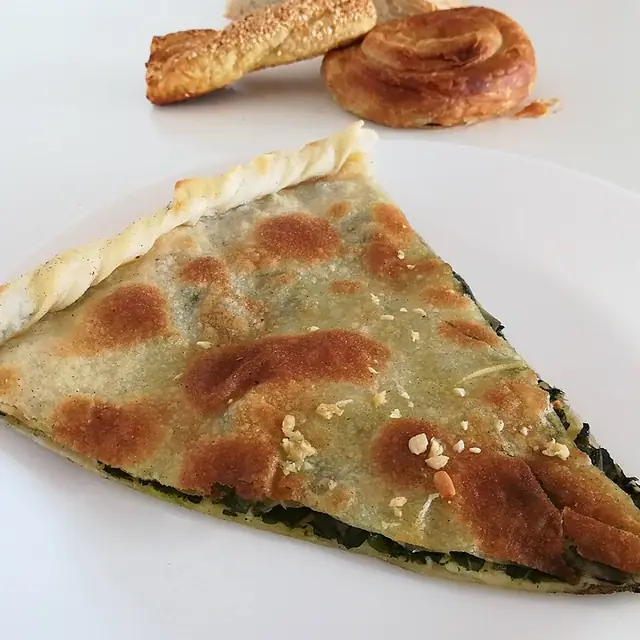

History
Wikipedia dates soparnik to about the 13th century and says it was probably created under oriental influence, as its name suggests. In the past it was prepared as a fasting dish and for celebrations, and its original season was the colder time of the year, when older, sweeter chard was available. The preparation method is a protected intangible cultural heritage of Croatia, and in 2016 the European Commission entered the dish in its register of protected names. Taste of Split 2026 ended with a soparnik workshop.
Common allergens: Gluten
Make it at home
Ingredients
- 500g plain flour
- 300ml warm water
- Pinch of salt for the dough
- 800g Swiss chard, leaves only, finely chopped
- 2 small onions, finely chopped
- Handful flat parsley, chopped
- 100ml olive oil, plus more for brushing
- 1 clove garlic, crushed
- Sea salt, black pepper
Method
- Mix flour, water and salt to a smooth elastic dough. Rest covered 1 hour.
- Mix chard, onions, parsley, half the olive oil, salt and pepper for the filling.
- Divide dough in two. Roll each piece into a thin disc on an oiled surface, 35 to 40cm wide.
- Lay one disc on a flat baking tray. Spread filling evenly to within 1cm of the edge.
- Cover with the second disc; seal the edges by pressing and rolling them in.
- Bake at 240C/465F for 12 to 15 minutes (or 4 minutes per side under a hot grill).
- Brush with garlic-warm olive oil while still hot; cut into squares.
Tip from the editors. Traditional soparnik is baked under hot ash; an oven works but go as hot as it allows.
Where to eat soparnik
Soparnik in Split
Featured by TableJourney as a signature dish of Split. See where to eat Soparnik in Split or the Split signature dishes guide.
More cities are in research. Want soparnik covered somewhere specific? Tell us where you want to eat.