History

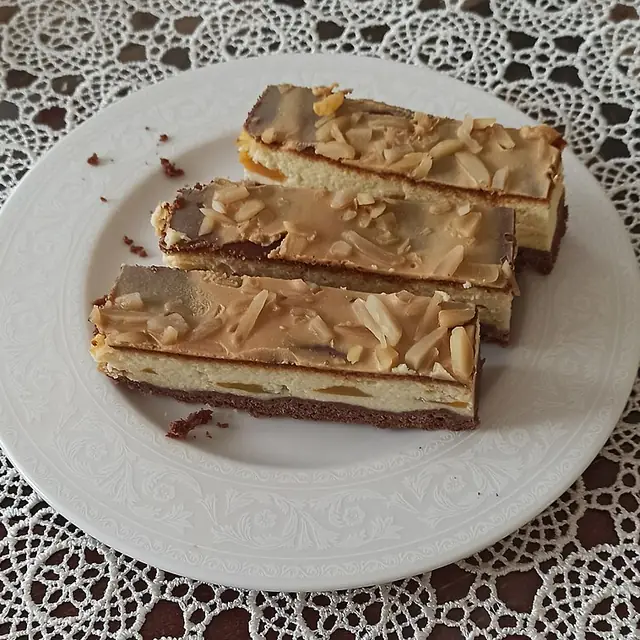
Polish sernik (baked cheesecake) entered Polish home baking in the 19th century, using twaróg (farmer's cheese) instead of the German Quark or American cream cheese. The Krakow variant, sernik krakowski, distinguished itself by 1900 with a decorative lattice of pastry strips baked on top. The cake appeared in Maria Ochorowicz-Monatowa's 1910 cookbook as a Krakow speciality. The city's surviving counter sellers, Vanilla on Brzozowa and Noworolski in the Cloth Hall, serve the editorial Krakow version. The lattice pattern is the geographic ID; serniki from Warsaw, Poznań or Gdańsk are flat-topped.

Common allergens: Dairy, Egg, Gluten

Where to eat sernik krakowski

Sernik krakowski in Kraków

Vanilla ★ 4.0

Daily 10:00-21:00Walk-in onlyPolish patisserie

Cukiernia Vanilla in Kraków runs traditional Polish patisserie from two shops, Brzozowa 13 and Na Szaniec 14. Sernik, hazelnut tortes, makowiec and szarlotka baked daily.

Tip: Sernik krakowski is the city's lattice-topped cheesecake; ask for it at the counter.

Worth the queue: Sernik (Polish cheesecake)

Cukiernia Michałek ★ 4.3

Mon-Fri 08:00-19:00, Sat 08:00-16:00Walk-in onlyPolish layered cakes and pączki

Cukiernia Michałek on Kraków's Krupnicza is the family-run pastry counter west of the Planty since 1958: rose-filled pączki, kremówka, sernik, all baked in-house.

Tip: The rose-filled pączki are the counter pick; Fat Thursday queue runs hours long.

Worth the queue: Rose-filled pączki

Noworolski ★ 4.4

Wifi

Noworolski inside the Cloth Hall on Kraków's Rynek Główny pours coffee in Józef Mehoffer's art-nouveau rooms since 1910. Krakow artists, Habsburg-era trade.

Signature drink: Viennese coffee

Tip: The art-nouveau rooms are the photograph; the terrace on Rynek Główny is the better summer seat.

More cities are in research. Want sernik krakowski covered somewhere specific? Tell us where you want to eat.

Browse all dishes →