

History
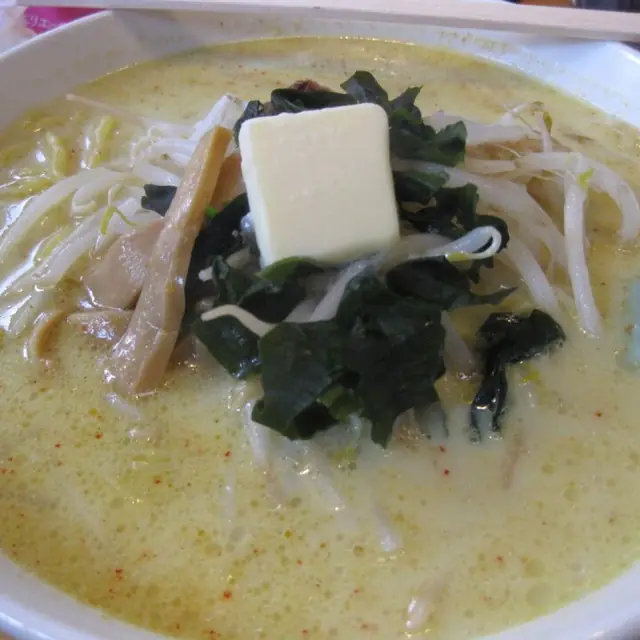
Founder Morito Omiya created Sapporo miso ramen at Aji no Sanpei in 1955, blending three types of miso into a thick pork-bone broth that locals carried home through Sapporo's winters. The bowl spread first through Ramen Yokocho, the 1951-founded alley just south of Susukino, then nationally; today nearly every prefecture's ramen kitchens serve a Sapporo miso variant. Aji no Sanpei still pours the original recipe from a counter inside Daimaru Fujii Central on Minami 1-jo Nishi 3.
Book a food experience
Tours, tastings and classes that match this page, bookable on GetYourGuide.

Common allergens: Gluten, Soy, Pork
Make it at home
Ingredients
- 200g pork belly, plus pork bones for stock if available
- 2 packs alkaline ramen noodles
- 3 tbsp red miso (aka)
- 1 tbsp white miso (shiro)
- 1 tbsp ground sesame paste
- 2 cloves garlic, minced
- 1-inch piece ginger, grated
- 100g bean sprouts
- 100g cabbage, shredded
- 2 tbsp sweet corn (frozen Hokkaido if available)
- 30g butter for the cap
- 1 tbsp lard or sesame oil
- 1 litre pork-bone stock
- 1 tbsp soy sauce, 1 tsp mirin
Method
- Simmer pork-bone stock 90 minutes if making from scratch; otherwise use 1 litre pork-bone broth.
- In a wok or large pan, heat lard or sesame oil over high. Add garlic and ginger; fry 30 seconds.
- Add ground pork, bean sprouts and cabbage; stir-fry 2 minutes until pork is cooked through.
- Push solids to one side. Add red and white miso plus sesame paste to the wok; cook for 1 minute to take the raw edge off the miso.
- Pour pork-bone stock into the wok; whisk to dissolve the miso. Add soy sauce and mirin. Bring to a simmer.
- Cook noodles in a separate pot of salted water 30 seconds shorter than package directions.
- Drain noodles tight and divide between two bowls. Pour boiling broth over the noodles.
- Top each bowl with sweet corn, sliced chashu (or the stir-fried pork), a knob of butter and a sprinkle of ground white pepper. Serve immediately.
Tip from the editors. The lard or butter cap is structural, not decorative; it seals heat in for winter eating. Don't skip it.
Where to eat sapporo miso ramen
Sapporo Miso Ramen in Sapporo
Aji no Sanpei ★ 4.5
The origin shop for Sapporo miso ramen. Founder Morito Omiya created the miso bowl here in 1955; the menu still leads with the original broth.
OrderMiso ramen, served the same way since 1955.
TipClosed Mondays; the lunch line builds around 12:00 and there are no reservations.
Menya Saimi ★ 4.7
The miso-ramen counter consistently ranked top of Sapporo Tabelog at 3.96. Saimi blends three white misos with a clear pork-bone base; queue early.
OrderMiso ramen with extra ginger ground tableside, the Saimi house gesture.
TipThree minutes from Misono subway; queue from 11:00 weekdays. Closed Mondays.
Sumire Nakanoshima Honten ★ 4.6
The Murakami family ramen house, opened 1964, codified the Sapporo miso style with a thick lard cap sealing the broth heat-stable through winter.
OrderMiso ramen with extra chashu; the lard cap stays piping.
TipTen-minute walk from Nakanoshima subway; the Susukino branch is the late-night option.
Keyaki Susukino Honten ★ 4.4
A Susukino miso-ramen specialist since 1999, Keyaki folds three regional misos around a pork-and-vegetable base. Constant one-hour queue at the small counter.
OrderMiso ramen with extra noodle (omori) and a wantan add.
TipHours 10:30-04:00; queue forms by 19:00. Sister-store Keyaki bowls also reach the Stellar Place sixth floor near Sapporo Station.
Ramen Shingen Minami 6-jo ★ 4.2
Shingen's Susukino branch is the line-out-the-door miso shop with a Shinshu-style broth lighter on lard than classic Sapporo miso. Open until 01:00 nightly.
OrderAged miso (Koshu) ramen, the menu's deepest broth.
TipCloses when the soup runs out; queue from 11:30 lunch and after 21:00 dinner.
More cities are in research. Want sapporo miso ramen covered somewhere specific? Tell us where you want to eat.