
History
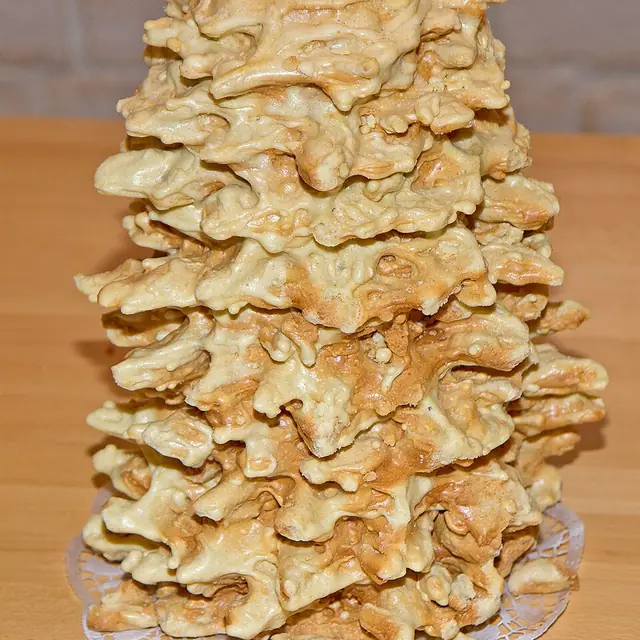
Made from butter, eggs, flour, sugar and cream, šakotis is built by painting layers of batter onto a rotating spit in a special open oven or over an open fire, a labour-intensive process. It is one of the most important desserts at Lithuanian celebrations, especially weddings, and is also served at Easter and Christmas. Similar cakes are the Polish sękacz and the Belarusian bankukha. In May 2015 a šakotis 372 cm tall and weighing 85.8 kg was made in Druskininkai, the largest on record.
Common allergens: Gluten, Eggs, Dairy
Make it at home
Ingredients
- 10 eggs, separated
- 500 g butter, softened
- 500 g sugar
- 500 g all-purpose flour
- 200 ml sour cream
- 2 tsp vanilla extract
- 1 tsp salt
Method
- Cream butter with half the sugar until pale. Add egg yolks one at a time, beating well.
- Mix in sour cream, vanilla and salt. Sift flour over the mixture; fold in gently.
- Whisk egg whites with remaining sugar to firm peaks. Fold into the batter in two additions.
- Set up a rotating spit over an oven base or open flame. Brush the spit with butter.
- Pour batter slowly onto the turning spit, allowing each thin layer to cook and brown for 2 to 3 minutes before adding more.
- Continue building layers for 90 minutes to 2 hours, until you have a 30 cm tall cake with characteristic dripping branches. Cool fully before removing from the spit.
Tip from the editors. This is a showpiece for a bakery: a home version needs a rotating spit and steady heat, so buy a slice from a Lithuanian baker first.
Where to eat šakotis
Šakotis in Vilnius
Featured by TableJourney as a signature dish of Vilnius. See where to eat Šakotis in Vilnius or the Vilnius signature dishes guide.
More cities are in research. Want šakotis covered somewhere specific? Tell us where you want to eat.