History
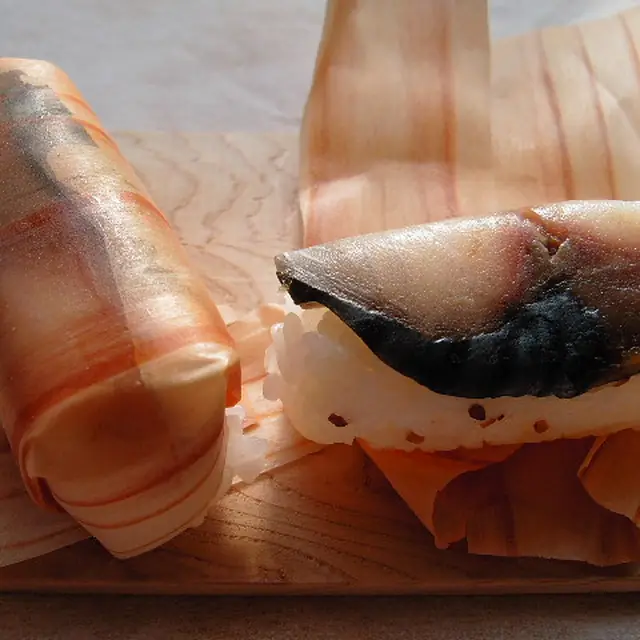
Saba-zushi traces to medieval Kyoto, when salt-packed mackerel from the Sea of Japan crossed the Saba Kaido (Mackerel Highway) from Obama in Fukui to the imperial capital. The fish arrived just-salted enough to age into a delicacy. Izuju has been pressing saba-zushi opposite Yasaka Shrine in Gion since 1892, and the dish remains the Gion-festival takeaway that locals queue for. Eaten cold from the bamboo wrap, with a slice of kelp pressed under the rice.
Common allergens: Fish, Soy
Make it at home
Ingredients
- 1 fresh mackerel fillet, 400g, pin bones removed
- 60g sea salt, 200ml rice vinegar
- 300g short-grain sushi rice, cooked
- 30ml rice vinegar, 20g sugar, 3g salt for the rice seasoning
- 1 strip kombu kelp (10cm), softened in rice vinegar
- Pickled ginger, soy sauce, wasabi to serve
Method
- Salt-cure the mackerel: bury skin-side up in sea salt for 4 hours; rinse and pat dry.
- Marinate the cured fish in rice vinegar for 2 hours, then dry on a cloth-lined plate for another 2 hours.
- Season the cooked rice with rice vinegar, sugar and salt; cool to body temperature.
- Lay the kombu strip on a sushi mat, then the mackerel skin-side down, then a long log of seasoned rice.
- Roll tight in the mat, press for 30 minutes under a 1kg weight to compact.
- Slice into 1.5cm thick pieces with a wet knife; serve with pickled ginger, soy and wasabi.
Tip from the editors. Use the freshest mackerel you can find; the salt-cure and vinegar do the rest of the work. Day-old fish gives a brackish saba-zushi.
Where to eat saba-zushi
Saba-zushi in Kyoto
Featured by TableJourney as a signature dish of Kyoto. See the Kyoto signature dishes guide for the canonical version.
More cities are in research. Want saba-zushi covered somewhere specific? Tell us where you want to eat.