
_-_Goemon_Ramen_Bar_2025-09-01.jpg)

History
Heiwa Shokudo is a Japanese restaurant at 87 North Lexington Avenue downtown. Its site lists dinner from 4:30pm to 9pm Tuesday to Saturday and lunch Wednesday to Saturday, and links to its menu and online ordering.
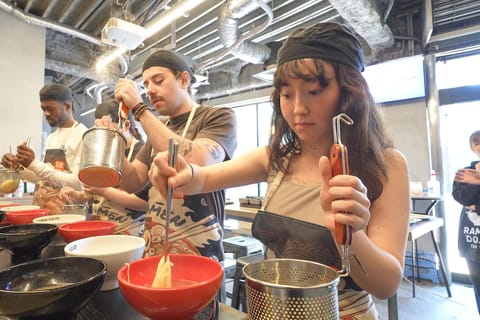
Book a food experience
Tours, tastings and classes that match this page, bookable on GetYourGuide.

Common allergens: Gluten, Soy, Egg
Make it at home
Ingredients
- 2 kg pork bones (neck, trotter, knuckle mix)
- 1 large onion, halved
- 1 head garlic, halved across the equator
- 5 cm piece ginger, sliced
- 60ml soy sauce, plus more to taste
- 2 tbsp mirin
- 1 tbsp white miso
- 400g fresh ramen noodles
- 4 soft-boiled eggs, marinated overnight in soy-mirin
- 200g chashu pork belly, sliced thin
- Sliced scallions, nori sheets, sesame oil to serve
Method
- Cover the pork bones with cold water in a large stockpot, bring to a hard boil for 10 minutes, then drain and rinse the bones and pot.
- Return the bones to the pot with onion, garlic, ginger and 4 litres fresh water. Bring to a hard boil, then maintain a rolling simmer for 10 to 12 hours, topping up water as it reduces.
- Strain through a fine sieve; you should have a milky-white broth. Reduce further if needed for body.
- Whisk the soy sauce, mirin and miso into the hot broth. Taste and adjust salt.
- Bring a separate pot of water to a hard boil for the noodles. Cook ramen 1 to 2 minutes until just tender, drain and divide between bowls.
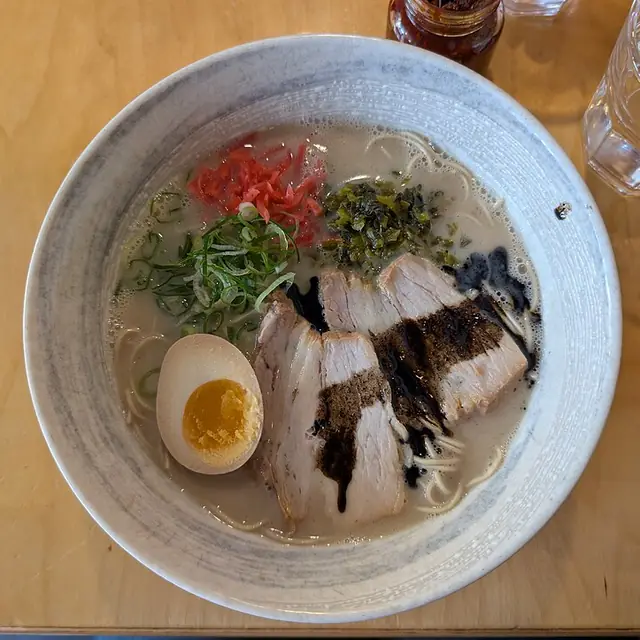
- Ladle the hot broth over the noodles. Top each bowl with a halved soft-boiled egg, two slices of chashu pork belly, sliced scallions, a sheet of nori and a few drops of sesame oil.
Tip from the editors. The hard-boil-then-rinse step on the bones is what makes the broth milky-white instead of murky. Skipping it is the most-common home-cook ramen failure.
Where to eat tonkotsu ramen (heiwa shokudo)
Tonkotsu ramen (Heiwa Shokudo) in Asheville
Heiwa Shokudo ★ 4.3
Heiwa Shokudo is a traditional Japanese restaurant at 87 N Lexington Ave in Asheville, run by a Japanese owner, with dine in and take out service.
OrderThe popular vegan rolls: Sweetie Pie, Bibimpap, and Spicy Garlic Tofu or Eggplant.
TipReservations are taken for parties of five and over, and customer parking is next to the restaurant.
More places near Heiwa Shokudo
Not on this list, but close by, nearest first. Every one is in our guide with its address, hours and what to order.
- Mela Indian Restaurant Indian, Regional, under 100 m away
- Rosetta's Kitchen Vegan, about 100 m away
- DSSOLVR Late night, about 100 m away
- Twisted Crepe Casual dining, about 200 m away
- Strada Italiano Italian, about 200 m away
- The Rankin Vault Burgers, about 250 m away
More cities are in research. Want tonkotsu ramen (heiwa shokudo) covered somewhere specific? Tell us where you want to eat.