
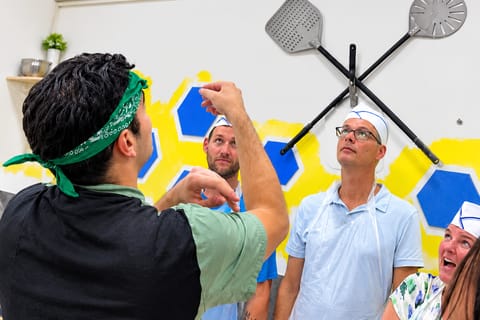
Naples
3 hours
Naples Official Pizza Making Class & Tiramisu with wood oven
Roll up your sleeves and discover the flavors of Naples by making authentic pizza and creamy tiramisù with a passionate local chef. Cook, laugh, eat,...
from€21Check dates
Pizza bianca is Rome's salt-and-olive-oil flatbread: a long focaccia-like dough baked in a wood oven, salted and oiled, sold by weight at the city's forni for €3 to €4 per slice.
Where to eat it: 4 restaurants across 1 city.
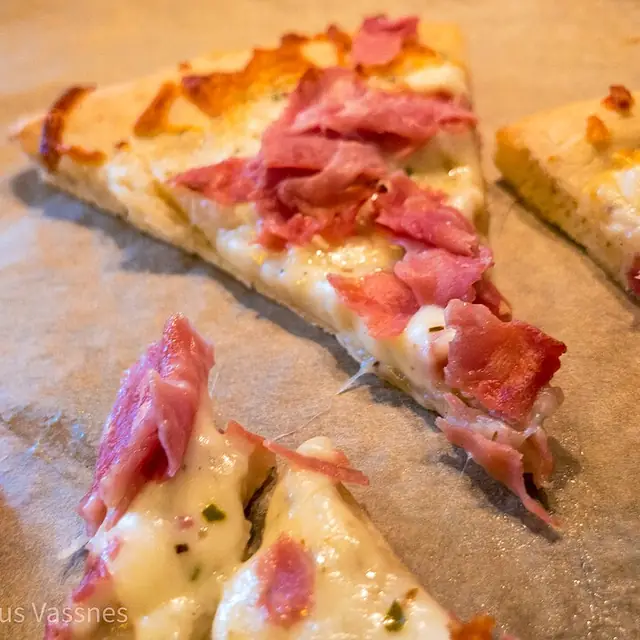
Pizza bianca evolved from the Roman testing-bread (panaria) that bakers used to check oven temperature: a stretched-out, salted, oiled dough thrown into the wood-fired forno before the morning loaves. The bakers found it sold faster than the bread it was meant to test, and pizza bianca became the daily Roman snack of the 19th and 20th centuries. Forno Campo de' Fiori codified the modern form: long rectangular pieces, sold by weight, often eaten standing on the street with a slice of mortadella inside. Forno Roscioli sells the modern version closest to the canonical bianca; the Bonci Panificio version is the most-discussed modern interpretation with a 72-hour fermented dough.
Tours, tastings and classes that match this page, bookable on GetYourGuide.
3 hours
Roll up your sleeves and discover the flavors of Naples by making authentic pizza and creamy tiramisù with a passionate local chef. Cook, laugh, eat,...

2 hours
Make authentic Roman-style pizza from scratch with a local hosts near Piazza Navona. Enjoy a fun hands-on class, then relax with a drink and savor...
5 hours
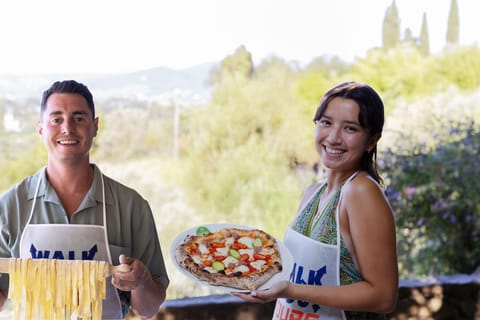
Learn how to make mouth-watering pizza or pasta and gelato with a professional Italian chef.
3 hours
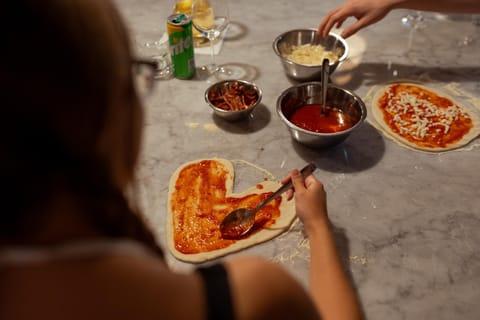
Join a hands-on Pizza & Gelato Class in Palermo. Make authentic pizza, enjoy a live gelato show & tasting, then dinner with wine. Family Option: save...
Common allergens: Gluten
Tip from the editors. Hydration is high; the dough is wet. Use a wet hand to handle it. The dimpled top holds the oil and salt; do not skip the dimples.
Forno Campo de' Fiori in Rome bakes pizza bianca by weight at €3-4 per slice. Cash only. Open Mon-Sat 07:30-14:30 and 16:45-20:00; closed Sunday.
TryPizza bianca by weight
TipCash only. Open Mon-Sat 07:30-14:30 and 16:45-20:00; closed Sunday.
The Roscioli family's Antico Forno in Rome's Centro Storico is the 200-year-old neighbourhood bakery counter, with pizza bianca, pizza rossa.
OrderPizza bianca (the classic), pizza rossa with anchovies, and a maritozzo con la panna.
TipOpen Mon to Sat 07:00-19:30; closed Sunday. The maritozzo sells out by 11:00.
Gabriele Bonci's Panificio in Rome's Prati district sells pizza bianca and pizza rossa by weight at €4-6 per slice, with the saltless Roman loaf at €4.
TryPizza bianca, pizza rossa by weight
TipOpen Mon-Sat 07:30-20:00; closed Sunday. The 18:00 batch is the afternoon drop.
Panella in Rome's Esquilino quarter runs an all-day bakery brunch with pizza bianca slices, frittatas, sandwiches and the cornetto-and-cappuccino counter.
OrderPizza bianca with mortadella plus a cornetto and cappuccino at the bar.
TipOpen daily 07:00-22:00. The pizza bianca lunch counter heats up at 12:00; arrive before for the freshest.
More cities are in research. Want pizza bianca covered somewhere specific? Tell us where you want to eat.