Karaköy Lokantası ★ 4.5
The teal-tiled Karaköy Lokantası, Bib Gourmand listed in the Michelin Guide, runs an Ottoman-leaning lunch lokanta downstairs and a meyhane upstairs at night.
Signature: Lakerda, Hünkar beğendi, Lamb shank
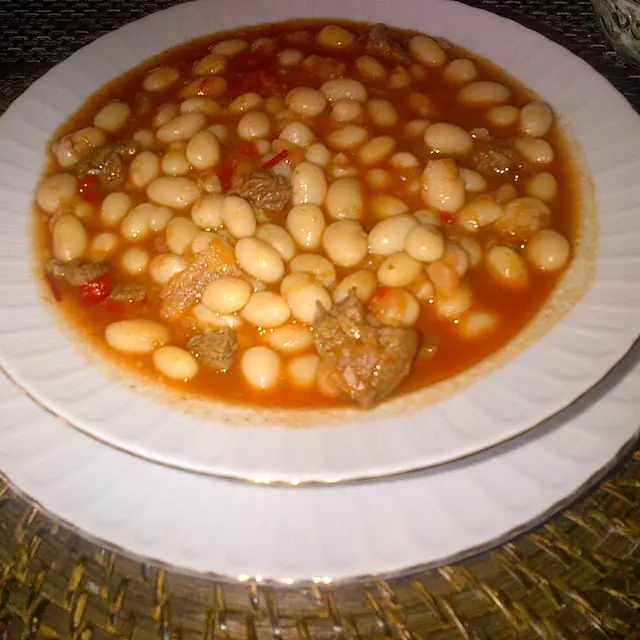
Slow-stewed dried white beans in a tomato and red-pepper broth, often with chunks of lamb or pastirma. Served over pilav with pickles, the Turkish home-cooking comfort dish.
Where to eat it: 3 restaurants across 1 city.
Kuru fasulye took hold across Anatolia after dried white beans arrived from the New World in the 17th century. The Istanbul esnaf-lokantasi tradition, the trade-guild canteens that fed shopkeepers and craftsmen, made it the canonical lunch plate; pilav with kuru fasulye, pickle and ayran is the working-city meal.
Tip from the editors. Salt only at the end; salting the soaking water or the early simmer toughens the bean skins and the stew turns mealy.
The teal-tiled Karaköy Lokantası, Bib Gourmand listed in the Michelin Guide, runs an Ottoman-leaning lunch lokanta downstairs and a meyhane upstairs at night.
Signature: Lakerda, Hünkar beğendi, Lamb shank
Hayvore off Istiklal, the Black Sea steam-table cooking corn-bread anchovies and smoky bean stews for whoever knows the side street. Located in Beyoğlu.
Why locals love it: Locals fill it for the Black Sea menu, tourists walk past for the larger Istiklal places ten metres away.
Tip: Order the hamsi pilav and the muhlama; they only run while supplies last.
Tarihi Hocapaşa Pidecisi in Sirkeci, where a kıymalı pide costs under 180 lira and beats every tourist trap on the historic peninsula for the same money.
Try: Wood-oven pide
More cities are in research. Want kuru fasulye (white bean stew) covered somewhere specific? Tell us where you want to eat.