

History
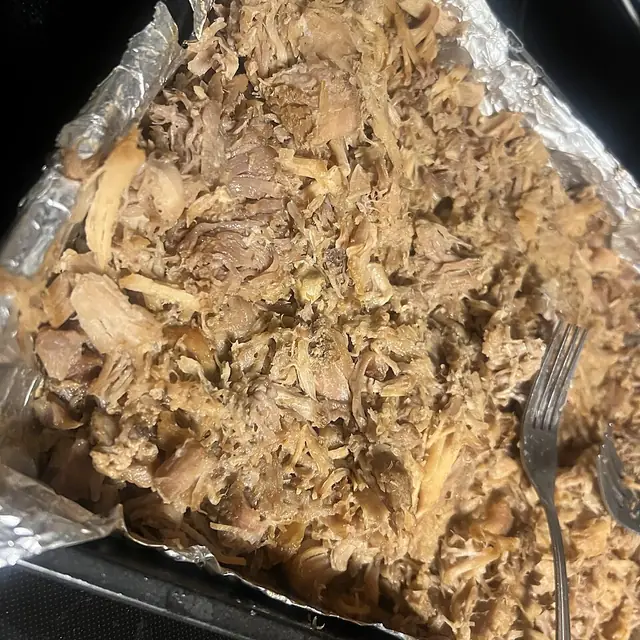
Kalua means 'to bake in an underground oven' in Hawaiian. The traditional imu method dates to pre-contact Polynesia: dig a pit, line with kiawe wood embers and lava stones, wrap a whole hog in ti and banana leaves, cover with damp burlap and earth, leave 8 to 12 hours. The dish was the centerpiece of luaus before and after Western contact. The Toguchi family's Highway Inn has served kalua pork plates since the 1947 Waipahu opening, now with a 2013 Kakaako outpost; Helena's Hawaiian Food on North School Street has cooked the imu since 1946.
Book a food experience
Tours, tastings and classes from the cities on this page, bookable on GetYourGuide.

Make it at home
Ingredients
- 2.5kg bone-in pork shoulder (Boston butt)
- 3 tablespoons Hawaiian alaea sea salt (or coarse pink salt)
- 1 tablespoon liquid smoke (mesquite or kiawe)
- 8 fresh ti leaves or 6 large banana leaves (or substitute with parchment plus foil)
- 240ml water
Method
- Pat the pork shoulder dry. Score the fat cap in a 2cm diamond pattern. Rub with the Hawaiian salt all over.
- Drizzle the liquid smoke across the fatty side and rub in. This is the chef's shortcut for imu smoke without the pit.
- Lay ti or banana leaves on a heavy roasting tray in a cross. Set the pork in the centre. Pour 240ml water around the meat.
- Wrap the leaves over the pork, sealing the top. Cover the whole tray tightly with foil, then a second layer.
- Roast at 150C (300F) for 8 hours. The meat should pull apart with a fork; if not, give it another 60 minutes.
- Rest 20 minutes still wrapped. Unwrap, shred with two forks. Toss with any pan juices and a final pinch of Hawaiian salt.
Tip from the editors. If you have a smoker, replace the liquid smoke with 2 hours of kiawe or mesquite smoke at 110C before the foil-roasting step. Result is closer to imu.
Where to eat kalua pig
Kalua pig in Honolulu
Helena's Hawaiian Food ★ 4.8
Helena's Hawaiian Food is locals queue for this 1946 kalihi institution but most visitors never venture past chinatown to north school street.
Why locals goLocals queue for this 1946 Kalihi institution but most visitors never venture past Chinatown to North School Street.
TipTuesday to Friday 10:00-19:30. Pipikaula short ribs are the must-order; the kalua pig is also canonical.
Highway Inn Kakaako ★ 4.3
Highway Inn Kakaako Honolulu serves a combination kalua pig plate with rice, mac salad and lomi salmon for around $15, the cheapest sit-down Hawaiian food.
TryKalua pig combo plate
TipDaily 09:30-20:00. Mini plate at $13 feeds one; combo plate at $18 feeds two with leftovers.
More places near Helena's Hawaiian Food and Highway Inn Kakaako
Not on this list, but close by, nearest first. Every one is in our guide with its address, hours and what to order.
- Maguro Brothers Hawaii Chinatown Poke, about 200 m away
- Chinatown Honolulu Marketplaces Market, about 200 m away
- Lucky Belly Ramen, about 300 m away
- Senia Modern Hawaiian, about 300 m away
- The Manifest Cafe, about 350 m away
- Bar 35 Pizzeria, about 350 m away
More cities are in research. Want kalua pig covered somewhere specific? Tell us where you want to eat.