

History
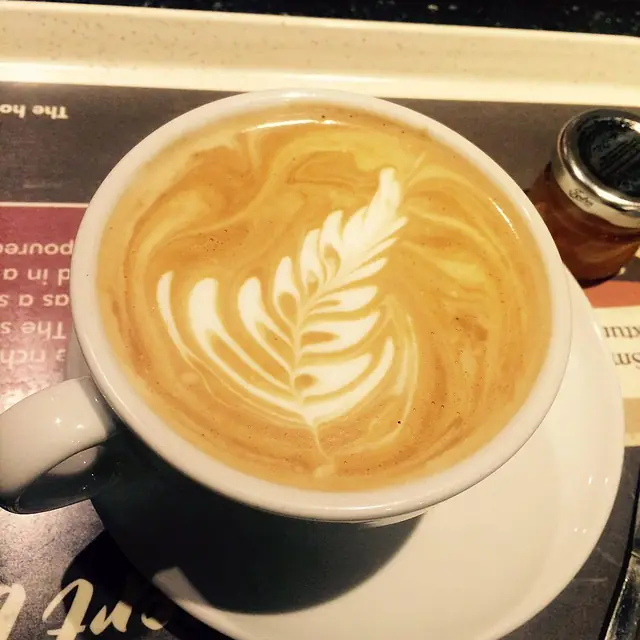
A flat white is espresso with steamed milk, a higher proportion of coffee to milk than a latte and without the thick foam of a cappuccino; cafe owners in Australia and New Zealand both claim it. A review of the Sydney cafe Miller's Treat mentioned its flat white coffee in May 1983, Alan Preston put it on the permanent menu at Moors Espresso Bar in Sydney in 1985, and a Wellington claim dates from 1989. In Australia it is usually served in a ceramic cup with a handle. Strauss in the Brisbane CBD lists it on its drinks menu.
Book a food experience
Tours, tastings and classes that match this page, bookable on GetYourGuide.

Common allergens: Dairy
Make it at home
Ingredients
- 18g freshly ground espresso (medium-fine)
- 150ml fresh whole milk (3.5 percent fat)
Method
- Pre-heat your espresso machine. Pull a double espresso into a 6oz ceramic cup: 30-second extraction yielding 36ml liquid.
- Pour cold milk into a stainless steel jug to about one-third full.
- Steam the milk with the wand just below the surface to create microfoam (gentle hiss, not large bubbles), stretching for 5 seconds.
- Submerge wand deeper to heat milk to 60-65 degrees (jug becomes uncomfortably warm to hold).
- Tap the jug on the bench to pop bubbles, swirl to homogenise. Pour into the espresso from a 5cm height initially, lowering as the cup fills.
- The pour should produce a single white circle (or simple rosetta) on a glossy chestnut surface.
Tip from the editors. A flat white has less milk than a latte and only a thin layer of microfoam, so stop stretching the milk early and pour low.
Where to eat australian flat white
Australian Flat White in Brisbane
Strauss ★ 4.8
Strauss is a family-owned cafe down a laneway off Elizabeth Street, brewing its own Strauss House Blend and single origin beans rotated weekly.
More places near Strauss
Not on this list, but close by, nearest first. Every one is in our guide with its address, hours and what to order.
- Coffee Anthology Café, about 100 m away
- Pablo & Rusty's Brisbane Coffee roaster, about 200 m away
- Lune Croissanterie Croissant, about 250 m away
- John Mills Himself Cafes, about 300 m away
- Simply Cupcakes Bakeries, about 600 m away
- Christian Jacques Bakery Bakeries, about 850 m away
More cities are in research. Want australian flat white covered somewhere specific? Tell us where you want to eat.