History

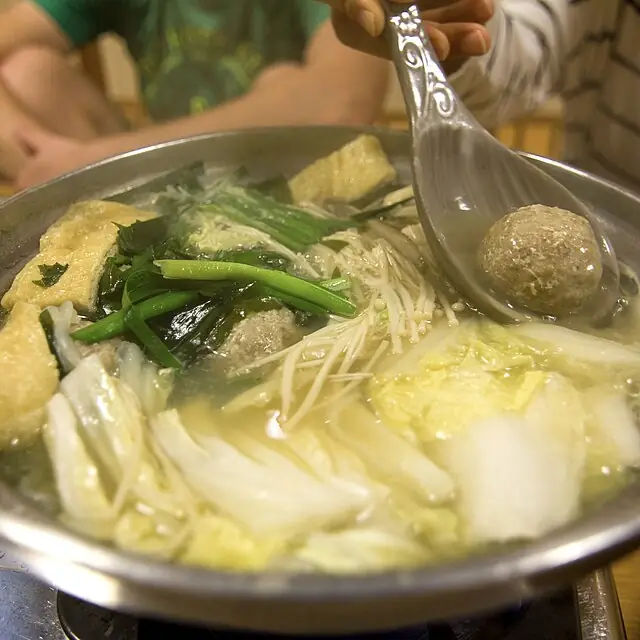
Chankonabe was developed by sumo stables in Tokyo's Ryogoku district through the late 19th century as the standard diet to bulk up wrestlers: protein-rich, vegetable-heavy, served in vast pots that fed a stable of 15+ men at one sitting. The base broth is shio (salt) or shoyu (soy); the contents rotate seasonally but always feature tsukune (chicken meatballs), tofu, vegetables and noodles or rice for the finale. The sumo tradition is chicken-only on competition days (the wrestler stands on two legs, not four), making beef and pork tournament-day taboo. Several Ryogoku restaurants are run by retired wrestlers and serve the authentic stable-recipe chankonabe.

Common allergens: Soy, Gluten, Fish, Egg

Make it at home

Yield 4Hands-on 45 minTotal 1 hrDifficulty Easy

Ingredients

  • For the broth: 2L dashi stock (kombu and bonito), 100ml sake, 80ml shoyu, 50ml mirin, 1 tsp sea salt
  • For tsukune (chicken meatballs): 500g minced chicken (thigh and breast mixed)
  • 1 small onion (finely grated)
  • 2cm ginger (grated)
  • 2 tsp shoyu
  • 1 tsp sake
  • 1 tsp sesame oil
  • 2 tbsp panko
  • 1 egg
  • 1 spring onion (finely chopped)
  • pinch of white pepper
  • 300g boneless chicken thighs, cut into 4cm chunks
  • 1 block (300g) firm tofu, cut into 3cm cubes
  • 1 small daikon radish (300g), peeled and sliced 1cm thick
  • 1 large carrot, sliced 1cm thick
  • 1 small Chinese cabbage (hakusai, 500g), cut into 4cm chunks
  • 100g shiitake mushrooms, stems removed
  • 100g enoki mushrooms, separated
  • 1 negi (Japanese leek), sliced 2cm thick on the diagonal
  • 1 bunch shungiku (chrysanthemum greens) or substitute with watercress
  • 200g udon noodles (for the shime finish)
  • Cooked Japanese rice (alternative shime)
  • Yuzu kosho, ponzu, ground sansho or shichimi, to serve

Method

  1. Combine all the tsukune ingredients in a bowl and knead with your hand for 2 minutes until sticky; shape into 24 walnut-sized balls.
  2. In a large cast-iron donabe or heavy pot, combine the broth ingredients and bring to a simmer.
  3. Add the daikon and carrot, simmer 8 minutes until they begin to soften.
  4. Add the chicken thigh pieces and the tsukune meatballs (drop them in by hand); simmer 5 minutes.
  5. Add the cabbage stems first (the white thick parts), shiitake mushrooms and tofu; simmer 4 minutes.
  6. Add the cabbage leaves, enoki, negi and shungiku; simmer 2 to 3 minutes until just wilted.
  7. Bring the pot to the table (still bubbling) and let each diner ladle into their own bowl, with small dishes of yuzu kosho, ponzu and shichimi alongside.
  8. Eat communally; replenish from the pot as it empties.
  9. For the shime (finishing course): when the solids are mostly gone, drop the udon noodles into the remaining flavoured broth and simmer 3 minutes; ladle out as a noodle soup course. Alternatively, drop a scoop of rice into the broth with a beaten egg stirred in for chankoyu zosui (rice porridge).

Tip from the editors. Sumo stables traditionally serve the heaviest ingredients first to settle to the bottom, then layer the greens last. Do not let the cabbage cook past a fast wilt; over-cooked Chinese cabbage releases too much water and dilutes the broth.

Where to eat chankonabe

Chankonabe in Tokyo

Tsukiji Outer Market ★ 4.8

Market¥Tue-Sun 05:00-14:00, closed Wednesdays

Tsukiji Outer Market in Tokyo's Chuo ward is the food-stall labyrinth that survived after the wholesale auctions moved to Toyosu in 2018. Peak 07:00-11:00.

Tip: Arrive by 07:30 for stalls before the tour groups; the tamagoyaki sticks at Yamacho are the canonical first bite.

More cities are in research. Want chankonabe covered somewhere specific? Tell us where you want to eat.

Browse all dishes →