

History
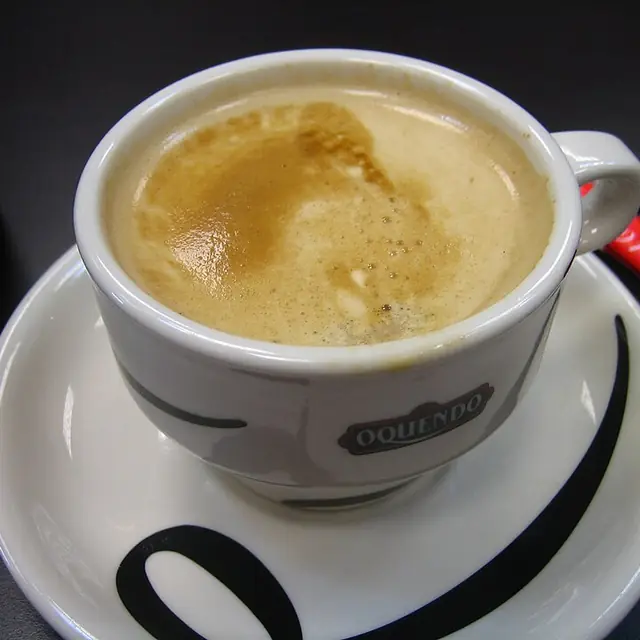
The coffee window came over with the cigar workers and never left. Key West drinks it Cuban style: the sugar is beaten into the first drops of espresso to make the espumita, the sweet crema that sits on top, and the whole thing is served at a hatch onto the street rather than at a table. 5 Brothers Grocery pours it at Southard and Grinnell alongside the sandwich counter, Sandy's Cafe opens its White Street window at 05:00, and Cuban Coffee Queen has grown from one muralled window by the Bight into several sites plus its own roastery.
Book a food experience
Tours, tastings and classes from the cities on this page, bookable on GetYourGuide.


Common allergens: Dairy
Make it at home
Ingredients
- 40g finely ground dark-roast espresso coffee
- 3 tbsp granulated sugar
- 240ml whole milk
- Water for the moka pot
Method
- Fill the moka pot base to the valve, load the basket with coffee and level it without tamping. Assemble and set over a medium heat.
- Put the sugar in a small heatproof jug.
- As soon as the first dark drops come through, pour about a tablespoon of them over the sugar and take the pot off the heat for a moment.
- Beat that spoonful and the sugar hard with a teaspoon for a full minute until it turns pale and thick. This is the espumita.
- Return the pot to the heat, let it finish, then pour the rest of the coffee into the jug and stir through the espumita.
- Heat the milk to just below boiling, pour into two glasses, top with the sweetened coffee and stir once.
Tip from the editors. Beat the espumita before the coffee cools. Once the first drops drop below about 60C the sugar will not whip pale and you get sweet coffee instead.
Where to eat cafe con leche (cuban coffee with milk)
Cafe con Leche (Cuban coffee with milk) in Key West
5 Brothers Grocery & Sandwich Shop ★ 4.7
5 Brothers Grocery feeds Old Town Key West on corner-store prices, pressing Cuban mixes and frying bollos at Southard and Grinnell since 1978.
TryCuban mix, con leche and bollos
TipThe Bench Crew of regulars holds court outside each morning; come before the 06:30 rush clears the pastry case.
Sandy's Cafe ★ 4.6
Sandy's Cafe is Key West's cheapest good lunch, a laundromat window on White Street pressing Cuban mixes and pouring con leche from 05:00 every day.
TryCuban mix and cafe con leche
TipOrder at the window, eat on the stools facing the street; the buchi shot is the fastest caffeine on the island.
Cuban Coffee Queen ★ 4.6
Cuban Coffee Queen pairs pressed sandwiches with dollar-scale Cuban coffee at its Key West Bight window, breakfast and lunch for pocket change.
TryPressed Cuban sandwich and con leche
TipFive windows now operate across Key West, including a roastery at 6 Key Lime Square; the Margaret Street original keeps the mural queue.
Cafe con Leche (Cuban coffee with milk) in Tampa
La Teresita ★ 4.5
La Teresita on Columbus Drive has run a Cuban counter and dining room in West Tampa since 1972, owned by the Capdevila family across two generations.
OrderPalomilla steak with yellow rice and black beans.
TipThe counter side runs 6am to midnight Friday and Saturday; the dining room takes reservations next door.
La Segunda Central Bakery ★ 4.8
La Segunda in Ybor City has baked Cuban bread daily since 1915, with 18,000-plus loaves a day and the palmetto frond baked into the top loaf for steam.
Worth the queueLong Cuban bread with palmetto frond
Mauricio Faedo's Bakery ★ 4.7
Mauricio Faedo's Bakery on North Florida Avenue bakes Cuban bread, breakfast Cuban toast and deviled crabs daily, with the family running it since 1955.
Worth the queueDaily-baked Cuban bread
More cities are in research. Want cafe con leche (cuban coffee with milk) covered somewhere specific? Tell us where you want to eat.