History

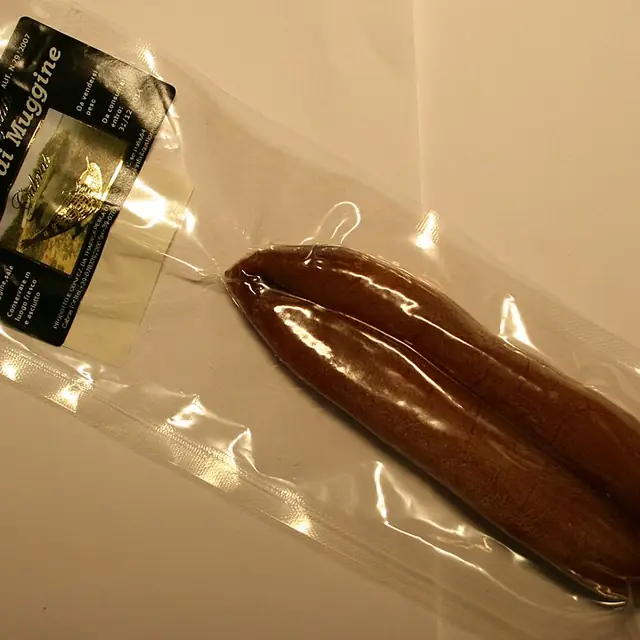
Bottarga is made by lifting the intact roe sac from a grey mullet, salting it, pressing it flat under weights and drying it in air for weeks until it firms into a translucent block. The technique is Phoenician in origin and the lagoons around Cagliari and Cabras have supplied the fish for it since antiquity, which makes bottarga arguably the oldest continuously traded Sardinian food. Mullet bottarga, di muggine, is finer and more expensive than the tuna version. In Cagliari it appears grated over spaghetti with oil and garlic, shaved raw over artichoke or celery, or simply sliced with a little oil as an antipasto.
Common allergens: Fish

Make it at home

Yield Serves 4Hands-on 15 minTotal 25 minDifficulty Easy

Ingredients

  • 360g spaghetti
  • 60g bottarga di muggine, half grated and half sliced paper thin
  • 1 garlic clove, lightly crushed
  • 5 tablespoons olive oil
  • Zest of half an unwaxed lemon
  • 1 tablespoon chopped flat parsley

Method

  1. Warm the oil with the garlic over low heat for 3 minutes, then take out the garlic and let the oil cool slightly.
  2. Cook the spaghetti in lightly salted water, remembering the bottarga is already salty.
  3. Drain the pasta a minute early, keeping a ladle of the water, and return it to the warm pan off the heat.
  4. Toss the spaghetti with the garlic oil and a splash of pasta water until it is glossy.
  5. Fold in the grated bottarga off the heat so it melts into the oil rather than cooking.
  6. Plate, then finish with the sliced bottarga, the lemon zest and the parsley.

Tip from the editors. Never add cheese. Bottarga and pecorino fight each other, and Sardinians will tell you so.

Where to eat bottarga di muggine

Bottarga di muggine in Cagliari

Featured by TableJourney as a signature dish of Cagliari. See where to eat Bottarga di muggine in Cagliari or the Cagliari signature dishes guide.

More cities are in research. Want bottarga di muggine covered somewhere specific? Tell us where you want to eat.

Browse all dishes →