
Lisbon
Guided tour · 3 hours
Lisbon: Food and Wine Small Group Walking Tour
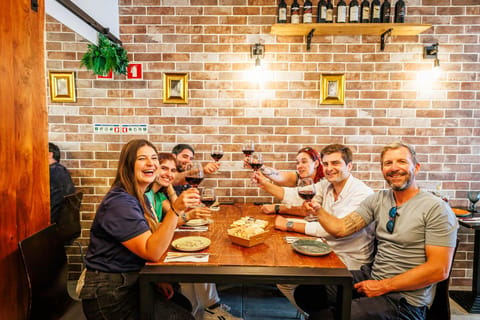
Savor the flavors of Portuguese cuisine on a guided foodie walking tour of Lisbon. With your culinary guide, discover the finest food and wine with...
from€70Check dates
Thin slices of pork marinated in garlic, white wine and paprika, seared on the plancha and stuffed into a soft Portuguese papo seco roll, mustard optional.
Where to eat it: 5 restaurants across 2 cities.
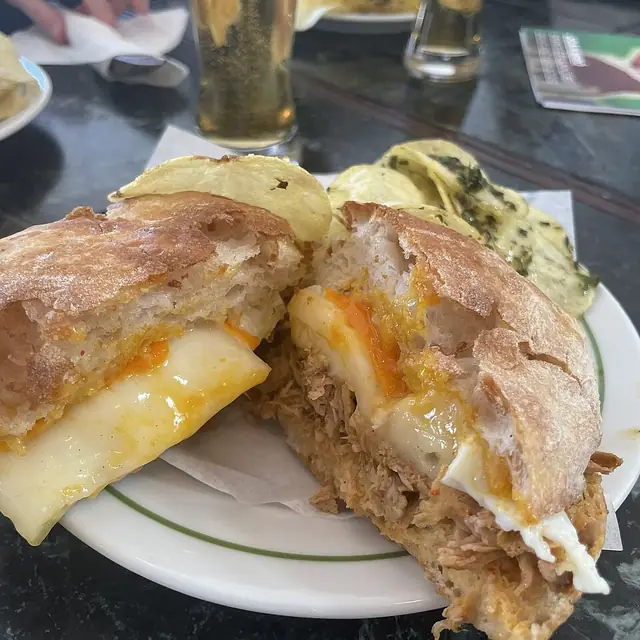
The bifana grew up in Vendas Novas in the Alentejo in the early 20th century as roadside fuel for Lisbon-to-Madrid hauliers, the pork tenderloin marinated in garlic, paprika and white wine and griddled to order. It moved into the city after the 1960s as the canonical 2.50-euro working lunch, and O Trevo on Camoes has been most-cited since the 1990s as the textbook Lisbon version on a soft papo-seco bun with yellow mustard.
Tours, tastings and classes from the cities on this page, bookable on GetYourGuide.
Guided tour · 3 hours
Savor the flavors of Portuguese cuisine on a guided foodie walking tour of Lisbon. With your culinary guide, discover the finest food and wine with...

2 - 3 hours
Discover the history of one of the most prestigious Port wine houses in the world - Taylor’s Port, established in 1692. Embark on a self-guided tour...

Guided tour · 4 hours
Are you a foodie? Then this is the perfect tour for you. Enjoy the best local flavors on this 4-hour walking food tour while absorbing the rich...

Guided tour · 3 hours
Discover the rich history of Braga on a guided tour of its historical center. Admire the grandeur of the city's palaces, churches, and civic...
Common allergens: Gluten
Tip from the editors. Slice the pork while still half-frozen for the thinnest cuts. Three minutes total cooking is the maximum, or it goes leathery.
As Bifanas do Afonso on Lisbon's Rua da Madalena: bifanas at 2.50 euros, stand-up counter, beer in a sleeve, no chairs, lunch in five minutes flat.
TryBifana, marinated pork sandwich
O Trevo on Lisbon's Praca Luis de Camoes: 2.80-euro bifanas with cheese, a stand-up beer with each, the local consensus for cheap Lisbon eats.
TryBifana with cheese
Casa das Bifanas in Lisbon's Baixa: a long counter on Praca Dom Joao da Camara, bifanas at three euros with sharp mustard and a Sagres in a sleeve glass.
TryBifana with sharp mustard, 3 euros
Conga on Rua do Bonjardim in Porto turns out 2.50 euro bifanas with mustard and piri-piri, a counter where two sandwiches and an imperial cost under 10 euros.
TryBifana (slow-cooked pork sandwich)
Cervejaria do Carmo on Rua do Carmo in Porto pours a working-class house lager, sells imperials all day and runs the city's most enduring seafood petiscos.
More cities are in research. Want bifana covered somewhere specific? Tell us where you want to eat.