History

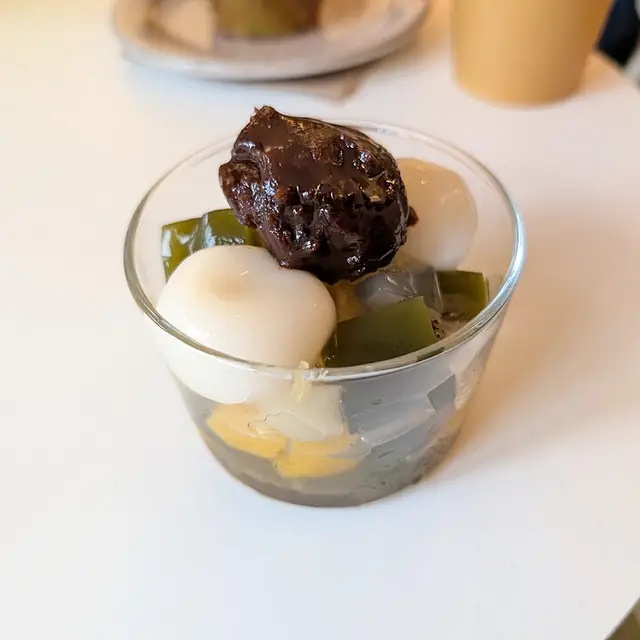
Anmitsu was invented in 1930 at Funawa, a tea-and-sweets shop in Asakusa, as an evolution of the older mitsumame (kanten cubes with sweet syrup) by adding anko (sweetened azuki bean paste). The dish became the standard Tokyo summer dessert through the postwar boom, sold at kanmidokoro (sweet shops) and senbei (rice-cracker) stores. The classic preparation never adds dairy beyond the optional scoop of ice cream; the agar-agar jelly is the structural backbone. Tokyo old-shop kanmidokoro like Funawa Asakusa Honten and Asakusa Umezono still serve the dish in unchanged glass coupes.

Common allergens: Dairy (if ice cream), Soy (if mochi flour)

Make it at home

Yield 4Hands-on 30 minTotal 2 hrDifficulty Intermediate

Ingredients

  • For the kanten jelly: 4g powdered agar-agar (kanten), 500ml water, 1 tbsp caster sugar
  • 200g sweetened anko (azuki bean paste; sold tinned at Asian groceries; or make from 200g dried azuki beans simmered with 150g sugar and a pinch of salt for 90 minutes until thick)
  • For shiratama mochi balls: 100g shiratamako (glutinous rice flour) mixed with 80 to 90ml cold water to a soft dough
  • rolled into 16 small balls and boiled in salted water 3 minutes until they float
  • For kuromitsu syrup: 100g okinawan kurozato (dark muscovado sugar), 80ml water, 1 tbsp honey
  • simmered together 5 minutes to a syrup, cooled
  • Seasonal fresh fruit: 8 strawberries or mandarin segments, 8 cubes of melon or kiwi, 4 cherries
  • 4 scoops matcha or vanilla ice cream
  • 4 tinned mandarin segments (the traditional canned-fruit touch that Funawa still uses)

Method

  1. Make the kanten: combine powdered agar with the water in a small saucepan, whisk well, bring to a boil and simmer 2 minutes, whisking constantly. Stir in the sugar.
  2. Pour the hot kanten into a shallow flat-bottomed tray to 1.5cm depth. Cool at room temperature 20 minutes (it sets at room temperature, unlike gelatine) then chill 60 minutes.
  3. Cut the set kanten into 1cm cubes with a sharp knife.
  4. Make the shiratama mochi: mix the rice flour with cold water to a soft, smooth dough; roll into 16 balls about the size of small marbles. Boil in salted water for 3 minutes; they will float when ready. Lift out into cold water to firm up.
  5. Make the kuromitsu: heat the kurozato, water and honey in a small pan, simmer 5 minutes until a thick dark syrup. Cool to room temperature.
  6. Assemble each bowl: spoon a heaped tablespoon of anko in the centre of a glass bowl. Surround with kanten cubes around the perimeter.
  7. Arrange 4 shiratama mochi balls on top of the kanten. Layer with fresh fruit and a tinned mandarin segment.
  8. Top with a scoop of matcha ice cream just before serving.
  9. Pass a small pitcher of kuromitsu at the table; each diner drizzles their own to taste.

Tip from the editors. Powdered agar is sold at Asian groceries and health-food shops; do not substitute with gelatine, which gives a wobbly texture rather than the clean snap kanten provides. Make all components except the ice cream a few hours ahead so the kanten is properly chilled.

Where to eat anmitsu

Anmitsu in Tokyo

Nakamise-dori snack street ★ 4.1

Street food¥Daily 09:00-19:00 (vendor hours vary)Cash only

Nakamise-dori in Tokyo's Asakusa is the 250-metre snack street between Kaminarimon gate and Senso-ji temple. Ningyo-yaki, agemanju, senbei since 1685.

Try: Ningyo-yaki, agemanju, senbei rice crackers

Tip: The ningyo-yaki at Kimura-ya Honten and senbei at Tokiwa-do are the historic picks. Eat on the spot, do not walk-and-eat.

More cities are in research. Want anmitsu covered somewhere specific? Tell us where you want to eat.

Browse all dishes →