

Toronto
Guided tour · 2.5 hours
Kensington Market 'Taste the World' Food Tour
Kensington Market is a must-see on any Toronto bucket list. Travel the world in one afternoon as we taste a variety of multicultural delicacies in...
fromC$109Check dates
21 editor-picked pacific northwest restaurants across 3 cities.
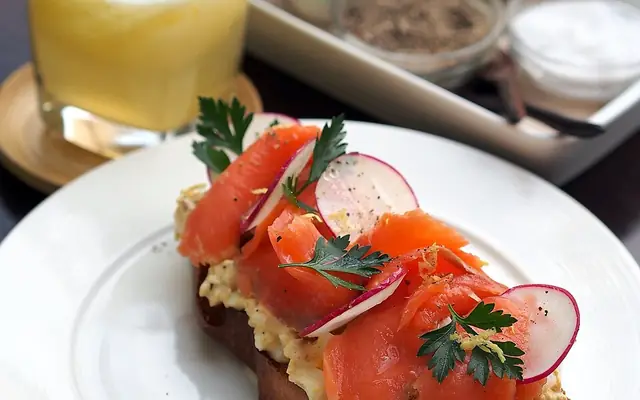
Pacific Northwest cuisine is the cooking of the wet, temperate, rainforest-and-coastline region from Northern California through Oregon, Washington, British Columbia, and into southeast Alaska, anchored by Seattle and Portland as the urban food capitals. The cuisine is built on one of the richest natural larders in North America: wild salmon (especially king/chinook, sockeye, coho), Pacific oysters (Olympia, Kumamoto, Pacific from Willapa Bay and Hood Canal), Dungeness crab, spot prawns, halibut, sablefish (black cod), razor clams, geoduck, mussels; foraged mushrooms (chanterelle, morel, porcini, matsutake, black trumpet) from the temperate rainforest; wild berries (marionberry, salmonberry, huckleberry, thimbleberry, Olallieberry); apples and pears from the Yakima and Hood River valleys; and a distinctive Native American and First Nations foodway (Coast Salish, Chinook, Tlingit, Haida) that includes cedar-plank salmon, smoked salmon, and the potlatch tradition.
The modern Pacific Northwest restaurant cuisine took shape in the 1980s and 1990s with Tom Douglas in Seattle, the rise of Portland's chef-driven scene in the 2000s (Cathy Whims at Nostrana, Naomi Pomeroy at Beast, the Pok Pok and Le Pigeon era), and the emergence of New Nordic-influenced cooking with chefs like Renee Erickson (Walrus and the Carpenter, Bateau) and Eric Donnelly (RockCreek). The cuisine shares much with Californian (seasonal sourcing, restraint, ingredient-first composition) but has its own distinct vocabulary built around the regional larder. Smoke, fire, and foraged ingredients are central in ways they are not in Californian cooking.
The coffee culture (Seattle as the home of Starbucks and the modern espresso movement), the beer culture (the Pacific Northwest is the most innovative craft beer region in the country, with Portland and Bend leading), the wine culture (Willamette Valley Pinot Noir, Walla Walla and Yakima Valley reds), and the spirits culture (Westland whiskey, Aviation Gin, Stumpy Point) all feed into the region's eating-and-drinking identity. The Pacific Northwest food scene is, for its population, one of the most chef-driven and ingredient-conscious in the country.
Tours, tastings and classes that match this page, bookable on GetYourGuide.
Guided tour · 2.5 hours
Kensington Market is a must-see on any Toronto bucket list. Travel the world in one afternoon as we taste a variety of multicultural delicacies in...

Guided tour · 2 hours
Embark on a culinary tasting tour of Pike Place Market with a local chef. Stop at 9 artisanal vendors and learn about local food producers as you...

Day trip · 8 hours
Experience the fine wines and beautiful scenery of Napa and Sonoma on a guided day trip from San Francisco.
Guided tour · 3 hours
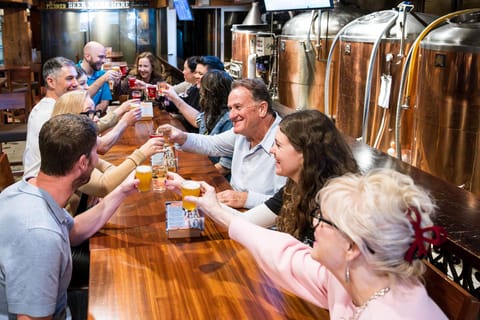
Tantalize your taste buds as you enjoy a walking food tour of Vancouver's historic Gastown. Explore this culturally rich neighbourhood and visit 7...
The best-scored pacific northwest place in each of 3 cities.
AnnaLena in Kitsilano runs chef Michael Robbins's tasting menu on West 1st Avenue, named Canada's Best Restaurant in 2020 and Michelin recommended.
OrderThe full chef's tasting menu; chef Mike Robbins drives the night.
TipReservations open 60 days out on Tock; Friday and Saturday seats clear within hours. The bar walks in earlier in the evening.
Atoma in Seattle's Wallingford is the chef-driven Craftsman-house kitchen named Seattle Met's Restaurant of the Year 2024 and a James Beard New Restaurant.
OrderThe chef's tasting; the menu changes every two weeks with the Washington harvest.
TipReservations open four weeks out at 09:00 and book inside an hour; the bar seats four for walk-ins.
Birdsong in San Francisco is Christopher Bleidorn's two-Michelin-star Pacific Northwest tasting in SoMa, with a hearth-cooked menu rooted in foraging.
Book4 to 6 weeks ahead
TipThe kitchen-counter four-top is the best seat; ask for it when booking opens at 09:00 Pacific.
AnnaLena in Kitsilano runs chef Michael Robbins's tasting menu on West 1st Avenue, named Canada's Best Restaurant in 2020 and Michelin recommended.
OrderThe full chef's tasting menu; chef Mike Robbins drives the night.
TipReservations open 60 days out on Tock; Friday and Saturday seats clear within hours. The bar walks in earlier in the evening.
Published on Main from 2020 is chef Gus Stieffenhofer-Brandson's wood-fire tasting room on Main, Canada's Best Restaurant 2022 and Michelin-starred 2022.
OrderThe tasting menu; chef Gus Stieffenhofer-Brandson sets the seasonal pace.
TipTock reservations open 30 days out and book within hours; the chef's counter takes a separate higher-priced menu.
Botanist at the Fairmont Pacific Rim runs chef Hector Laguna's contemporary kitchen, Michelin recommended and World's 50 Best Discovery 2024.
OrderThe seasonal tasting menu with the wine pairing at the Botanist Bar before dinner.
TipBook through OpenTable 30 days out. The Botanist Bar takes walk-ins for cocktails and a tighter snack menu.
Atoma in Seattle's Wallingford is the chef-driven Craftsman-house kitchen named Seattle Met's Restaurant of the Year 2024 and a James Beard New Restaurant.
OrderThe chef's tasting; the menu changes every two weeks with the Washington harvest.
TipReservations open four weeks out at 09:00 and book inside an hour; the bar seats four for walk-ins.
Birdsong in San Francisco is Christopher Bleidorn's two-Michelin-star Pacific Northwest tasting in SoMa, with a hearth-cooked menu rooted in foraging.
Book4 to 6 weeks ahead
TipThe kitchen-counter four-top is the best seat; ask for it when booking opens at 09:00 Pacific.
Lark in Seattle is John Sundstrom's 20-year Pacific Northwest dining room on Capitol Hill: a James Beard winning kitchen plating local ingredients.
Book2 to 3 weeks ahead
Matt's in the Market in Seattle is the Pike Place Corner Market room with windows over the clock: a Pacific Northwest kitchen sourcing five floors down.
OrderThe catfish sandwich at lunch, on Macrina sourdough with house remoulade.
TipLunch counter seats walk in at 11:30 and turn quickly; dinner needs a reservation, especially for window tables.
 Vancouver13 places
AnnaLena, Published on Main
Vancouver13 places
AnnaLena, Published on Main
 Seattle7 places
Atoma, Lark
Seattle7 places
Atoma, Lark
 San Francisco1 place
Birdsong
San Francisco1 place
Birdsong
The Pacific oyster capital (Walrus and the Carpenter is the institution-grade raw bar), the Tom Douglas restaurant family (Dahlia Lounge, Etta's, Palace Kitchen), the modern Asian-PNW fusion (Canlis, Mistral Kitchen alumni), and the Pike Place Market food culture. Salmon, halibut, geoduck, Dungeness crab.
The chef-driven restaurant city: Le Pigeon (Gabriel Rucker), Beast and Expatriate (Naomi Pomeroy), Pok Pok (Andy Ricker, Thai-PNW), Olympia Provisions (charcuterie), Castagna (modernist), and a deep food cart culture. Willamette Valley Pinot Noir country.
Astoria, Cannon Beach, Tillamook, Long Beach Peninsula, Hood Canal, the San Juan Islands. Fishing-village restaurants, oyster shacks, smoked salmon producers. The most direct access to the regional larder.
Often grouped with the US Pacific Northwest culinarily. Strong Asian fusion (Vancouver has one of the largest Chinese populations in North America), seafood-led fine dining (Hawksworth, St. Lawrence), and the Sea-to-Sky food scene.
Juneau, Sitka, and Ketchikan as smaller scenes; salmon, halibut, king crab, spot prawns are all native. Tlingit and Haida indigenous foodways are still alive and increasingly visible in the restaurant scene.
A Pacific Northwest restaurant meal typically opens with oysters (a half-dozen or dozen on the half shell, ideally a sampler of regional varieties) and a salad or a smoked-salmon starter. The main is salmon, halibut, or Dungeness crab in season, or a wild-mushroom or seasonal-vegetable dish. Sides are seasonal vegetables (asparagus in spring, brassicas in autumn, root vegetables in winter). Dessert is marionberry pie, an apple-pear-or-plum crisp, or a fruit-led tart. The wine pairing is typically Willamette Pinot Noir or a Washington white.
The rookie mistakes: ordering farmed Atlantic salmon at a Pacific Northwest restaurant (the wild Pacific salmon, especially king and sockeye, is the point; off-season, the high-quality menu will pause or shift), under-trying the oyster varietals (the differences are real and worth exploring), missing the food cart culture in Portland (some of the best meals in the city are from a tin-roofed truck), and skipping the smoked salmon (it is the regional pantry's signature).
Pacific Northwest wine is exceptional: Willamette Valley Pinot Noir (Domaine Drouhin, Beaux Freres, Eyrie Vineyards), Walla Walla Cabernet and Syrah, Yakima Valley Riesling and Chardonnay, and the rising sparkling-wine scene. Craft beer is genuinely world-class (Russian River, Logsdon, Cascade, Pfriem, Boneyard, Breakside, Modern Times). Coffee culture is its own thing (Stumptown, Heart, Coava, Caffe Vita as the third-wave touchstones). With oysters, sparkling wine or a dry Riesling; with salmon, a Willamette Pinot Noir; with crab, a buttery Chardonnay or a IPA; with wild mushrooms, a Pinot Noir or a Walla Walla red blend.
Seattle: Canlis (the institution-grade fine dining), Walrus and the Carpenter, Sitka & Spruce (closed but seminal), the Tom Douglas restaurants, Wild Ginger, Cafe Juanita, Eden Hill. Portland: Le Pigeon, Expatriate, Castagna, Nostrana, Coquine, Olympia Provisions, the food cart pods. Vancouver: Hawksworth, St. Lawrence, Kissa Tanto, Phnom Penh, Anh and Chi. The coastal Oregon-Washington-BC stretch for fishing-village restaurants and oyster shacks. Outside the region, Pacific Northwest cuisine has limited explicit export; the influence is felt through the alumni of major PNW restaurants who have moved to other cities.
Pacific Northwest cuisine descends from the indigenous foodways of the Coast Salish, Chinook, Tlingit, Haida, and other Pacific Northwest peoples (salmon, shellfish, berries, roots, cedar-cooking techniques), layered with the agricultural traditions of European settlers in the late 19th century, Asian immigration (particularly Chinese, Japanese, and Vietnamese), and the modern chef-driven restaurant culture that emerged in the 1980s and 1990s. The region's natural larder (one of the richest in North America) and the wine industry's emergence in Oregon's Willamette Valley (Eyrie planted Pinot Noir in 1965; the modern industry consolidated in the 1980s) shaped the contemporary cuisine.
Related, distinct. Both share seasonal, ingredient-led, ingredient-first thinking. Pacific Northwest is built on a different larder (wild salmon, oysters, mushrooms, berries, the rainforest pantry), uses more smoke and fire as cooking techniques, and has a stronger indigenous foodway influence. Californian leans Mediterranean; Pacific Northwest leans New Nordic and Native American.
Five Pacific species. King (chinook) is the largest and richest, with the highest fat content. Sockeye is the most flavorful and brightest red. Coho (silver) is leaner and milder. Pink and chum are typically used for canning and smoking. King and sockeye are the prized restaurant species. Farmed Atlantic salmon is a different fish and not a Pacific Northwest product.
Seattle was the birthplace of Starbucks (1971) and of the modern American espresso movement, partly because the cool, rainy climate makes coffee culture an everyday ritual. The third-wave coffee revolution (Stumptown in Portland, Heart, Coava, Caffe Vita) reshaped American specialty coffee in the 2000s and 2010s. The PNW continues to be the most coffee-obsessed region of the country.
More cities are in research. Want pacific northwest covered somewhere specific? Tell us where you want to eat.