Moldovan cuisine is the food of a small Black Sea-adjacent country that has been pulled between Romanian, Russian, Ukrainian, and Ottoman culinary worlds for centuries, and the result is a kitchen that shares dishes with each but composes them in its own way. The land itself does most of the work: Moldova is one of the most agriculturally productive countries in Europe per capita, with deep black soil (the Pontic-Caspian chernozem) that grows wheat, corn, sunflowers, walnuts, stone fruit, and the grapes that anchor Moldova's defining export industry. Wine has been made here since at least the fourth millennium BCE; the cellars at Cricova and Milestii Mici (the latter a Guinness record-holder for sheer volume) run for tens of kilometers underground.
The daily table is built on mamaliga (the cornmeal polenta), placinte (filled pastries, savory or sweet, in dozens of regional shapes), sarmale (stuffed cabbage or vine leaves with rice and pork), zeama (a sour chicken-noodle soup with bors, the fermented wheat-bran liquid), and a strong dairy tradition that runs to brinza sarata (a brined sheep cheese), urda (a ricotta-like fresh cheese), and smantana (sour cream). Pork is the dominant meat, with lamb and chicken behind; Black Sea-influenced fish dishes show up in the south.
The Moldovan-Romanian relationship is the closest culinary one, and many dishes (sarmale, mamaliga, zeama, placinte) cross the Prut river freely. But Moldova's stretching toward Ukraine, Russia, and Turkey gives it a distinct accent: more dill and parsley, more sour-cream sauces, more dumpling traditions (coltunasi, the Moldovan ravioli, closer to pelmeni than Italian pasta), and the deepest wine-with-meals culture in the region.
Book a food experience
Tours, tastings and classes that match this page, bookable on GetYourGuide.
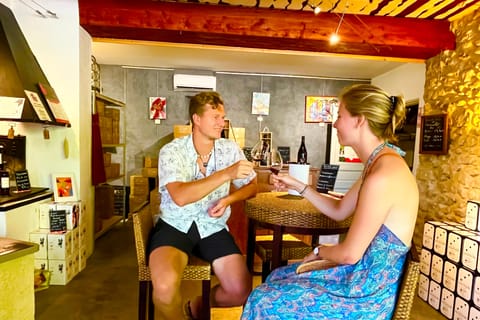
The Wine Tour is an amazing and real experience not to be missed in the surrounding area of Cagliari. Enjoy the beautiful scenery while tasting some...
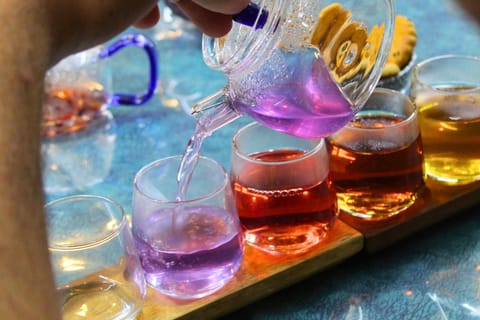
Discover world teas and traditional Turkish tea culture in a cozy workshop. Learn brewing techniques, taste different teas, and experience the social...
$$$$ChișinăuModern MoldovanCentruChef BERD'S Hotel kitchen team
BERD'S Arome Locale in Chișinău is the fine-dining room at Moldova's first design hotel on Cantemir, working Moldovan produce in a refined modern idiom.
OrderThe Moldovan tasting menu with the BERD'S Castel Mimi wine pairing.
TipBook the Organic Sunday Brunch for the local-producer board; the kitchen runs vegetarian, gluten-free and salt-free tasting menus on request.
$$$$ChișinăuModern MoldovanCentruChef BERD'S Hotel kitchen team
BERD'S Arome Locale in Chișinău is the fine-dining room at Moldova's first design hotel on Cantemir, working Moldovan produce in a refined modern idiom.
OrderThe Moldovan tasting menu with the BERD'S Castel Mimi wine pairing.
TipBook the Organic Sunday Brunch for the local-producer board; the kitchen runs vegetarian, gluten-free and salt-free tasting menus on request.
La Taifas in Chișinău is the old village house with porch on Strada București, serving rustic Moldovan cooking and live folk music in a clay-pottery room.
OrderTocăniță cooked in the cauldron with mămăligă and a shot of house țuică.
TipBook a porch table on a warm evening; the kitchen leans on cauldron stews and the placinte are made to order with a 20-minute wait.
The forested hill country around Chisinau. The most varied kitchen: mamaliga with sour cream and brinza, mititei (grilled minced-meat sausages), placinte cu branza (cheese-filled), tochitura (pork stew). The Cricova wine cellars sit here.
Gagauzia (southern, Turkic minority)
Turkic-Christian community with Ottoman-influenced cooking: kavarma (a meat-and-onion stew), pita-like flatbreads, more lamb than pork, and Gagauz red wines. Distinct from Romanian-Moldovan in seasoning and meat balance.
Transnistria (left bank of the Dniester)
Russian and Ukrainian leaning: more borshch, more vareniki, more salo, more pelmeni-style dumplings. The political situation is fraught; the kitchen is heavily Slavic.
South (Cahul, Stefan Voda)
Black Sea proximity and the deepest viticulture. The DOC wine zones (Stefan Voda for reds, Valul lui Traian for Saperavi and Feteasca Neagra) are here. Fish dishes (carp, perch, sturgeon historically) and grape-leaf sarmale.
Defining moldovan dishes
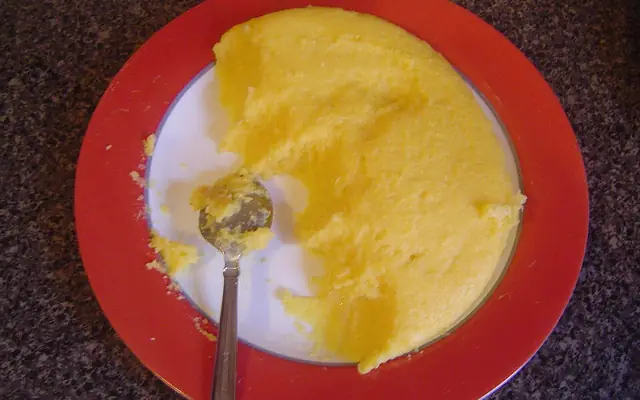
Mamaliga
Cornmeal polenta cooked to a firm consistency, traditionally cut with thread, not a knife. Served as the starch base with sour cream and brinza sheep cheese, or alongside meat stews and fried fish.
Sarmale
Cabbage rolls (or vine-leaf rolls in summer) stuffed with rice, ground pork, onion, dill, and parsley, simmered in tomato broth. Always served with sour cream and mamaliga. The festive dish for Christmas, Easter, and weddings.
Zeama
Moldovan sour chicken-noodle soup soured with bors (fermented wheat-bran liquid), with carrot, parsnip, parsley, dill, and homemade noodles (taietei). The classic recovery soup.
Placinte
Filled pastries baked or pan-fried, with a paper-thin pulled dough. Savory fillings include brinza and dill, potato and onion, cabbage; sweet fillings include sweet curd cheese, apple, pumpkin, sour cherry. Sold by every village bakery in dozens of shapes.
Brinza Sarata
A salty brined sheep cheese, eaten in chunks on mamaliga, crumbled into salads, or melted into placinte. The defining Moldovan dairy product.
Tochitura
A pork stew of cubed pork, onion, garlic, and red wine, reduced to a thick sauce. Served on mamaliga with a fried egg and brinza on top.
Mititei
Skinless grilled minced-meat sausages (beef, pork, lamb mix) seasoned with garlic, black pepper, allspice, and a touch of bicarbonate. Shared with Romania; eaten with mustard, bread, and a cold beer.
Coltunasi
Moldovan dumplings, closer to pelmeni than Italian ravioli, with farmer's cheese, potato, or cherry filling. Boiled and served with sour cream and melted butter.
Racituri
Pork aspic (head-cheese style), made by slow-cooking pork knuckle and head and setting the strained broth with garlic. A Christmas and cold-season classic.
Vin Fiert
Mulled wine with cinnamon, clove, honey, and citrus, served warm in winter. Made with Moldovan reds (Feteasca Neagra, Rara Neagra).
How to order
At a traditional Moldovan restaurant, expect a long meal: cold appetizers (charcuterie, pickled vegetables, brinza, salads), a hot soup (zeama or borshch), a main with mamaliga or roast potatoes, and a sweet placinta or fruit compote at the end. Order at least one dish with mamaliga (the starch is the soul of the kitchen) and at least one wine pairing (the wine is the cuisine's other half). Sour cream comes with most savory dishes and is a finishing condiment, not optional.
The rookie mistakes: ordering Moldovan food as if it were Russian (it is closer to Romanian than to Russian), refusing the house wine in favor of a foreign label (the local wine is genuinely world-class and far better than any import), skipping the placinte (the bakery tradition is one of the most distinctive in Eastern Europe), and confusing mamaliga with Italian polenta (Moldovan mamaliga is denser, drier, and cut into wedges, not stirred into a porridge). Tipping is 10 percent, rounded up.
What to drink with it
Moldovan wine is the headline. Feteasca Neagra (the indigenous red, dark and earthy), Rara Neagra (lighter, perfumed), Saperavi (the Georgian variety planted widely), Feteasca Alba (the white workhorse), and the dessert wines from Cricova and Milestii Mici are the categories to know. The cellars themselves are a destination: Milestii Mici holds over 1.5 million bottles in 200 kilometers of tunnels. For spirits, divin (Moldovan brandy, made in Calarasi and Tiraspol) is the after-dinner pour. Beer (Chisinau and Bere Bardar) is the casual choice. Compote (sweetened fruit drink) for non-drinkers.
Where to eat it
Chisinau is the center: La Plopi, Pegas, Vatra Neamului, Andy's Pizza (the local chain that does Moldovan classics alongside pizza) and the modern fine-dining rooms (Carpe Diem). The Cricova and Milestii Mici cellars are full restaurant-and-tasting experiences and one of the best wine days you can book in Europe. Outside Chisinau, the wine route to Stefan Voda or Valul lui Traian for cellar lunches; Soroca and Orhei for village-style cooking; Comrat for Gagauz food. Outside Moldova, the diaspora restaurants in Bucharest, Moscow (historically), Lisbon (Portugal hosts a sizable Moldovan community), and Italy's smaller cities (Padua, Verona) hold the line.
A short history
Moldovan cuisine descends from the medieval principality of Moldavia (founded in the 14th century), shaped by waves of Ottoman, Russian, and Habsburg rule, then by 20th-century Soviet ingredient politics, then by the post-1991 independence push to revive a distinct national kitchen. Wine has been continuous since at least the 4th millennium BCE; the country's modern wine industry restarted in the 1990s after Soviet collectivization and has earned international recognition over the past two decades.
Frequently asked
Is Moldovan food just Romanian food?
They share roughly 70 percent of the canon (sarmale, mamaliga, mititei, placinte, ciorba), but Moldovan cooking accents more dill and parsley, more sour cream sauces, more dumplings (a Slavic inheritance Romania has less of), and a deeper sour-soup tradition. Romanians and Moldovans recognize each other's tables but rarely confuse them.
How serious is Moldovan wine?
Very. Moldova is one of the world's most wine-dense countries per capita, with the largest underground cellars on earth (Milestii Mici) and a serious set of indigenous grape varieties (Feteasca Neagra, Rara Neagra, Feteasca Alba). Cricova's tunnels were a state-banquet wine cellar through the Soviet era and remain a working museum-winery.
What is bors and where does it come from?
Bors is the fermented wheat-bran liquid that sours Moldovan and Romanian soups. It is made by soaking wheat or corn bran in water for several days until lactic fermentation produces a light, sour liquid. The word also gives its name to Ukrainian and Russian borshch, though that soup is now identified with beets rather than the sour base.