

Cologne
Guided tour · 2 hours
Cologne: Brewery Tour with 3 Kölsch Beer Tastings
Experience Cologne's famous brewing culture and old town on this popular brewery tour. Immerse yourself in the exciting, humorous, and bizarre...
from€28Check dates
3 editor-picked burmese restaurants across 2 cities.
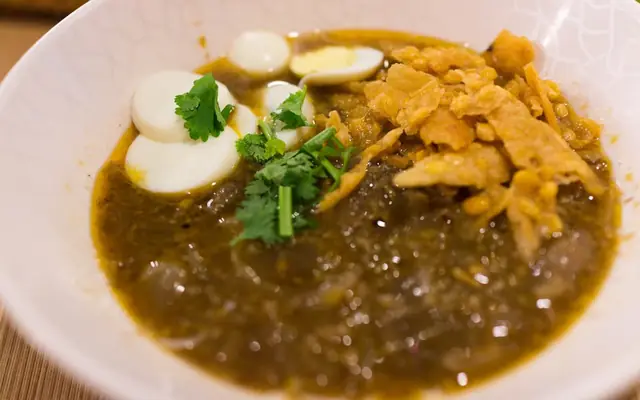
Burmese cuisine (sometimes Bama or Myanmar cuisine) is the food of Myanmar, sitting culturally and geographically between India, China, Thailand, and Bangladesh, with its own distinct grammar. The defining elements are fermented soybean (pepe in cake form, used like miso), fermented fish paste (ngapi), shrimp paste, dried shrimp, peanut oil, turmeric, garlic, ginger, and chile. Curries are oil-rich (the oil rises to the top, the local technique being to cook off the water until only the seasoned oil remains, then return ingredients to it). The Burmese curry is structurally closer to an oil-braise than to an Indian sauce.
The most distinctive Burmese contribution to world cuisine is laphet, fermented or pickled tea leaves, eaten as a salad (laphet thoke) with peanuts, sesame seed, fried garlic, dried shrimp, and lime. The combination of caffeine, fermentation, and crisp-fried garnish makes laphet thoke unlike any other Southeast Asian dish. Mohinga, the catfish-coconut-chickpea noodle soup eaten for breakfast across Myanmar, is the closest the country has to a national dish.
Burmese cuisine has a strong vegetarian and Buddhist monastic tradition, especially in central Bama areas. Pulses, vegetables, and tofu (Shan tofu, made from chickpea flour rather than soy) are common staples. The Shan State in eastern Myanmar has its own distinct cuisine, closer to Thai and Yunnan styles. The diaspora to Thailand, the US, and the UK following the 1962 military coup and the 2021 coup has dispersed Burmese cooking; the largest concentrations are now in Yangon, Thailand's Mae Sot border region, Singapore, and the San Francisco Bay Area.
Tours, tastings and classes from the cities on this page, bookable on GetYourGuide.
Guided tour · 2 hours
Experience Cologne's famous brewing culture and old town on this popular brewery tour. Immerse yourself in the exciting, humorous, and bizarre...
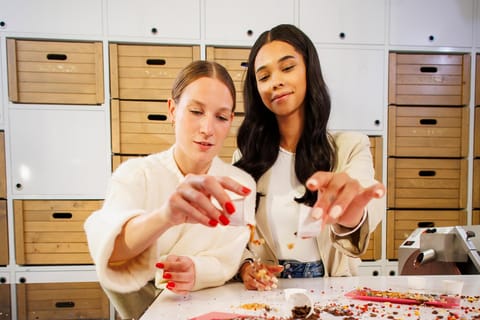
Guided tour · 1h 30m
Take a guided tour of the Chocoversum in Hamburg and discover how sweet chocolate is made. Taste the chocolate at various stages of production and...
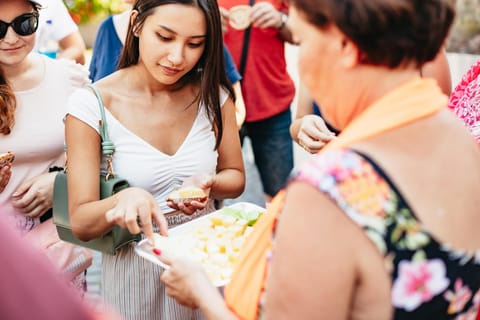
Guided tour · 2.5 hours
Enjoy a guided tour of the Viktualienmarkt in Munich and taste delicious regional foods as well as international delicacies. Enjoy the bustling life...

Day trip · 8 hours
Experience the fine wines and beautiful scenery of Napa and Sonoma on a guided day trip from San Francisco.
The best-scored burmese place in each of 2 cities.
Mandalay in Cologne's Belgisches Viertel is one of Germany's very few Burmese restaurants, serving family Myanmar recipes and fermented tea leaf salad.
OrderTea leaf salad with fermented Shan tea, crunchy beans and toasted sesame
TipOpen evenings only; arrive by 19:00 or book ahead as the small room fills quickly.
Burma Superstar in San Francisco is the Clement Street Burmese room that taught the city to eat lahpet thoke; the tea leaf salad is the order.
OrderThe tea leaf salad, tossed table-side with crunchy lentils and fried garlic.
TipNo reservations; put your name in then walk down Clement to B Star for tea while you wait.
Mandalay in Cologne's Belgisches Viertel is one of Germany's very few Burmese restaurants, serving family Myanmar recipes and fermented tea leaf salad.
OrderTea leaf salad with fermented Shan tea, crunchy beans and toasted sesame
TipOpen evenings only; arrive by 19:00 or book ahead as the small room fills quickly.
Burma Superstar in San Francisco is the Clement Street Burmese room that taught the city to eat lahpet thoke; the tea leaf salad is the order.
OrderThe tea leaf salad, tossed table-side with crunchy lentils and fried garlic.
TipNo reservations; put your name in then walk down Clement to B Star for tea while you wait.
Mandalay on Brüsseler Strasse 53 in the Belgisches Viertel is one of Germany's very few Burmese restaurants; evening-only, small room, Cologne Gastro Award.
Why locals goBurmese cuisine is almost absent from Germany; this is one of very few real Burmese kitchens in the country.
 Cologne2 places
Mandalay, Mandalay Burmese
Cologne2 places
Mandalay, Mandalay Burmese
 San Francisco1 place
Burma Superstar
San Francisco1 place
Burma Superstar
The dominant tradition. Oil-rich curries, mohinga, laphet thoke, ohn no khao swe (coconut chicken noodles), and the central Burmese curry repertoire. Yangon and Mandalay hold the densest restaurant scenes.
Closer to Thai and Yunnan styles. Shan-style noodles (khao soi Shan, different from the Thai version), Shan tofu (chickpea-flour tofu) and tofu salads, fermented soybean cakes (pone yay gyi), and a less oil-heavy cuisine.
The spiciest regional tradition, on the Bangladesh border. Rakhine fish curry (mont di), shrimp curries, and a stronger Bengali influence. Rakhine cuisine is now harder to access due to ongoing displacement.
Hill-tribe cuisines with stronger meat (wild game traditions historically, now mostly pork and chicken), bamboo, and foraged greens. Closer to Karen cuisine in Thailand.
At a Burmese restaurant, the meal centers on rice (htamin) and a curry, with multiple small side dishes (htamin gyi) including a soup (hingyo), a fresh salad (a thoke), a relish (mei thee or balachaung), and pickles. The standard order is one or two curries shared among diners, plus the side platter. Mohinga is breakfast and lunch, not dinner. Laphet thoke is a snack or appetizer, never a main. Tea (laphet yay) is served in small handle-less cups; the Burmese tea-shop (laphet yay saing) is a social institution and a key dining venue. The bill is paid at the counter. Tipping is not common in Myanmar but is appreciated; 5-10% at diaspora restaurants. The rookie mistakes are treating Burmese as just another Southeast Asian cuisine (it has its own grammar; the oil-braised curries are not Thai or Indian style), refusing fish paste (ngapi is the umami foundation), and asking for mohinga at dinner (it is a morning dish).
Tea is the central Burmese pair, in three forms: laphet yay (Burmese-style milk tea with condensed milk, the everyday drink), green tea (offered free at most restaurants), and the fermented laphet leaf salad described above. Beer (Myanmar Beer, Tiger, Mandalay Beer) is the standard meal pair. Sugarcane juice and toddy (palm wine) are local drinks. Coconut water at curry-heavy meals. Outside Myanmar, the diaspora restaurants pair with Thai-style beer and tropical fruit juices. Wine pairing is rare; off-dry whites work with the oil-rich curries.
Yangon (Rangoon) holds the deepest in-country Burmese food scene, with the markets (Bogyoke Aung San Market, Insein), the tea shops, and the increasing number of modern restaurants. Mandalay for the central Bama cuisine. Outside Myanmar, the Burmese diaspora has built strong food scenes in Bangkok (Mae Sot border region for the densest), Singapore (Peninsula Plaza), San Francisco (the largest Burmese community in the US, with Burma Superstar and Mandalay setting the diaspora standard), Daly City and the Bay Area broadly, New York (Burmese Bites, Rangoon Spoon), London (Lahpet, Manaow), and increasingly Berlin.
Burmese cuisine took shape across centuries of contact with India (via Bengal and the Bay of Bengal), China (via Yunnan), Thailand, and the Mon and Karen indigenous peoples. The British colonial period (1824-1948) introduced wheat and bread but had less culinary impact than in India. The 1962 military coup and the long isolation that followed limited culinary exchange; only since the 2010s has Burmese cuisine begun to globalize, mostly through diaspora restaurants. The 2021 coup has accelerated the diaspora and the spread of Burmese restaurants abroad.
No. Burmese cuisine has its own grammar: oil-braised curries, fermented tea-leaf salads, the laphet tradition, fish paste (ngapi) as the umami base, and a structure of rice plus curry plus multiple small sides. It shares ingredients with Thai (lemongrass, fish sauce) and Indian (turmeric, chile, ginger) but uses them differently.
Laphet is fermented (sometimes pickled) tea leaves, a staple Burmese ingredient unique in Southeast Asia. Eaten as the base of laphet thoke (tea leaf salad), chewed as a stimulant snack, or offered as a ceremonial gift. The fermentation produces caffeine plus a slightly umami, tart flavor.
The traditional Burmese curry technique cooks the dish until the water has evaporated and the oil (peanut oil traditionally) rises to the top, intensifying the spice flavor and acting as a preservative. The dish is then served with the oil layer intact. It is structurally an oil-braise, not a sauce.
More cities are in research. Want burmese covered somewhere specific? Tell us where you want to eat.