
Brazilian cuisine is too big to be one cuisine. The country covers half a continent, holds Africa's largest diaspora outside Africa, and was shaped by Portuguese colonization, Indigenous Amazonian and coastal cultures, and 19th- and 20th-century waves of Italian, German, Japanese, and Lebanese immigration. The result is at least five distinct regional kitchens that share a few national anchors, rice and beans, manioc (cassava) in flour and starch form, cachaca, and the feijoada bean stew, but otherwise look completely different from each other.
The national dish, feijoada, comes from Rio's slave-era kitchens and is now eaten across the country on Wednesdays and Saturdays. The Bahian kitchen of the Atlantic northeast, built by enslaved West Africans, runs on dende (red palm) oil, coconut milk, dried shrimp, and the moqueca seafood stew. The Mineiro cuisine of inland Minas Gerais is pork, cheese (queijo Minas), beans, and the slow-cooked tutu and feijao tropeiro. The southern gaucho cuisine is churrasco, the rotating skewers of beef cooked over wood embers that became the rodizio style now seen worldwide. The Amazonian cuisine of the north runs on river fish, tucupi, jambu, and tropical fruits that exist nowhere else.
São Paulo, the country's biggest city, is also its food capital, holding the largest Japanese diaspora outside Japan, a serious Italian and Lebanese heritage, and a tasting-menu scene led by D.O.M. (Alex Atala) that put Amazonian ingredients on the global fine-dining map. Rio cooks differently: looser, more beachside, more feijoada-centric. Salvador anchors Bahian cooking, Belo Horizonte the Mineiro, Porto Alegre the gaucho.
Book a food experience
Tours, tastings and classes that match this page, bookable on GetYourGuide.

Top picks
The best-scored Brazilian place in each of 7 cities.
Lasai 2 ★ ★ 4.9
Lasai in Humaitá serves a single tasting menu built on produce from the chef's own gardens, and it holds two Michelin stars in Rio de Janeiro, Brazil.
OrderThe single tasting menu, led by vegetables from the chef's gardens in Itanhangá and Vale das Videiras
BookBook ahead; the house takes reservations only ahead
TipSeatings are fixed at 20:00 from Tuesday to Friday and at 19:00 or 22:30 on Saturday, so arrive on time; the house takes reservations only.
Evvai 3 ★ ★ 4.9
Evvai in Pinheiros serves a single tasting menu, Oriundi, fusing Brazilian and Italian technique under chef Luiz Filipe Souza in Sao Paulo, Brazil.
OrderMoqueca branca with squid and pupunha palm heart
BookSeveral weeks; book directly with the restaurant ahead
TipThe tasting menu changes with every edition but the scallop course, Bomba de vieira, is a permanent fixture on the menu.
Reveler's Hour ★ 4.5
Reveler's Hour in Washington DC is Bill Jensen and chef Mari Kolchraiber's Adams Morgan Brazilian-Italian dining room on Columbia Road, the sister.
OrderWhichever fresh pasta course leads the menu.
TipBottles of wine are 50 percent off Monday to Thursday before 18:30; the room takes walk-ins at the bar most nights.
Pitanga ★ 4.1
Pitanga is a Brazilian-inspired cafe, restaurant and bar at 207 Starr St in Bushwick, specializing in healthy brunch fare with vegan and vegetarian offerings.
OrderBrazilian Breakfast: organic eggs, slow-cooked beans, tomato and cheddar cheese.
TipBrunch is served daily from 9am to 4pm, and tables can be booked on Resy.
Tucanos Brazilian Grill ★ 3.9
Tucanos Brazilian Grill brings the churrascaria rodizio format to Boise, with gaucho servers carving a dozen meats tableside alongside a Brazilian salad bar.
OrderThe rodizio experience -- start with the gaucho-carved garlic sirloin
Rodizio Grill Brazilian Steakhouse ★ 3.9
Rodizio Grill runs the Brazilian steakhouse ritual on Jefferson Street, gauchos carving rotisserie meats beside a 30-item housemade salad bar.
OrderThe full rodizio meat service with a Rodizio Limeade
TipFriday to Sunday opens at 11:00 with a brunch service; the made-to-order Rodizio Limeades are the house non-alcoholic signature.
Latina Brazilian Steakhouse (Liangmaqiao) ★ 3.7
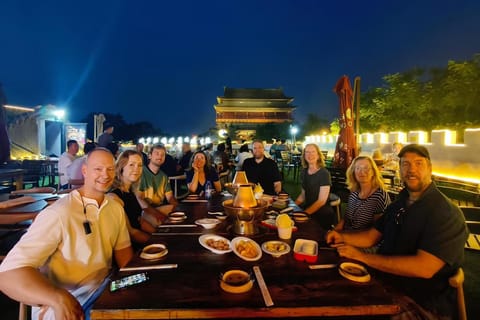
Latina Brazilian Steakhouse at The Grand Summit in Liangmaqiao, Beijing, serves rodizio-style beef cooked over an open flame; it began in China in 1998.
OrderTake the rodizio service of large beef cuts grilled on skewers over an open flame, then the salad buffet.
TipThe Liangmaqiao branch is unit 201 on the second floor of The Grand Summit; the chain has served Brazilian barbecue in China since 1998.
Find a place
Lasai 2 ★ ★ 4.9
Lasai in Humaitá serves a single tasting menu built on produce from the chef's own gardens, and it holds two Michelin stars in Rio de Janeiro, Brazil.
OrderThe single tasting menu, led by vegetables from the chef's gardens in Itanhangá and Vale das Videiras
BookBook ahead; the house takes reservations only ahead
TipSeatings are fixed at 20:00 from Tuesday to Friday and at 19:00 or 22:30 on Saturday, so arrive on time; the house takes reservations only.
Evvai 3 ★ ★ 4.9
Evvai in Pinheiros serves a single tasting menu, Oriundi, fusing Brazilian and Italian technique under chef Luiz Filipe Souza in Sao Paulo, Brazil.
OrderMoqueca branca with squid and pupunha palm heart
BookSeveral weeks; book directly with the restaurant ahead
TipThe tasting menu changes with every edition but the scallop course, Bomba de vieira, is a permanent fixture on the menu.
Tuju 3 ★ ★ 4.9
Tuju occupies a three-storey Pinheiros townhouse near the Museu da Casa Brasileira, where chef Ivan Ralston builds a seasonal menu from Sao Paulo produce.
OrderSeasonal tasting menu built around the current climate cycle
BookSeveral weeks; book directly with the restaurant ahead
TipThe three floors separate functions: canapes and cellar on the ground floor, the open-kitchen dining room above, and a panoramic bar on top.
Oro 2 ★ ★ 4.8
Oro in Leblon cooks over live fire for chef Felipe Bronze, with two Michelin stars and tasting menus that draw on Brazil's regions in Rio de Janeiro.
OrderThe Criatividade menu, the longer of the two fire-cooked tasting menus
BookBook ahead; reserve through the restaurant ahead
TipAfetividade is the shorter menu, built around two main dishes; the kitchen counter seats only four guests, so ask for it when booking.
Oteque 1 ★ ★ 4.8
Oteque in Botafogo serves chef Alberto Landgraf's single seasonal tasting menu in a house dating from 1938, and it holds one Michelin star in Rio de Janeiro.
OrderThe seasonal tasting menu, which has included langoustines with pirão and aromatic pepper
BookBook ahead; tables are prepaid packages ahead
TipTables are sold as prepaid packages; same-day bookings after 18:00 and groups of more than eight must phone or email the restaurant.
D.O.M. 2 ★ ★ 4.8
D.O.M. in Jardins, Sao Paulo, is Alex Atala's tribute to native Brazilian ingredients, a menu he has built since 1999 around Amazonian produce.
OrderTasting menu built around native Amazonian ingredients
BookSeveral weeks; book directly with the restaurant ahead
TipAtala opened D.O.M. in 1999 and was a pioneer of putting Amazonian ingredients like pupunha and priprioca on a fine-dining menu.
Reveler's Hour ★ 4.5
Reveler's Hour in Washington DC is Bill Jensen and chef Mari Kolchraiber's Adams Morgan Brazilian-Italian dining room on Columbia Road, the sister.
OrderWhichever fresh pasta course leads the menu.
TipBottles of wine are 50 percent off Monday to Thursday before 18:30; the room takes walk-ins at the bar most nights.
Pitanga ★ 4.1
Pitanga is a Brazilian-inspired cafe, restaurant and bar at 207 Starr St in Bushwick, specializing in healthy brunch fare with vegan and vegetarian offerings.
OrderBrazilian Breakfast: organic eggs, slow-cooked beans, tomato and cheddar cheese.
TipBrunch is served daily from 9am to 4pm, and tables can be booked on Resy.
Tucanos Brazilian Grill ★ 3.9
Tucanos Brazilian Grill brings the churrascaria rodizio format to Boise, with gaucho servers carving a dozen meats tableside alongside a Brazilian salad bar.
OrderThe rodizio experience -- start with the gaucho-carved garlic sirloin
Rodizio Grill Brazilian Steakhouse ★ 3.9
Rodizio Grill runs the Brazilian steakhouse ritual on Jefferson Street, gauchos carving rotisserie meats beside a 30-item housemade salad bar.
OrderThe full rodizio meat service with a Rodizio Limeade
TipFriday to Sunday opens at 11:00 with a brunch service; the made-to-order Rodizio Limeades are the house non-alcoholic signature.
Latina Brazilian Steakhouse (Liangmaqiao) ★ 3.7
Latina Brazilian Steakhouse at The Grand Summit in Liangmaqiao, Beijing, serves rodizio-style beef cooked over an open flame; it began in China in 1998.
OrderTake the rodizio service of large beef cuts grilled on skewers over an open flame, then the salad buffet.
TipThe Liangmaqiao branch is unit 201 on the second floor of The Grand Summit; the chain has served Brazilian barbecue in China since 1998.
Brazilian by city
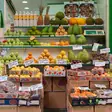






Regional variations
Bahia / Northeast
African-rooted, palm-oil-led. Moqueca de peixe (coconut and dende fish stew), acaraje (black-eyed pea fritter with shrimp), vatapa, caruru, abara. Salvador is the capital. The most distinct regional Brazilian kitchen and the closest to West African cooking.
Minas Gerais / Mineiro
Inland, cattle country, pork-and-beans cooking. Tutu a mineira (mashed beans with pork), feijao tropeiro, frango com quiabo, queijo Minas, doce de leite. Comforting, slow, the home cooking that traveled best across Brazil.
Rio Grande do Sul / Gaucho / Pampas
Southern grasslands, cattle country shared with Argentina and Uruguay. Churrasco (the rotating-skewer wood-grill), espeto corrido (rodizio), chimarrao (mate). The cuisine that exported as Brazilian steakhouses worldwide.
Amazon / North
River-fish cooking. Tucupi (fermented manioc juice), jambu (the tongue-numbing herb), pato no tucupi, tacaca, pirarucu and tambaqui fish, cupuacu and acai fruit. Belem and Manaus anchor the region; Alex Atala at D.O.M. put it on the global fine-dining map.
Sao Paulo / Southeast urban
Italian, Japanese, and Lebanese immigration shaped Sao Paulo as an urban food capital. Mortadela sandwiches at Mercadao, pizza in the Italo-Sao Paulo style, sushi and Japanese-Brazilian fusion, esfiha (Lebanese), and the largest fine-dining scene in the country.
Defining Brazilian dishes
- Feijoada
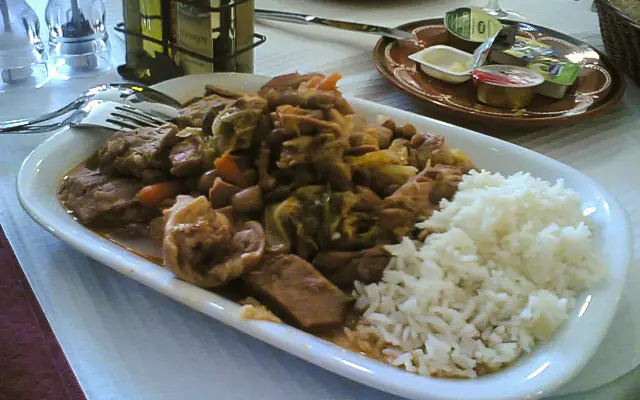
- Black bean stew with multiple cuts of pork (ear, foot, tail, ribs, smoked sausage) served with rice, sauteed couve (collards), farofa (toasted manioc flour), orange slices, and a small caipirinha. The national dish, eaten Wednesdays and Saturdays.
- Moqueca
- Bahian fish or seafood stew cooked in dende (palm) oil and coconut milk with tomato, onion, pepper, and cilantro, served in a clay pot with rice and pirao (manioc gravy). Espirito Santo has a non-dende version (moqueca capixaba).
- Picanha
- Top sirloin cap, the gaucho cut, salted heavily and grilled on a skewer or open fire. The defining cut of Brazilian churrasco.
- Acaraje
- Black-eyed pea fritter deep-fried in dende oil, split, filled with vatapa (shrimp and bread paste), caruru (okra and cashew), and dried shrimp. Bahian street food sold by women in white lace (baianas).
- Pao de queijo
- Small, chewy cheese bread made from tapioca flour and queijo Minas. A Minas Gerais breakfast staple, now eaten across the country.
- Coxinha
- Teardrop-shaped fried snack of dough stuffed with shredded chicken and catupiry cheese. The bar snack across Brazil.
- Brigadeiro
- Condensed-milk and cocoa fudge rolled in chocolate sprinkles. Birthday-party staple, now reinvented by patisseries as a serious dessert.
- Pao na chapa
- Brazilian breakfast: bread split and griddled with butter, served with cafe com leite. The single most-eaten Brazilian breakfast.
- Caipirinha
- Cachaca, lime, sugar, ice. The national cocktail, served everywhere from beach kiosks to bars.
- Pato no tucupi
- Amazonian duck cooked in tucupi (fermented manioc juice) with jambu, the herb that produces a slight tongue-numbing sensation. The defining Para dish.
How to order
At a churrascaria, the rodizio (all-you-can-eat) format brings waiters to your table with skewers of beef, lamb, sausage, pork, and chicken. Use the small disc by your plate (green up = keep cutting, red up = stop) to control pace. Start hungry and skip the salad bar if you came for meat; the cuts you actually want (picanha, fraldinha, alcatra) arrive in waves. At a feijoada lunch (almost always Wednesday or Saturday), the stew comes with the full set of sides; small caipirinha first, then plate up rice, beans, couve, farofa, and orange. At Bahian rooms, moqueca for two, plus an acaraje starter; expect intensity from the dende oil. Per kilo (por quilo) lunch buffets are the Brazilian working lunch: weigh your plate, pay by weight, eat the standard rice-beans-meat-salad spread.
What to drink with it
Cachaca is the national spirit, distilled from fresh sugarcane juice (unlike rum, which uses molasses). Caipirinha is the universal cocktail. Brazilian beer (Brahma, Antarctica, Skol) is the workhorse pour; craft beer has grown fast in Sao Paulo and Porto Alegre. Brazilian wine, mostly from Rio Grande do Sul, has improved sharply and the sparkling Serra Gaucha bottles pair well with seafood. With feijoada, beer or caipirinha. With moqueca, beer or a clean white. With churrasco, a malbec or carmenere works as well as in Argentina. Guarana, the Amazonian-fruit soda, is the national soft drink.
Where to eat it
Sao Paulo is the country's food capital with the largest concentration of fine dining (D.O.M., Mani, Tuju) plus the deepest Italian and Japanese heritage. Rio for feijoada and beach-bar culture. Salvador for Bahian. Belo Horizonte for Mineiro and the country's best cheese culture. Belem for Amazonian and the Ver-o-Peso market. Porto Alegre for gaucho churrasco. Outside Brazil, the rodizio format exported worldwide as Brazilian steakhouses (Fogo de Chao, Texas de Brazil), and the Japanese-Brazilian fusion in Sao Paulo influences sushi rooms in New York and Los Angeles.
A short history
Brazilian cuisine took shape across three colonial and post-colonial centuries: Indigenous Tupi and Amazonian cooking, Portuguese colonization (from 1500), the trans-Atlantic slave trade that brought West African cooking to Bahia (4-5 million enslaved Africans arrived in Brazil, more than any other country in the Americas), and the post-1880 European and Asian immigration that built Sao Paulo and the southern states. The country's cuisines remain genuinely regional; there is no homogenized 'Brazilian food.' Alex Atala's D.O.M. (founded 1999) was the first restaurant to put Amazonian ingredients on a global fine-dining stage.
Frequently asked
What is dende oil?
Dende is red palm oil from the African oil palm, brought to Brazil during the slave trade and now central to Bahian cooking. It gives moqueca, acaraje, and vatapa their bright orange-red color and a distinctive nutty, slightly bitter flavor. Bahian cuisine is essentially defined by it.
Are Brazilian barbecue and Argentine asado the same?
Related but different. Both come from the Pampas grasslands shared by southern Brazil, Argentina, and Uruguay. Brazilian churrasco uses skewers (espetos) rotated over coals, often in the rodizio (continuous-service) format. Argentine asado uses a horizontal parrilla grill and cooks cuts whole or as ribs, served at a single seating.
What is acai really?
A small purple berry from the Amazonian acai palm, traditionally eaten by indigenous and riverside (ribeirinho) communities of Para state as a savory side with farinha and fish. The sweetened smoothie-bowl version popular worldwide is a Rio surfer adaptation from the 1980s, not the Amazonian original.
More cities are in research. Want Brazilian covered somewhere specific? Tell us where you want to eat.