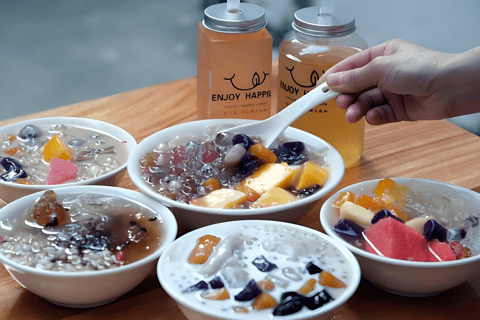
How Guangzhou came to eat the way it does: the people, migrations and accidents that shaped the plate.
Key eras
-
Panyu and the kingdom of Nanyue (214 BC to 111 BC)
Guangzhou was founded as Panyu on the east bank of the Pearl River in 214 BC, and in 204 BC General Zhao Tuo made it the capital of the kingdom of Nanyue. Archaeologists have found goods there from central China, Southeast Asia, India and even Africa, the first sign of a trading port whose cooks kept taking in foreign ingredients.
-
Teahouses and the Canton trade (10th century to 1842)
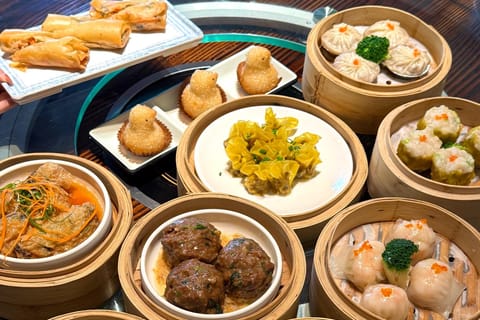
From the tenth century travellers in Guangzhou stopped at teahouses for yum cha, small meals with tea, and in the 13th century the royal court, fleeing the Mongols, brought a royal influence to the city's dim sum. From 1757 to 1842 the Thirteen Factories on the Xiguan shore were the only legal place for foreign trade with China.
-
Late Qing and Republican boom (1860 to 1948)
Restaurants boomed with trade in the late Qing, when the city's teahouse culture was born, and in 1860 Xu Laogao opened the Taiping Restaurant, the first major Western-style restaurant in Guangzhou. Tao Tao Ju opened in 1880, diners named Wenyuan, Nanyuan, Dasanyuan and Xiyuan the four great houses, and by 1948 the city counted 12,000 restaurants, teahouses and eateries.
-
State ownership and revival (1949 onwards)
With the communist takeover in 1949 many restaurateurs fled, and in 1956 the new Guangzhou Food and Drinks Company brought the trade under unified management; its exhibition that year counted 5,457 dishes and 825 kinds of dim sum. Since reform and opening up many restaurants have expanded and renovated, and the city launched Guangzhou Gourmet Week in 2023.
Immigrant influences
- Western merchants and their tastes
- In 1860 Xu Laogao opened the Taiping Restaurant, the city's first major Western-style restaurant, and by the late 1930s teahouses were inventing dim sum influenced by Western tea pastries.
- Hakka families
- Seven of Guangzhou's districts, Yuexiu and Tianhe among them, have a sizeable Hakka population; at Hua Ge Si Chu in Liwan a chef with decades of experience cooks Hakkanese food.Taste it todayHua Ge Si Chu
- Chaoshan cooks
- Chaoshan natives run the kitchen at Stay Here in Haizhu, whose small menu covers the greatest hits of Chaoshan cuisine, led by raw marinated mud crab.Taste it todayStay Here
- Cooks from Shanghai and Beijing
- In the fierce teahouse competition of the late 1930s new dim sum appeared almost daily, including pieces influenced by the tea pastries of Shanghai and Beijing.
Signature innovations
- Har gow, first served as Wufeng Har Gow at Yi Zhen restaurant in Wufeng Village
- Shahe fen, the wide rice noodle named after Shahe town near Baiyun MountainTaste it todayShahe fen (ho fun rice noodles)
- Ginger milk curd, the ginger and milk dessert that originated in Shawan, PanyuTaste it todayGinger milk curd (jiang zhuang nai)
- Teng jai congee, first sold from small boats on the water at Lizhiwan in XiguanTaste it todayTeng jai congee (sampan congee)
- The lotus seed paste filling of the Cantonese mooncake, set at Lian Xiang Lou in 1889Taste it todayLian Xiang Lou
Book food experiences in Guangzhou
Check dates and prices
Powered by GetYourGuide