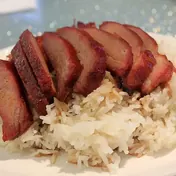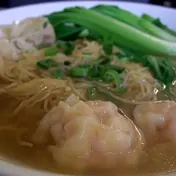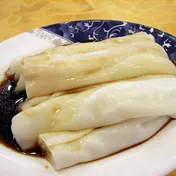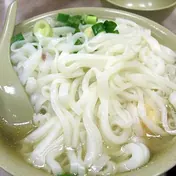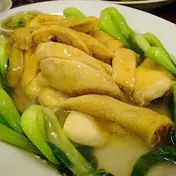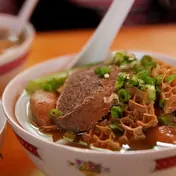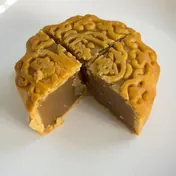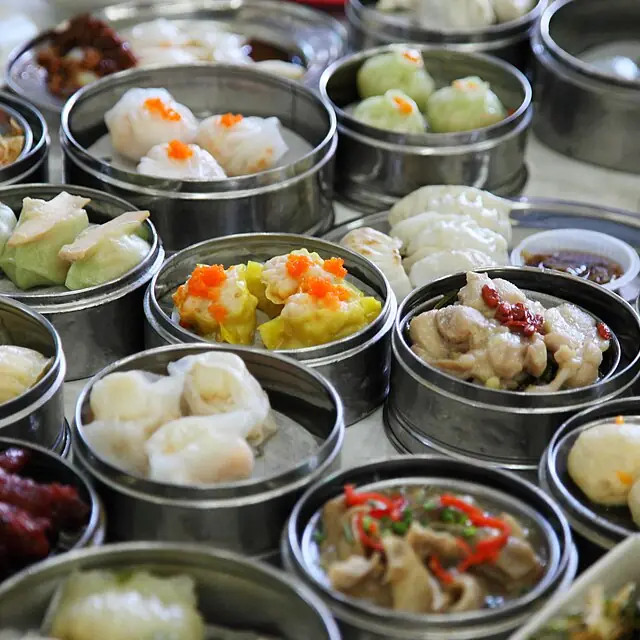


Dim sum are small Cantonese plates, savoury or sweet, eaten with tea at yum cha; the classic rule is 'one bowl with two pieces', two pieces of food to go with the tea.
Guangzhou saw more commercial travel in the tenth century, and travellers stopped at teahouses for yum cha, small meals with tea. In the 13th century the royal court, fleeing the Mongols, brought a royal influence to the city's dim sum. Har gow, the shrimp dumpling, was first served at Yi Zhen restaurant in Wufeng Village, Guangzhou. Dim sum culture grew fast in the city in the late nineteenth century, and by the late 1930s competition among teahouses was so fierce that new kinds appeared almost daily. Dim sum is traditionally eaten at breakfast and lunch, never at dinner.