The plates that define Sofia: what they are, where they came from, and where to eat the canonical version.
Signature dishes
-
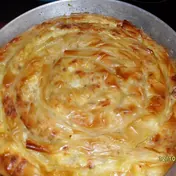
Banitsa (баница)
Banitsa is a traditional Bulgarian pie made by layering whisked eggs, plain yogurt and pieces of white brined cheese between filo pastry and baking it in an oven.
Where to try it: Thirsty Kitchen, Kostis Bakery
Banitsa is served for breakfast with plain yogurt, ayran or boza and can be eaten hot or cold. Lucky charms are traditionally put into the pie on New Year's Eve, and more recently people write wishes on small pieces of paper wrapped in tin foil. The name derives from a South Slavic word meaning to fold.
Watch out for: Gluten, Eggs, Milk
-
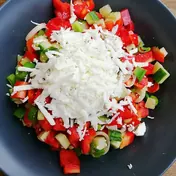
Shopska salata (shopska salad)
Shopska salad is a cold salad of tomatoes, cucumbers, onion, raw or roasted peppers and sirene, a white brined cheese similar to feta, covered in a thick layer of grated or diced cheese.
Where to try it: Pizza The Jungle, Pizza Marti, Smile Bar & Dinner, Of Course
Price: €3.40 to €5.89
Balkantourist named its version of the salad shopska in 1956, and the salad first appeared at the Chernomorets restaurant in the Druzhba resort near Varna. It was approved as a national culinary symbol during the 1970s and 1980s, and it is often eaten as an appetizer with rakia.
Watch out for: Milk
-
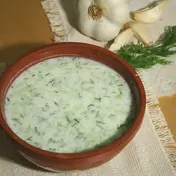
Tarator (таратор)
Tarator is a cold soup made of yogurt, minced cucumber, dill, garlic, and sunflower or olive oil.
Where to try it: Gostilnitsa Blyan, Pizza Marti
Price: €2.60 to €2.99
Tarator belongs to a family of cold yogurt and cucumber dips and soups found in the cuisines of Southeastern Europe and West Asia, known as tzatziki in Greek and cacık in Turkish.
Watch out for: Milk
Book food experiences in Sofia

-
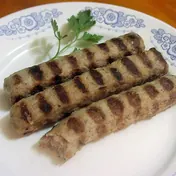
Kebapche (кебапче)
Kebapche is a dish of grilled minced meat with spices, shaped into an elongated cylinder similar to a hot dog, typically from a mix of pork and beef and spiced with black pepper, cumin and salt.
Where to try it: Divaka, Pizza Marti
Price: €8.18 to €8.69
Kebapche is part of the Bulgarian grill (skara), and the mixed grill plate, meshana skara, consists of kebapche, kyufte, shishche, and karnache or nadenitsa.
-
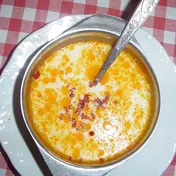
Shkembe chorba (шкембе чорба)
Shkembe chorba is tripe soup, a soup or stew made with tripe, the stomach of a cow or of lamb or mutton.
Where to try it: Gostilnitsa Blyan
Price: €4.00
The Bulgarian name škembe čorba was borrowed from the Turkish işkembe çorbası, and the soup is widely considered to be a hangover remedy.
-

Mekitsa (мекица)
Mekitsa is a traditional Bulgarian dish of kneaded, deep fried dough made with yogurt, typically served with jam, honey, sirene or icing sugar.
Mekitsi are a Bulgarian breakfast food, made from flour, eggs, yogurt, water, salt and oil.
Watch out for: Gluten, Eggs, Milk
-
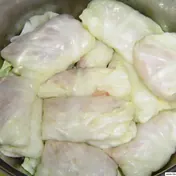
Sarmi (сарми)
Sarma is stuffed cabbage, cabbage leaves stuffed with rice and minced meat.
On Christmas Eve, tradition requires vegetarian stuffed peppers and cabbage leaves, sarmi.
-
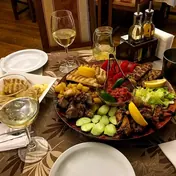
Lyutenitsa (лютеница)
Lyutenitsa is a sometimes spicy hot vegetable relish whose ingredients include peppers, aubergines, carrots, garlic, vegetable oil, sugar, salt, tomatoes and walnut.
The name means spicy. It comes smooth, chunky, with chili peppers or eggplant, and hot or mild, and industrial production has flourished in recent years.
Watch out for: Tree nuts
-

Kiselo mlyako (кисело мляко)
Kiselo mlyako, literally sour milk, is Bulgarian yogurt, produced using Lactobacillus delbrueckii subsp. bulgaricus and used in many Bulgarian dishes.
Per-capita yogurt consumption among Bulgarians is traditionally higher than in the rest of Europe, and the country is the historical namesake of the microorganism Lactobacillus bulgaricus.
Watch out for: Milk
-
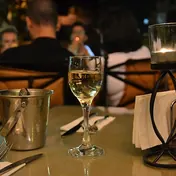
Rakia (ракия)
Rakia is the collective term for fruit spirits or fruit brandy popular in Southeastern Europe, made from fermented and distilled fruits, typically plums and grapes, and normally 40% ABV.
Where to try it: Made in Blue
Price: €3.50 to €3.90
Bulgaria cites an old piece of pottery from the 14th century in which the word rakiya is inscribed, reading: I have celebrated with rakia. In Bulgaria grape rakia is called grozdova or lozova.
Signature Dishes in Sofia, FAQ
What food is Sofia known for?
Sofia's signature dishes include Banitsa (баница), Shopska salata (shopska salad), Tarator (таратор), Kebapche (кебапче), Shkembe chorba (шкембе чорба). See our signature dishes chapter for where to eat each.