
The plates that define Hobart: what they are, where they came from, and where to eat the canonical version.
Signature dishes
-
Curried scallop pie ★ 4.8
A pie filled with a cluster of scallops in curry, sold in bakeries across Tasmania; scallops are also a staple of local fish and chip shops and are best in winter.
Where to try it: Harbour Lights Cafe
Scallop pies are counted among Tasmania's traditional foods, and the island's cooks have flavoured them with curry powder since Keen's Curry popularised it in the 19th century. Tourism Tasmania calls the pies a Tasmanian institution and a source of continual debate over which bakery makes the best one, an argument settled each winter at the Tassie Scallop Fiesta in Bridport, which holds a contest for the state's best scallop pie. Scallops are at their finest in winter.
Watch out for: Molluscs, Gluten
-
Fish and chips from the Constitution Dock punts ★ 4.7
Fish and chips ordered from a floating fish punt moored on Constitution Dock, where fishing boats supply the city's fish market and its waterfront restaurants.
Generations of Tasmanians have grown up on seaside fish and chips, and Tourism Tasmania counts them as an essential part of the coastal Tasmanian experience. In Hobart the place to eat them is Constitution Dock, on Sullivans Cove, where fishing boats serving the city's fish market and restaurants moor beside floating fish punts. Several of those restaurants sit at the northern end of the dock, and visitors can even paddle up to the punts on a half-day kayak trip.
Watch out for: Fish, Gluten
-
Tasmanian Pacific oysters ★ 4.7
Pacific oysters farmed in Tasmanian waters and eaten natural or dressed; Bar Wa Izakaya runs an oyster happy hour and Rockwall serves oysters from Bruny Island.
Where to try it: Bar Wa Izakaya, Rockwall Bar and Grill, Pearl + Co, Grape Food and Wine Bar, The Brick Factory, Frank Restaurant and Bar, Suminato Japanese Restaurant, La Sardina Loca
The Pacific oyster is native to the Pacific coast of Asia and was introduced to Australia, among other places, often to create an industry where none had existed. Pacific oysters are now farmed across Tasmania, many farms run farm-gate eateries in sight of their leases, and the oysters are at their best in winter. On Bruny Island, south of Hobart, the Get Shucked oyster farm opened the world's first oyster drive-through window, and Hobart restaurants serve oysters from there.
Watch out for: Molluscs
Book food experiences in Hobart
-
Southern rock lobster (crayfish) ★ 4.6
Jasus edwardsii, known locally as crayfish or crays: one of the ultimate Tassie treats, fished from about November to May for its fresh white flesh.
Where to try it: The Point Revolving Restaurant
The southern rock lobster lives around the southern coast of Australia, from central New South Wales to southern Western Australia, including Tasmania, and is commonly called crayfish in Australia. It is prized in Oceania, China and South-East Asia for its sweet, succulent flesh, and southern Australia lands just over 3000 tonnes a year for a well established export trade. In Tasmania the fishing season runs from about November to May.
Watch out for: Crustaceans
-
Tasmanian abalone ★ 4.4
Wild blacklip abalone from the world's largest wild abalone fishery; most is exported, so it appears on Hobart menus mostly in fine restaurants.
The blacklip abalone, Haliotis rubra, is a large edible sea snail endemic to Australia and one of two abalone species taken in Tasmania, named for the black edge of its foot. Tasmania is the world's largest wild abalone fishery, producing about 25% of total annual global production. Most of the catch is exported, and Candy Abalone Tasmania, near Hobart Airport, runs tours of its drying operation of wild-caught abalone.
Watch out for: Molluscs
-
Leatherwood honey ★ 4.3
A monofloral honey Tasmanian beekeepers make from the leatherwood tree of the island's western forests, sold in Hobart and named in Slow Food's Ark of Taste.
The leatherwood, Eucryphia lucida, is a tree or large shrub endemic to the forests of western Tasmania, with fragrant white flowers in spring and summer. Tasmanian beekeepers use it to make leatherwood honey, a noted monofloral honey recognised by the international Slow Food movement in its Ark of Taste. Much of the leatherwood grows deep in the forests of the wild west coast, and the Tasmanian Beekeepers' Association has lobbied to protect access to it from logging.
-
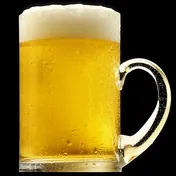
Cascade beer ★ 4.4
Lager, pale and stout from Cascade, Australia's longest operating brewery, under kunanyi/Mount Wellington; the heritage beer garden serves pub food.
Cascade Brewery was founded beside the Hobart Rivulet in 1832 by Hugh Macintosh and his nephews Henry and Charles Degraves, while Peter Degraves was in prison; Degraves ran and expanded it after his release. It is rare among breweries worldwide in operating its own maltings, making malt for Premium Lager and Pale Ale from locally grown barley. Cascade Pale Ale, known as green or simply Pale, is in fact an Australian-style lager. Asahi bought it in June 2020.
Watch out for: Gluten
-
Tasmanian single malt whisky ★ 4.6
Single malt from the state with more whisky distilleries than any other in Australia, poured in Hobart bars and at the Whisky Week Showcase each August.
Where to try it: Lark Distillery, Evolve Spirits Bar
Van Diemen's Land had a fledgling whisky industry in the 1820s and 1830s, but no whisky was produced on the island between 1838 and 1990. Bill Lark lobbied the government in 1990 to change the law, and he and Lyn Lark founded Lark Distillery in Hobart in 1992, the first of the boutique distilleries. In 2014 Sullivan's Cove French Oak single cask won the world's best single malt whisky at the World Whiskies Awards.
-
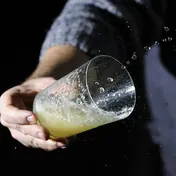
Huon Valley apples and cider ★ 4.3
Apples from the Huon Valley, once the hub of Tasmania's apple-growing industry, now pressed into cider and served with apple pie at Willie Smith's Apple Shed.
The Huon Valley, south-west of Hobart, was once the hub of Tasmania's apple-growing industry, and the island was called the Apple Isle. Traditional crops such as apples and pears declined in the 1960s and 1970s, and the valley's apples have since become cider. At Grove, William Smith planted the first tree of his family orchard in 1888; four generations later the family set up Willie Smith's Cider in 2012, Australia's first organic cidery.
-
Tasmanian pinot noir and sparkling wine ★ 4.4
Cool-climate pinot noir, chardonnay and sparkling wine from vineyards around Hobart, including Moorilla at MONA and the Coal River Valley to the east.
Where to try it: Moorilla, Glaetzer-Dixon Family Winemakers
Tasmania was one of the earliest regions in Australia to be planted with vines and supplied cuttings for the first vineyards in Victoria and South Australia. Its cool climate suits pinot noir, chardonnay and sauvignon blanc, and many mainland producers make the base cuvée for their sparkling wine on the island. Claudio Alcorso established Moorilla Estate at Berriedale in 1958, and the Coal River Valley east of Hobart grows pinot noir, chardonnay and sauvignon blanc.
Watch out for: Sulphites


Signature Dishes in Hobart, FAQ
What food is Hobart known for?
Hobart's signature dishes include Curried scallop pie, Fish and chips from the Constitution Dock punts, Tasmanian Pacific oysters, Southern rock lobster (crayfish), Tasmanian abalone. See our signature dishes chapter for where to eat each.