
The plates that define Adelaide: what they are, where they came from, and where to eat the canonical version.
Signature dishes
-
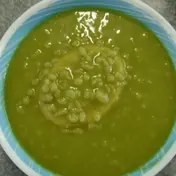
Pie floater ★ 4.7
A meat pie sitting, sometimes upside down, in a bowl of thick pea soup, usually with tomato sauce: the late meal once bought from Adelaide's street pie carts.
Where to try it: Bakery on O'Connell
The pie floater is believed to have been first created in the 1890s and became popular as a meal sold from South Australian pie carts, horse-drawn at first, with a long window where customers stood to eat. Adelaide has had pie carts since the 1870s: in the 1880s 13 of them worked King William Street and North Terrace, and in the evenings the Norwood cart stood on The Parade beside the Town Hall. The pea soup is traditionally made from blue boiler peas. In 2003 the pie floater was recognised as a South Australian Heritage Icon, and Bakery on O'Connell in North Adelaide calls itself the home of the pie floater.
Watch out for: Gluten
-
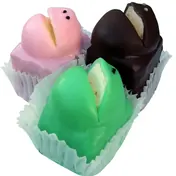
Frog cake ★ 4.5
A small cake shaped like a frog's head with its mouth open: sponge with a jam centre and cream under thick fondant, first green and later chocolate and pink too.
The frog cake was created by the Balfours bakery around 1923 and soon became a popular treat in South Australia. Balfours began in 1853, when Scottish immigrant James Calder and Margaret Balfour opened a bakery at 130 Rundle Street. The company does not credit the cake to one person, but suggests John Gordon Balfour may have been inspired by fondant-covered petit fours on a visit to Paris in 1923, at a time when tearooms were still popular in Adelaide. In 2001 the National Trust of South Australia listed the frog cake as a South Australian Heritage Icon, and Balfours registered its name and shape as a trademark.
Watch out for: Gluten, Eggs, Milk
-

Kitchener bun ★ 4.2
A sweet yeasted bun, baked or fried, split and filled with raspberry or strawberry jam and cream and dusted with sugar; made and sold in South Australia since 1915.
The Kitchener bun resembles the Berliner, a doughnut of German origin, but has an open face and uses more cream than jam. It was known as a Berliner until anti-German sentiment in World War I led to its renaming in honour of the British field marshal Lord Kitchener. In a 1930 recipe the jam is sealed into the doughnut before deep-frying, and cream is not mentioned until 1934. Ten years later an Unley Road baker was fined for using cream in his Kitchener buns, contrary to the National Security Regulations.
Watch out for: Gluten, Milk, Eggs
Book food experiences in Adelaide


-
Fritz and sauce ★ 3.9
Fritz is South Australia's name for the pork luncheon sausage other states call devon or polony, usually eaten in a sandwich with tomato sauce or fried in slices.
Fritz is usually made of several types of pork, basic spices and a binder, and is similar in look and taste to the bologna sausage. The same product goes by many names: luncheon in New Zealand, polony in Western Australia, devon in New South Wales and fritz in South Australia. South Australians maintain that devon is not related to their bung fritz, which is made with a process and recipe unique to the state, using the sheep's appendix, known as the bung, that gives it its name.
-

King George whiting ★ 4.6
A prized white fish of southern Australia, sold whole or as fillets and battered, crumbed or grilled; Secrets by the Sea at Henley Beach serves it beer battered.
Price: A$41.90 as a restaurant main with salad and chips
The King George whiting is endemic to southern Australia, and its main commercial fishery is centred on South Australia, from Ceduna in the west to Gulf St Vincent in the east. It is a highly rated food fish that fetches a premium price in markets, and in the late 1980s this single species made up 60% of South Australia's total annual catch. Sold whole or as fillets, it is generally rated one of the very best Australian fish for the table and is found in fish and chip shops everywhere. Recreational anglers seek it too, with a minimum length of 32 cm east of longitude 136°.
Watch out for: Fish
-
Coopers Pale and Sparkling Ale ★ 4.5
The pale and sparkling ales of Coopers, the largest Australian-owned brewery, founded in Norwood in 1862 and still owned by the Cooper family; Adelaide pubs pour them by the pint.
Where to try it: The Original Coopers Alehouse, Arab Steed Hotel, Sunny's Pizza
Thomas Cooper established the brewery at his home in the Adelaide suburb of Norwood in 1862 and brewed his first recorded batch on 13 May that year. It moved to larger premises at Leabrook in 1881 and to much larger premises at Regency Park in 2001, and is still owned by the Cooper family. Coopers is known mainly for its pale and sparkling ales, and is the world's largest producer of canned beer concentrate for homebrewing. In the East End the Exeter Hotel serves cold Coopers Ales, and the Seven Stars Hotel batters its flathead in Coopers Pale.
Watch out for: Gluten
-
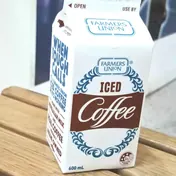
Farmers Union Iced Coffee ★ 4.1
A coffee milk drink in a carton, made with coffee, glucose and reduced fat milk, launched in 1977 and still most popular in its home state of South Australia.
Farmers Union Iced Coffee was first launched in 1977, when Farmers Union was a co-operative of South Australian dairy farmers; it is still drunk mainly in South Australia, though it is now sold in every other Australian state and territory too. It is made with coffee, glucose, homogenised reduced fat milk and milk solids. In 2003 Australians drank more than 22 million litres, making it the country's best selling flavoured milk drink at that time. The brand later passed to National Foods and then to subsidiaries of the Japanese brewer Kirin, and it is now made by Bega Group.
Watch out for: Milk
-
FruChocs ★ 4.0
Cubes of dried apricot and peach paste coated in milk chocolate, made in South Australia since 1948 by the Adelaide confectioner now called Menz Confectionery.
Robern Menz produced its first FruChocs, chocolate-covered fruit balls, in 1948. The Menz name goes back to Adelaide's Wakefield Street, where Magdalena Menz set up a grocery business in 1850; the Menz bakery began making confectionery in 1892 and developed the Yo-Yo biscuit. Menz was sold to Arnott's in 1964, and in 1992 Robern bought the confectionery side and renamed it Robern Menz. In 1995 it moved from Stepney to the former Gibb's Pies factory in Glynde, in Adelaide's eastern suburbs, where the company now known as Menz Confectionery is best known for its FruChocs.
Watch out for: Milk
-
Haigh's chocolate ★ 4.3
Chocolates from Haigh's, the Adelaide chocolatier founded in 1915 on King William Street, with its Beehive Corner store and Parkside factory tours; since 1993 it has made an Easter Bilby.
Alfred Ernest Haigh, born in Adelaide in 1877, opened his first shop on 1 May 1915 at 34 King William Street, and in 1922 moved a few doors along to Beehive Corner, on Rundle Mall and King William Street. His grandson John Haigh went to learn chocolate manufacturing with Lindt & Sprüngli in Switzerland to bring new techniques back to Australia. Three stores are in the city centre, including Beehive Corner and Adelaide Central Market, and the Visitor Centre store runs viewing tours of the Parkside factory behind it. Since Easter 1993 Haigh's has sold a chocolate Easter Bilby instead of a bunny.
Watch out for: Milk
-
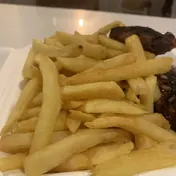
Chicken salt on hot chips ★ 4.0
A savoury seasoning salt shaken over hot chips across Australia, first developed in Gawler, South Australia, in the 1970s to season rotisserie chicken.
Chicken salt was developed in the 1970s by Peter Brinkworth in Gawler, South Australia, to season chicken for rotisseries. The Mitani Group bought the recipe in 1979, and it is now commonly used on hot chips throughout Australia. The most popular chicken salts sold in supermarkets contain no chicken, and most, including today's Mitani chicken salt, are vegetarian or vegan, although some versions do use chicken or animal fats for flavouring.
Signature Dishes in Adelaide, FAQ
What food is Adelaide known for?
Adelaide's signature dishes include Pie floater, Frog cake, Kitchener bun, Fritz and sauce, King George whiting. See our signature dishes chapter for where to eat each.